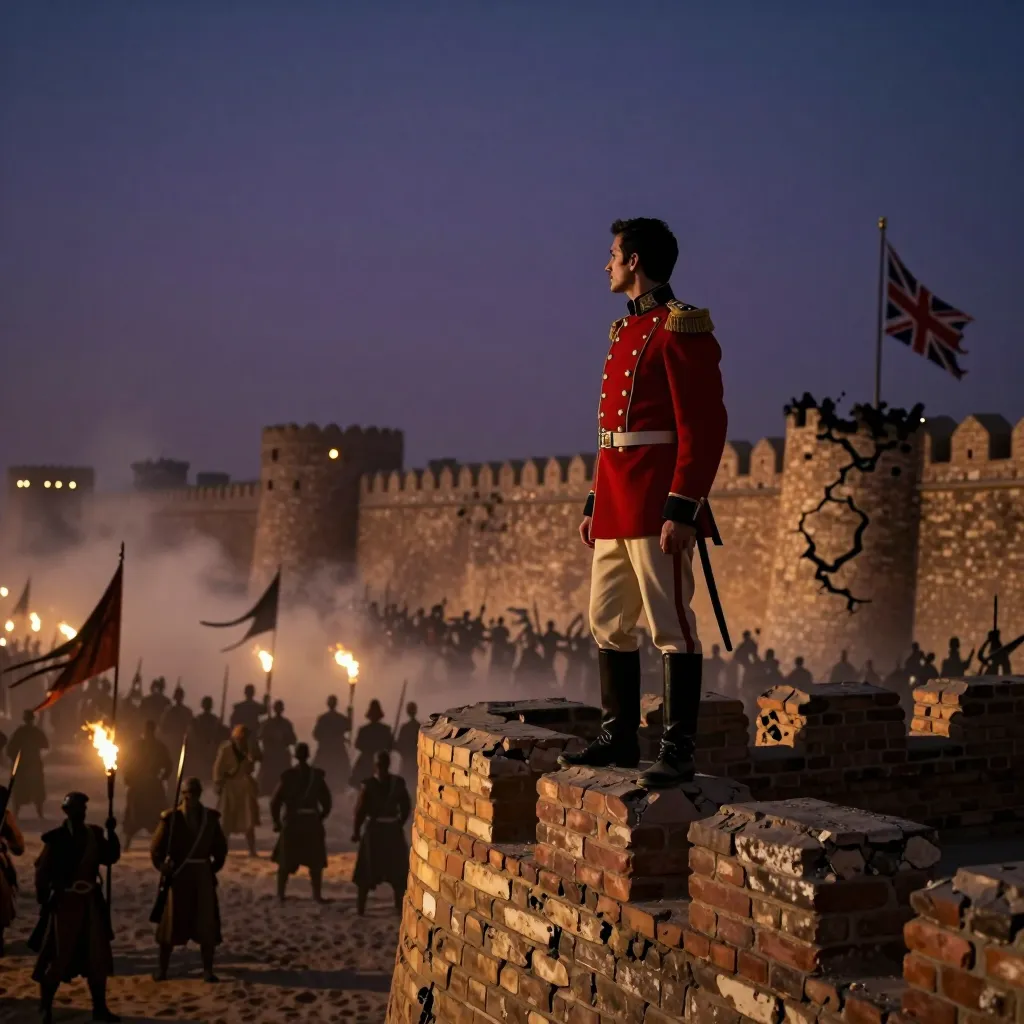
The Siege of Khartoum: Divine Zeal and the Martyrdom of General Gordon
Explore the epic struggle between Muhammad Ahmad, the self-proclaimed Mahdi, and General Charles Gordon. This historical collision of religious zeal and Victorian martyrdom transformed the Siege of Khartoum into a lasting myth of the 19th-century Sudanese sands.
The Guided One and the Ghost of Khartoum: A Tale of Zeal and Ruin
[cite_start]In the late 19th century, the shifting sands of Sudan became the stage for a conflict that blurred the lines between imperial politics and apocalyptic prophecy[cite: 1, 14]. [cite_start]At the heart of this dark chapter was a clash between two men who viewed themselves as agents of divine will: Muhammad Ahmad, the self-proclaimed Mahdi, and General Charles Gordon, the "inspired and mad" defender of a doomed city[cite: 13, 29, 31].
The Emergence of the Mahdi
[cite_start]In 1881, Muhammad Ahmad, a Sudanese Islamic cleric, experienced a series of profound visions[cite: 13]. [cite_start]He declared himself the Mahdi—the "Guided One" or the "Redeemer"—a messianic figure in Islamic tradition destined to restore justice and equity to the world[cite: 13].
[cite_start]This movement was not merely religious but a violent reaction against the perceived corruption of Ottoman-Egyptian rule and the growing influence of European powers[cite: 15]. [cite_start]The Mahdi’s followers, known as ansars (and later dubbed "Dervishes" by the British), sought to purge the faith of "heresies" and end foreign interference[cite: 11, 15, 20].
- [cite_start]The Jibba: To symbolize their rejection of worldly wealth, the Mahdi's soldiers wore the jibba, a distinctive robe of patched material[cite: 16].
- [cite_start]A Diverse Horde: Despite the religious core, the army included various tribes, such as the Hadanduwa—famously nicknamed "Fuzzy Wuzzies" by British soldiers due to their striking hairstyles[cite: 18, 19].
[cite_start]By 1883, the Mahdi’s forces had humiliated Egyptian military units, capturing the city of El Obeid and wiping out a British-led Egyptian army at Omdurman[cite: 23, 24]. [cite_start]With modern rifles and field guns seized from the fallen, a Mahdist state began to rise in western Sudan[cite: 25, 26].
The Lone Sentinel: Charles Gordon
[cite_start]Facing a collapsing Sudanese administration, the British government—led by a reluctant Prime Minister William Gladstone—decided to abandon the region[cite: 26, 30]. [cite_start]They dispatched General Charles Gordon to oversee the evacuation of Egyptian forces from Khartoum[cite: 26].
[cite_start]Gordon was a figure of Victorian legend, a man of intense Christian zeal who had earned the moniker "Chinese Gordon" for his exploits in the Taiping Rebellion[cite: 27, 30]. [cite_start]However, upon arriving in Khartoum in February 1884, Gordon abandoned his orders to evacuate[cite: 31, 32]. [cite_start]Believing he was divinely appointed to "redress the evils of the Sudan," he chose to fortify the city instead[cite: 33].
The Siege of Khartoum
[cite_start]The Mahdists severed Khartoum’s connection to the outside world on March 12, 1884[cite: 38, 46]. [cite_start]Inside the walls, Gordon commanded a cosmopolitan population of 50,000, including Europeans, Indians, and Sudanese[cite: 47].
The general turned the city into a fortress:
- [cite_start]Fortifications: He dug a massive perimeter ditch and parapet, connecting the Blue and White Nile rivers to encircle the city in a defensive triangle[cite: 52].
- [cite_start]Improvised Warfare: Gordon buried "landmines" made of cannon shells and tins filled with metal scraps, scatterings of broken glass, and sharpened stakes to thwart cavalry charges[cite: 54, 56].
- [cite_start]Gunboats: He converted seven paddle steamers into armored river vessels to gather supplies and harry the besiegers[cite: 57].
As the months dragged on, the atmosphere turned grim. [cite_start]In October 1884, the Mahdi took personal command of the siege[cite: 114]. He sent Gordon a chilling ultimatum, along with a jibba for the general to wear should he surrender; [cite_start]Gordon refused[cite: 44, 115].
The Fall and the Legend
By January 1885, the city was a shadow of itself. [cite_start]Residents had been reduced to eating rats, donkeys, and the pith of palm trees[cite: 123, 124]. [cite_start]Dysentery ravaged the ranks, and as the Nile’s water level dropped, a breach in the defenses was exposed[cite: 124].
[cite_start]Before dawn on January 26, 1885, the Mahdist army swarmed through the muddy gap[cite: 127]. [cite_start]A massacre ensued, claiming the lives of at least 6,000 soldiers and 4,000 civilians[cite: 128].
The death of Gordon became a point of mythic contention. [cite_start]While eyewitnesses claimed he died fighting with a revolver in hand, the British public preferred the image of a Christian martyr[cite: 129, 130]. [cite_start]This version—portrayed in George William Joy’s famous painting—depicts Gordon standing unarmed and calm at the top of a staircase as spears approached[cite: 130]. [cite_start]In reality, his head was severed and placed on a pole, and his body was left to be desecrated in the palace gardens[cite: 134].
Echoes in the Sand
[cite_start]A British relief force arrived on January 28, just two days after the city fell[cite: 135]. [cite_start]The failure to save Gordon rocked the British establishment, ultimately leading to the fall of Gladstone’s government[cite: 1, 141].
[cite_start]Though the Mahdi died of typhus just months later in June 1885, his state survived for over a decade[cite: 143, 144]. [cite_start]It was not until 1898 that General Horatio Kitchener returned to Sudan with modern machine guns and artillery, finally dismantling the Mahdist rebellion at the Battle of Omdurman—a victory framed as a "terrible revenge" for the fallen hero of Khartoum[cite: 1, 148, 149].