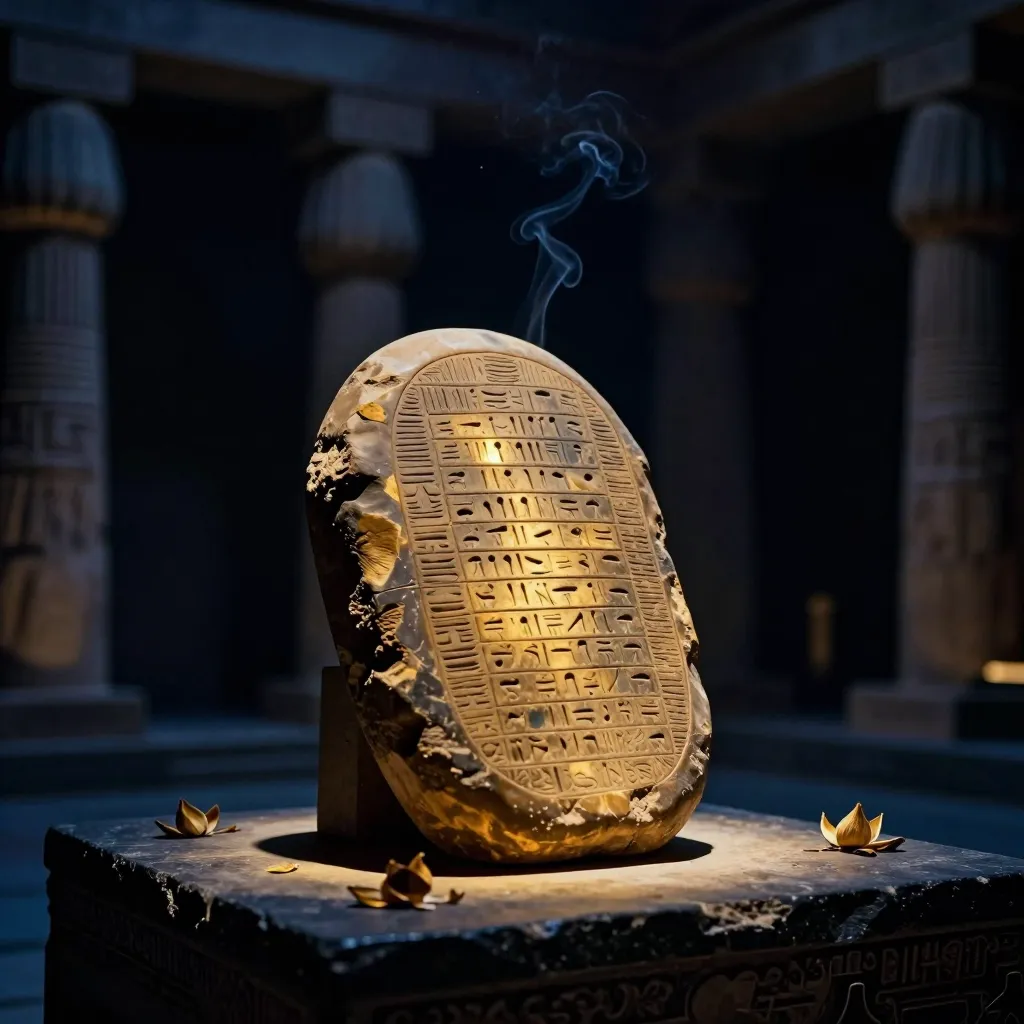
The Sacred Eroticism of Sumer: The World’s Oldest Love Poem for King Shu-Sin
Long before the Song of Solomon, ancient Sumerians recorded the Love Song for Shu-Sin on a clay tablet. This article explores the poem's rediscovery in a museum drawer and its role in the 'Sacred Marriage' ritual between a king and a priestess of Inanna.
The Sacred Eroticism of Sumer: The World’s Oldest Love Poem
Long before the lyrical verses of the biblical Song of Songs were penned, an ancient clay tablet lay silent in the dust of Mesopotamia, carrying a message of desire that pre-dates most modern historical records. Known as The Love Song for Shu-Sin, this Sumerian composition, dating to approximately 2000 BCE, holds the title of the world's oldest surviving love poem[cite: 1].
For centuries, scholars believed the Song of Solomon represented the earliest expression of romantic literature[cite: 1]. However, the 19th-century excavations of Mesopotamian ruins—initially intended to prove the historical accuracy of the Bible—ironically revealed a much older literary tradition that served as the foundation for many later narratives[cite: 1].
The Rediscovery: From Nineveh to Istanbul
The journey of this poem from the ancient city of Ur to modern eyes is a tale of archaeological serendipity. During the mid-1800s, explorers like Austen Henry Layard excavated sites such as Kalhu and Nineveh, uncovering the massive Library of Ashurbanipal[cite: 1]. This cache of over 30,000 cuneiform texts fundamentally shifted the human understanding of history, revealing that stories of the Great Flood and the Fall of Man had pre-existing Mesopotamian origins[cite: 1].
Amidst these discoveries was a small, well-preserved tablet numbered 2461. It was transported to the Istanbul Museum in Turkey, where it remained in an untranslated drawer for decades[cite: 1]. It wasn't until 1951 that the renowned Sumerologist Samuel Noah Kramer identified the text for what it was: a vibrant, stanza-divided celebration of beauty and erotic love[cite: 1].
Ritual and Romance: The "Sacred Marriage"
While the poem resonates with a personal and deeply affectionate voice, it was likely composed for a specific religious and political purpose. Shu-Sin, who reigned over Ur from roughly 2037 to 2028 BCE, was the younger son of King Shulgi and a member of the influential Ur III dynasty[cite: 1].
The poem is believed to be part of the "Sacred Marriage" rite (hieros gamos)[cite: 1]. In this annual ceremony, the king would symbolically—and perhaps physically—marry a priestess representing Inanna, the goddess of love, fertility, and war[cite: 1].
- Social Function: The ritual was intended to ensure the fertility of the soil and the prosperity of the people for the coming year[cite: 1].
- Divine Connection: By mating with the priestess, the king reinforced his own divinity and his personal connection to the gods[cite: 1].
- Literary Form: The text is classified as a balbale song of Inanna, often featuring the king’s name substituted for Dumuzi, Inanna’s mythological lover[cite: 1].
The Text of the Song
The poem is voiced from the perspective of the "bride," who expresses a raw, captivating attraction to the monarch. The imagery of honey and the bedchamber evokes a sensory-rich environment of ancient intimacy.
"Bridegroom, dear to my heart, Goodly is your beauty, honeysweet, Lion, dear to my heart, Goodly is your beauty, honeysweet."[cite: 1]
The narrator invites the "Lion" into the bedchamber, declaring that her caresses are "more savory than honey" and requesting that he gladden her heart until dawn[cite: 1]. This blend of the erotic and the holy highlights a culture where the boundaries between physical pleasure and spiritual duty were seamlessly intertwined.
A Legacy Beyond the Bible
The discovery of the Love Song for Shu-Sin serves as a reminder that the "first drafts" of human emotion were recorded in the clay of the Fertile Crescent. Scholars note that Shu-Sin also appeared as the lead in other Akkadian erotic poems written in dialogue form, mirroring the structure found in later Hebrew scripture[cite: 1].
By uncovering these texts, archaeology did more than just provide context for the Bible; it expanded the horizon of human history, revealing that the themes of passion, devotion, and the longing for prosperity are as old as civilization itself[cite: 1].