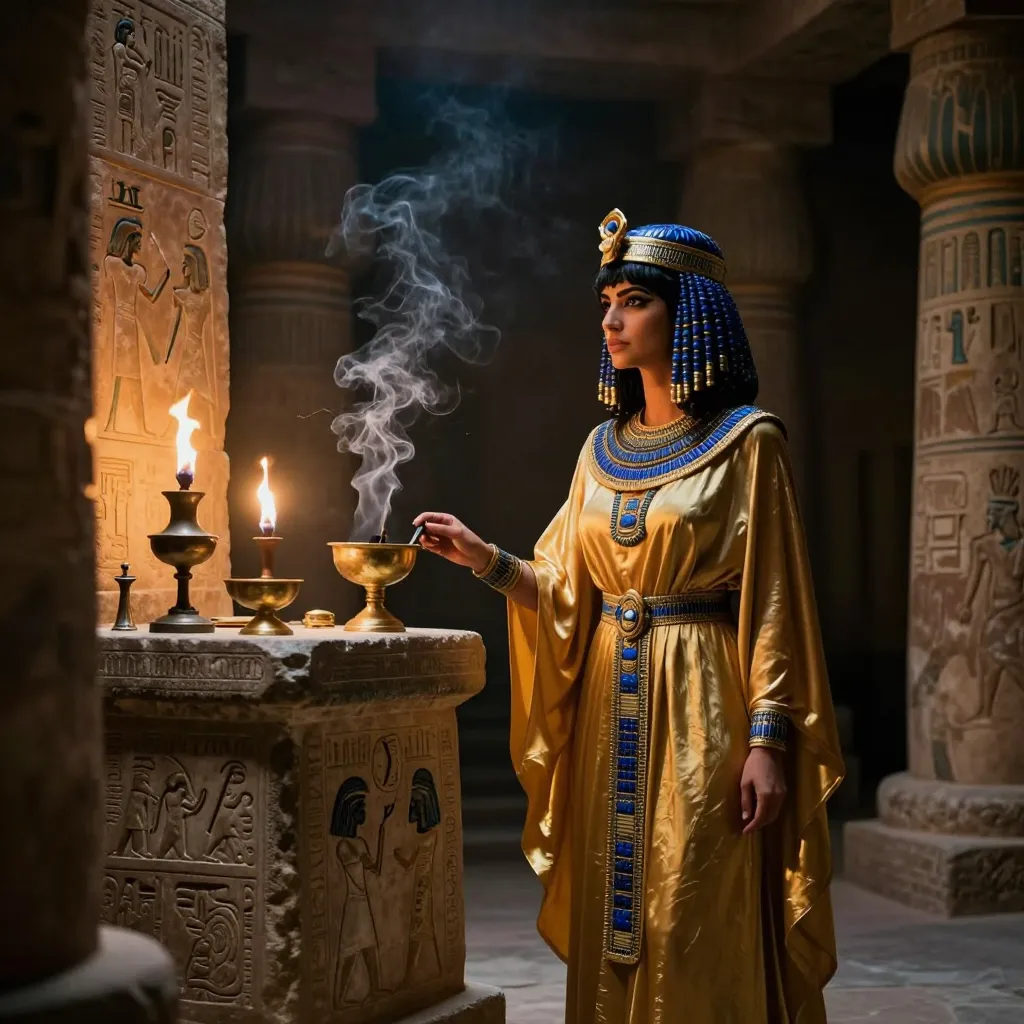
Exploring the Untold Power of Mesopotamian Women: From Priestesses to Queens
The article reveals how women in ancient Mesopotamia—from Uruk’s property‑holding traders to Enheduanna, the high priestess who authored the first signed hymns—exercised economic, religious, and political influence. It connects their historic power to the enduring mythic reverence of goddesses like Inanna, showing why their stories matter for modern readers seeking hidden histories of female agency.
The Divine and the Mortal: Women's Power in Ancient Mesopotamia
Between the Tigris and Euphrates, a civilization flourished where myth and daily life intertwined. In ancient Mesopotamia, women navigated a world shaped by patriarchal structures yet often found avenues to assert influence—through temple service, economic enterprise, and even sovereign rule. Their story is not merely one of restriction but of resilience, reflected in both historical records and the enduring myths that celebrated feminine divinity.
Early Foundations: Freedom in the Cradle of Civilization
During the Uruk period (circa 4000–3100 BCE), as writing emerged and cities rose, women enjoyed remarkable autonomy. Archaeological evidence, including cylinder seals bearing female names, indicates they could engage in contracts, own property, and participate in trade. This era saw the veneration of powerful goddesses such as Inanna, whose domains spanned love, war, and political authority—mirroring the real-world roles women could occupy.
The Early Dynastic period (2900–2350 BCE) continued this trend. Women of elite families managed households that functioned as economic centers, overseeing textile production—a craft increasingly associated with female labor. Some, like the tavern-keeper Kubaba of Kish, ascended to kingship, her name preserved in the Sumerian King List as a sole ruler without a male consort. Queen Puabi of Ur, whose lavish tomb revealed immense wealth, likely wielded comparable independence, her cylinder seal symbolizing administrative power.
Priestesses and the Sacred Office
Temple life offered one of the most prominent paths to influence. The naditu women of Sippar, dedicated to the god Shamash, exemplified this. Though expected to marry, they remained childless and focused on managing temple assets, engaging in lending, and leasing property. Their status as naditu—often translated as “vowed” or “consecrated”—granted them legal standing unusual for women of the time.
Enheduanna, daughter of Sargon of Akkad, stands as the most renowned example. Appointed high priestess of the moon god Nanna at Ur around 2300 BCE, she composed hymns that blended personal devotion with theological insight. Her writings, among the earliest signed works by a known author, reveal a woman who wielded religious authority to legitimize her father’s empire while asserting her own voice. Later periods saw similar roles, such as the sakintu in Assyrian administration, where women supervised trade and correspondence.
Shifting Tides: Empire and Ideology
The Akkadian Empire under Sargon did not erase women’s rights but reframed their expression. While military valor gained prominence, Sargon’s invocation of Inanna as his protector and his daughter’s priestesshood suggest a complex negotiation between martial ideology and enduring goddess worship. Texts from this era show women still appearing in legal documents as creditors and property owners.
Under Hammurabi of Babylon (circa 1795–1750 BCE), the famed law code codified expectations around marriage and fidelity, emphasizing women’s roles as wives and mothers. Nearly a third of its statutes addressed family life. Yet even within this framework, women retained the ability to initiate divorce, run inns, and work as scribes or midwives. The code’s rigidity coexisted with practical flexibility—evidence shows women pursuing debt claims and managing inheritances.
In Assyria, deities like Ashur rose to near-monotheistic stature, yet women remained vital to long-distance trade. Female administrators (sakintu) coordinated textile production between Ashur and Anatolian merchants, their letters revealing literacy and authority. Queens such as Sammu-Ramat (the historical basis for the legend of Semiramis) and Zakutu, who secured her grandson Esarhaddon’s succession, demonstrate that royal women could still shape dynastic fate.
Persian Interlude: A Contrast in Governance
The Achaemenid Persians, who conquered Mesopotamia in the 6th century BCE, presented a different model. Royal inscriptions and administrative tablets indicate women received equal pay for certain labor, could own and manage estates, and traveled independently. Pregnant workers and new mothers were granted wage increases—a practice unparalleled in contemporary Mesopotamia. This relative equity persisted through the Parthian and Sassanian eras, where Sassanian queens patronized centers of learning like Gundeshapur, blending Hellenistic, Indian, and Iranian knowledge.
The Eclipse of Divine Feminine
The Arab conquest of 651 CE marked a turning point. As Islam spread, the supreme deity Allah—explicitly masculine and non-anthropomorphic—replaced the diverse pantheon that had long included powerful goddesses. Figures like Anahita, the Zoroastrian goddess of waters and fertility once venerated across Mesopotamia, were downgraded to angelic status. Temples dedicated to Inanna/Ishtar fell into disuse, and the public roles women had held in temple economies diminished.
Scholars note a correlation between the decline of goddess worship and restrictions on women’s public agency. While private rights—such as inheritance or business ownership—persisted in some areas, the visible presence of women in religious and administrative spheres waned. The mythic memory of figures like Kubaba or Enheduanna endured in later folklore, but their historical exemplars became rare.
Legacy in Myth and Memory
The women of ancient Mesopotamia left an indelible imprint not only on history but on myth. Inanna’s descent into the underworld, her cyclical death and rebirth, echoes the agricultural rhythms she governed—and perhaps the fluctuating fortunes of her mortal devotees. Priestesses like Enheduanna transformed personal lament into enduring theology, their verses shaping how the divine was understood for centuries.
Their story invites reflection on how societies construct gender alongside cosmology. In a land where the first cities rose and writing was born, women were not passive observers but active participants—traders, rulers, scholars, and spiritual leaders. Though the tides of empire shifted, their contributions remain embedded in the archaeological record and the myths that continue to captivate those drawn to the mysterious origins of civilization.