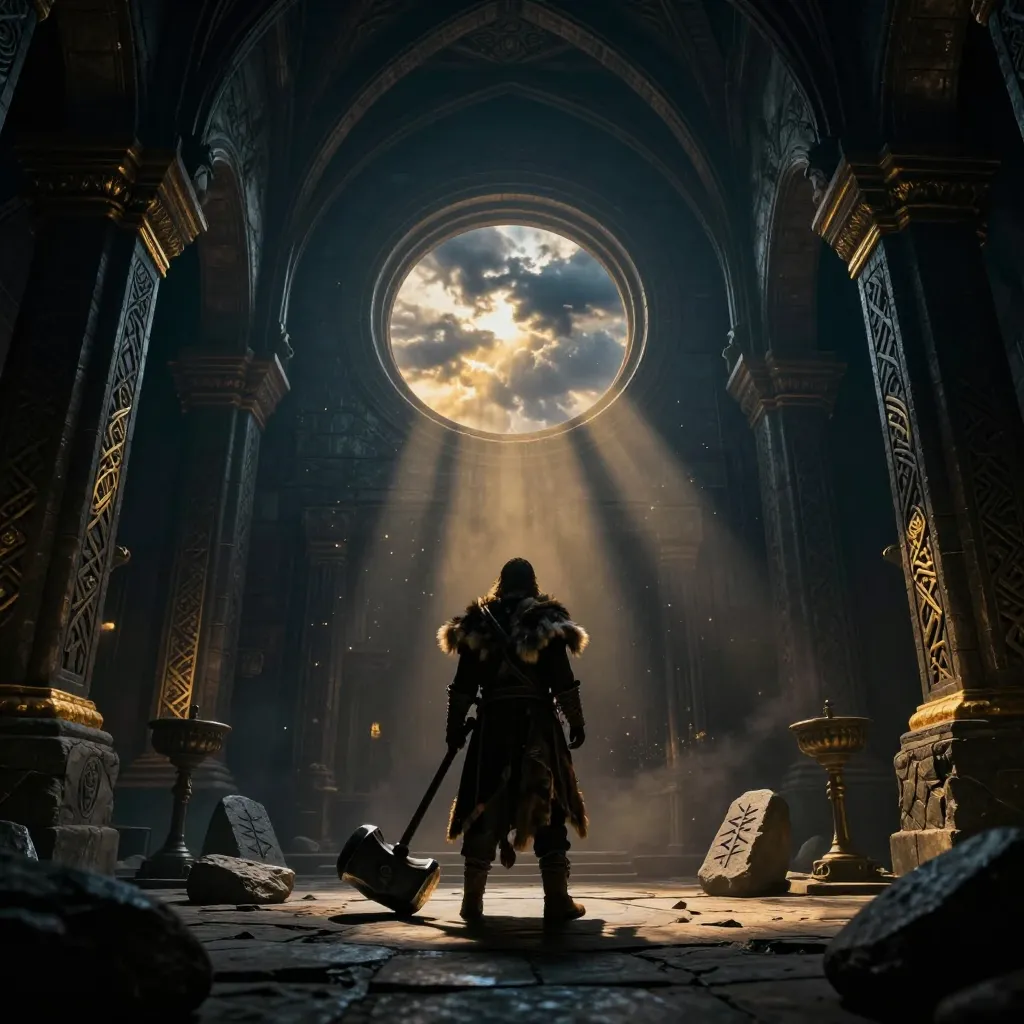
The Aesir Gods: Norse Mythology's Divine Architects
The Aesir are the primary gods in Norse mythology, responsible for upholding the structure of the universe. They reside in Asgard, a celestial stronghold, and their stories revolve around their constant battle against giants and the prophecy of Ragnarok. This article delves into their origins, key deities, and the inevitable twilight of the gods.
The Cosmic Pillars: Unraveling the Aesir of Norse Mythology
Within the vast, shadowed tapestry of Norse cosmology, the Aesir stand as the primary architects of cosmic order. These divine beings, whose name resonates with echoes of "pole" or "vitality" in ancient tongues, were not merely worshipped figures but the very sinews holding reality together, forever locked in a primal struggle against the forces of chaos and annihilation. Their dominion, Asgard, perched atop the World-Tree Yggdrasil, represented the zenith of celestial power, a bastion against the encroaching dark.
Origins and Essence: The Powers That Bind
The Aesir derive their name from Proto-Germanic roots, hinting at their fundamental nature. Whether stemming from ansaz ("pole, beam") or ansuz ("life, vitality"), their essence was intrinsically linked to the structure and life-force of the universe itself. They were perceived as the cosmic architects, the divine powers actively maintaining the fragile fabric of existence against the relentless pressure of giants and the primal void, Ginnungagap, from which all things emerged. Their constant vigilance prevented the cosmos from collapsing back into formless chaos.
Asgard: The Celestial Stronghold
The Aesir dwelled in Asgard, one of the Nine Worlds nestled in the highest, most luminous boughs of Yggdrasil. This realm was not merely a home but a fortress of divine power, shimmering with an otherworldly light. Its golden halls, traversed by bridges like the radiant Bifröst, served as the administrative and dwelling center for the gods. From this celestial vantage point, they observed the realms below and plotted their eternal defense against existential threats.
The Allfather and His Divine Court
At the apex of the Aesir hierarchy sat Odin, the Allfather. The complex god of wisdom, war, magic, and poetry, Odin was the chief strategist and seeker of knowledge, constantly scheming to preserve the gods' dominion. Around him gathered a pantheon of formidable deities:
- Thor: The mighty thunder god, embodiment of raw strength and protector of humanity. His hammer, Mjolnir, was the ultimate symbol of divine force, wielded to smite giants and uphold cosmic order.
- Frigg: Queen of the Aesir, goddess of foresight, marriage, and motherhood. Her wisdom, often veiled in mystery, complemented Odin's more overt strategies.
- Tyr: The god of law, justice, and heroic glory. Renowned for his courage, he sacrificed his hand to bind the monstrous wolf Fenrir, a testament to his commitment to cosmic balance.
- Loki: The complex trickster god. While a blood-brother to the Aesir, his unpredictable nature and chaotic actions often pushed the boundaries of divine order, driving the narrative towards the inevitable Ragnarok.
- Baldur: The beloved god of light, purity, and innocence. His tragic death, orchestrated by Loki's treachery, became a pivotal prophecy of doom.
- Heimdall: The vigilant guardian of Bifröst, whose senses were so keen he could hear grass grow and see across the nine worlds. His watchfulness was crucial for Asgard's defense.
- Idun: The keeper of the golden apples of eternal youth, her vital role ensured the gods' continued vitality and resistance to time's decay.
- Bragi: The god of poetry, eloquence, and inspiration, whose words held the power to shape narratives and preserve the memory of the gods and heroes.
The Eternal Struggle: Order Against Chaos
The Aesir's primary function was the perpetuation of cosmic order. They stood as the primary counterweight to the giants (Jotnar), primordial beings representing the destructive, chaotic forces of nature – mountains, oceans, and raw wilderness. The giants constantly sought to disrupt the established order, either through direct assault or by undermining the gods' power. This constant tension fueled countless myths, from Thor's battles to Loki's schemes, all reflecting the precarious balance between creation and destruction.
Ragnarok: The Inevitable Twilight
Despite their power, Norse mythology offers no ultimate victory. The Aesir are fated to fall. Ragnarok, the final destiny, is prophesied as the twilight of the gods, where cosmic forces clash in a cataclysmic battle. The giants, unleashed, will succeed in their millennia-long quest, dragging the cosmos back into the primordial chaos of Ginnungagap. Even the mighty Aesir, the very pillars of existence, cannot escape this fate, their struggles ultimately serving to delay rather than prevent the inevitable end. Their tales are thus narratives of desperate courage against an uncaring universe.