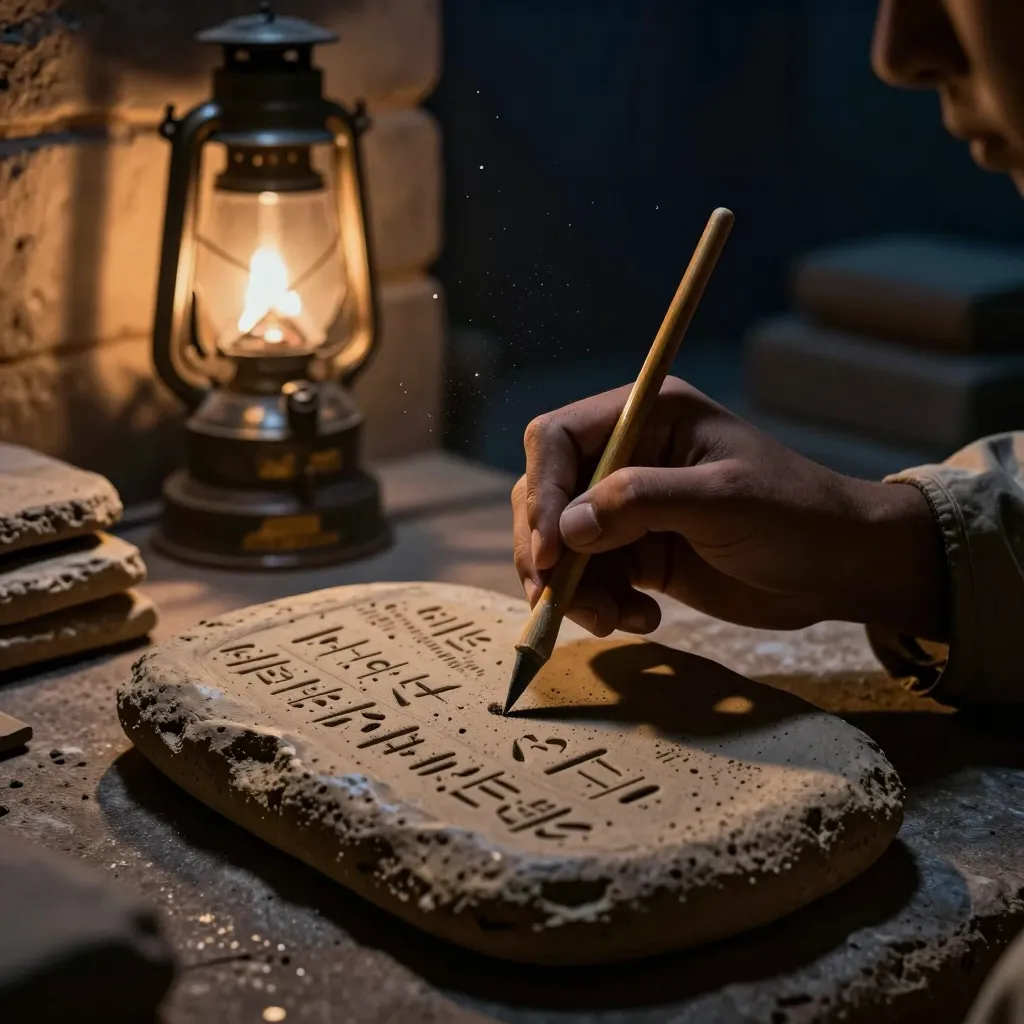
The Sumerian Poem Schooldays: A Dark Look at Ancient Scribal Life
Explore the harsh, punitive world of Sumerian scribal training. This analysis of the 'Schooldays' poem reveals a dark history of corporal punishment and the intense pressure faced by students in the cradle of civilization.
The Dark History of the Spanish Inquisition
Power, Fear, and the Persecution of Dissent
Introduction
The Spanish Inquisition stands as one of the most notorious episodes in the annals of Western religious history. Instituted in 1478 by the Catholic Monarchs Ferdinand II of Aragon and Isabella I of Castile, it was originally conceived as a means to maintain Catholic orthodoxy in the newly unified Spain. Over the centuries, the Inquisition evolved from a domestic tribunal into a sprawling network of tribunals that interrogated, tried, and punished individuals accused of heresy, blasphemy, and other offenses against the faith. Its legacy endures not only in historical scholarship but also in the realm of myth and popular imagination, where it is often portrayed as an era of unbridled cruelty and darkness.
Origins: The Quest for Religious Uniformity
The roots of the Spanish Inquisition lie in the political and religious climate of late‑15th‑century Spain. After centuries of Reconquista—the Christian reconquest of the Iberian Peninsula—Ferdinand and Isabella sought to consolidate their power by forging a unified nation. Central to this vision was the creation of a homogenous Catholic identity. The papacy granted the monarchs the authority to appoint inquisitors, effectively placing the Inquisition under royal, rather than purely ecclesiastical, control. This unique arrangement gave the Crown a powerful instrument to eradicate dissent and to cement its legitimacy in the eyes of both the Church and the populace.
Key Motivations
- Political consolidation: By eliminating religious minorities that could challenge royal authority, the monarchs aimed to strengthen the central government.
- Social control: The promise of eternal salvation tied to Catholic orthodoxy provided a moral framework for maintaining order.
- Economic considerations: The confiscation of property from convicted heretics filled royal coffers, offering a tangible incentive for prosecutions.
Structure and Procedure
The Holy Office of the Inquisition, commonly referred to as the Inquisición, operated through a hierarchical system of tribunals. At its apex was the Consejo de la Suprema y General Inquisición (Supreme Council), which issued directives and oversaw the appointment of provincial inquisitors. Provincial tribunals were established in major cities such as Seville, Toledo, Valencia, and later in the Americas.
The Inquisitorial Process
- Denunciation: Any member of the community could report suspected heresy to the Inquisition. Anonymous accusations were permitted, which often fostered an atmosphere of suspicion.
- Investigation: Upon receiving a complaint, the inquisitor would open a case, compile evidence, and summon the accused for questioning.
- Trial: The accused was allowed to see the charges, though the identities of witnesses were frequently withheld to protect them from retaliation.
- Verdict: If found guilty, sentences ranged from public penance (including wearing a sanbenito—a distinctive garment) to imprisonment, exile, or execution.
- Auto‑da‑fé: The public ceremony of sentencing, often held in a cathedral or town square, combined religious proclamation with the enforcement of penalties.
Notable Figures and Groups
| Figure / Group | Role | Significance |
|---|---|---|
| Tomás de Torquemada | Grand Inquisitor (1483–1498) | Instrumental in shaping the Inquisition’s early procedures; oversaw the expulsion of Jews. |
| Ferdinand and Isabella | Monarchs | Established the Inquisition as a royal tool for nation‑building. |
| Conversos (Jews who had converted to Christianity) | Target of suspicion | Accused of secretly practicing Judaism; subject to “limpieza de sangre” (blood purity) statutes. |
| Moriscos (Muslims forced to convert) | Persecuted minority | Targeted for alleged crypto‑Islamic practices. |
| Protestants (16th‑century) | Heretical group | Prosecuted during the “Nueva Planta” reforms. |
Scale of Persecution
While exact figures remain a matter of scholarly debate, historical records indicate that the Spanish Inquisition conducted tens of thousands of trials over its nearly four‑century existence. Conservative estimates suggest that the total number of executions may have reached a few thousand; more liberal calculations place the figure as high as 30,000. The majority of cases, however, resulted in fines, imprisonment, or mandatory penances rather than capital punishment.
| Period | Approximate Number of Trials | Notable Events |
|---|---|---|
| 1480‑1500 | ~2,000 | Early “Converso” trials; expulsion of Jews (1492). |
| 1500‑1550 | ~5,000 | Expansion to the Americas; intensified Morisco persecutions. |
| 1550‑1600 | ~8,000 | Suppression of Protestant cells; peak of auto‑da‑fé ceremonies. |
| 1700‑1800 | ~6,000 | Decline in intensity; gradual legal reforms. |
| 1800‑1834 | ~1,500 | Final dissolution under liberal governments. |
Causes of the Inquisition’s Longevity
Several factors contributed to the institution’s persistence:
- Royal patronage: Continuous support from the Crown ensured the Inquisition’s operational resources.
- Social stigma: The limpieza de sangre statutes created a permanent underclass of “impure” individuals, fostering ongoing suspicion.
- Religious orthodoxy: The Church’s doctrine of exclusive salvation reinforced the necessity of doctrinal conformity.
- Decentralized structure: Provincial tribunals could adapt to local conditions, making the system resilient to reform.
Myths versus Reality
Popular culture often portrays the Spanish Inquisition as a monolithic engine of terror, responsible for indiscriminate mass executions. While brutality was certainly present, historical analysis reveals a more nuanced picture:
- Procedural constraints: Although torture was employed, it was legally limited and required the presence of a physician.
- Regional variation: Some provinces, such as Catalonia, exhibited comparatively lenient practices, whereas others, like Andalusia, were far more severe.
- Decline and reform: By the late 18th century, many tribunals had shifted toward administrative penalties rather than capital punishments, reflecting changing attitudes toward justice.
Understanding these distinctions is essential for grasping the complex legacy of the Inquisition beyond its sensationalized reputation.
Lasting Impact
The Spanish Inquisition left indelible marks on the cultural, religious, and scientific trajectory of Spain and its former colonies:
- Religious homogeneity: The forced conversion and expulsion of Jewish and Muslim populations contributed to a largely Catholic national identity.
- Scientific stagnation: The suppression of dissenting ideas limited intellectual discourse, contributing to a relative decline in scientific innovation during the Enlightenment.
- Diaspora: The persecution drove thousands to seek refuge in North Africa, the Ottoman Empire, and the New World, influencing global demographics and cultural exchanges.
- Legal precedents: The Inquisition’s procedural innovations, such as the use of written testimony and the principle of “innocent until proven guilty” in certain contexts, influenced later legal reforms.
Conclusion
The Spanish Inquisition remains a potent symbol of the dangers inherent in the fusion of religious authority and state power. Its history illustrates how fear, political ambition, and the desire for social cohesion can coalesce into a system of oppression that endures for centuries. While modern scholarship continues to untangle the myths from the realities, the Inquisition’s legacy serves as a cautionary reminder of the fragility of tolerance and the enduring human capacity for both cruelty and resilience.