The Sumerian Genesis: Ancient Tablets and the Haunting Origin of Humanity
Buried in the ruins of Nippur, ancient cuneiform tablets describe a chilling origin: humanity was crafted from a slaughtered god's blood to relieve divine labor. Explore the eerie parallels to Genesis and the haunting truth of our supposed purpose as celestial servants.
The Sumerian Genesis: Where Gods and Mortals First Met
The Cradle That Predates All Others
Long before the pyramids of Giza pierced the horizon, before the Oracle of Delphi whispered its prophecies, and before the first stone of Jerusalem was laid, there existed a civilization so ancient that it seemed to emerge from the very dust of creation itself. In the marshy flatlands between the Tigris and Euphrates rivers—modern-day Iraq—a people called the Sumerians established what many scholars consider humanity's first true civilization. Around 4500 BC, they built cities of mud brick, developed a written language of wedge-shaped cuneiform, and constructed a religious framework so intricate that it would echo through millennia of human storytelling.
What makes the Sumerian account of creation particularly haunting is not merely its age, but its unsettling familiarity. Here, in tablets buried beneath the ruins of Nippur—an ancient city founded around 5000 BC—we find a narrative that predates the biblical Genesis by thousands of years, yet contains echoes that reverberate through the sacred texts of Judaism, Christianity, and Islam. It is a story of divine labor, of gods who toiled, of rebellion in the heavens, and of humanity born from blood and clay to serve purposes not entirely our own.
The Tablet of Nippur: Unearthing the Primordial Text
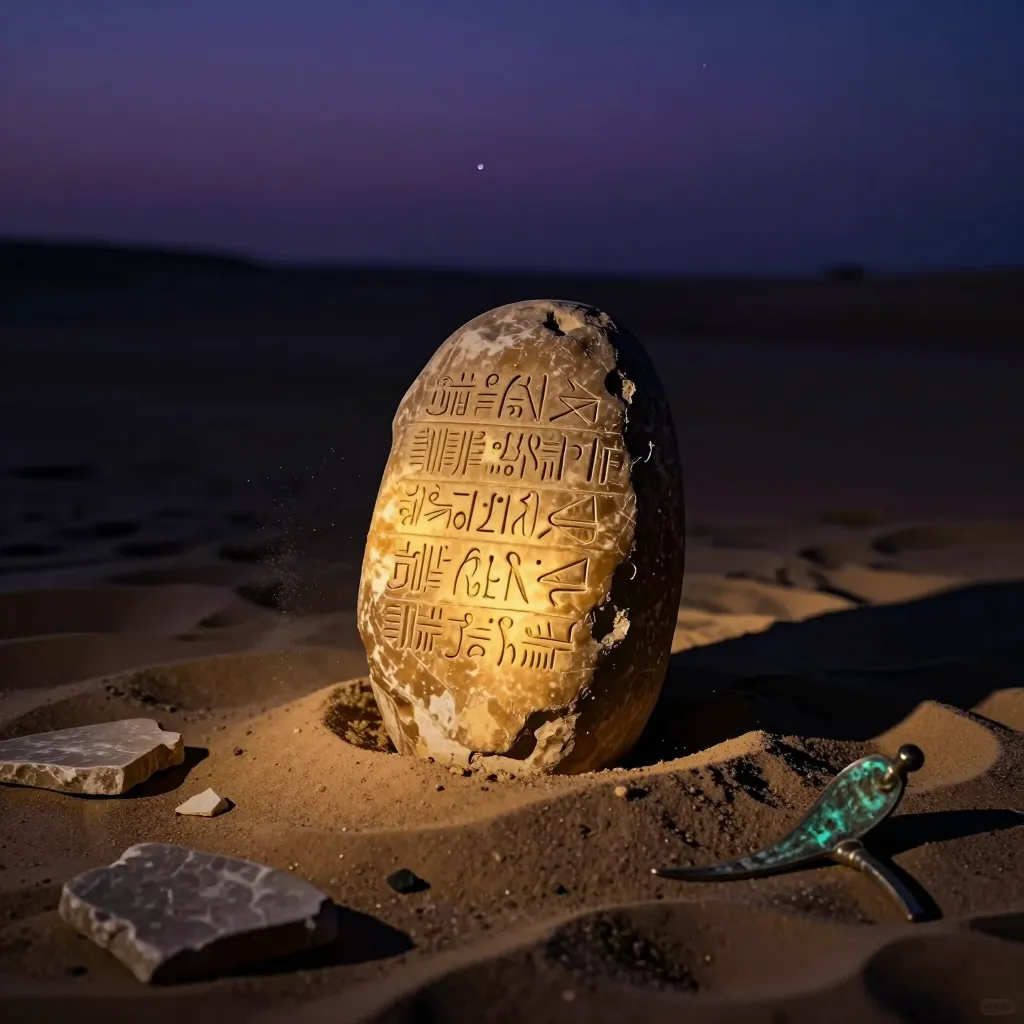
The Sumerian creation myth survives primarily on a tablet discovered in Nippur, one of Mesopotamia's most sacred cities. Unlike the polished literary works that would follow—the Babylonian Enuma Elish, for instance—these earliest tablets possess a raw, almost feverish quality. They speak of a time before time, when the universe existed only as undifferentiated water:
When in the height heaven was not named, And the earth beneath did not yet bear a name, And the primeval Apsu, who begat them, And chaos, Tiamut, the mother of them both— Their waters were mingled together, And no field was formed, no marsh was to be seen; When of the gods none had been called into being, And none bore a name, and no destinies were ordained; Then were created the gods in the midst of heaven...
In this primordial soup of fresh water (Apsu) and salt water (Tiamat, here rendered "Tiamut"), the first divine beings stirred into existence. The cosmos was not created from nothing—ex nihilo—but rather organized from pre-existing chaos. This concept alone separates the Mesopotamian worldview from many later theological traditions. Creation here is an act of ordering, of drawing boundaries, of making distinctions where none existed before.
The text continues to describe a cosmic labor that would prove unsustainable. The younger gods, born into this newly ordered universe, found themselves burdened with the relentless work of maintaining creation. Their complaint is recorded with striking emotional immediacy:
When the gods like men Bore the work and suffered the toll— The toil of the gods was great, The work was heavy, the distress was much.
It is difficult to overstate how revolutionary this concept was. In most ancient mythologies, gods are effortlessly powerful, existing beyond mortal constraints. The Sumerian gods, by contrast, suffer. They labor. They rebel against exploitative conditions. In this divine workforce's unrest, we perhaps see the first recorded whisper of class consciousness—a metaphysical labor movement that would reshape the cosmos.
The Making of Man: Blood, Clay, and Divine Slaughter
The solution to this celestial labor dispute came from Enki (also known as Ea), the god of wisdom and the subterranean waters. Son of Anu, the supreme deity, Enki proposed a creation that would forever alter the balance between heaven and earth: humanity, fashioned to bear the gods' burden.
The method of our creation, as recorded in the tablets, is at once visceral and deeply unsettling. A god was slaughtered—his identity remains ambiguous in the earliest versions, adding a layer of mystery to the act—and his flesh and blood were mixed with clay. From this composite material, the first human being was shaped:
You have slaughtered a god together With his personality I have removed your heavy work I have imposed your toil on man. ...In the clay, god and man Shall be bound, To a unity brought together; So that to the end of days The Flesh and the Soul Which in a god have ripened— That soul in a blood-kinship be bound.
Consider the implications: humanity carries divine blood in our veins, yet we were created specifically for servitude. We are kin to the gods through the murdered deity's essence, yet our purpose is to relieve divine suffering through our own. This is not a creation myth of benevolent design or loving craftsmanship. It is a myth of necessity, of divine self-interest, of a cosmic economy where life is created because labor is required.
The location of this first creation is equally evocative. The Sumerians called it Eden—a word meaning "flat terrain" in their language. In the Epic of Gilgamesh, Eden appears as the garden of the gods, situated between the Tigris and Euphrates rivers. The geographical specificity is striking: this is not a mythical elsewhere but a real place, mapped onto the known world, where the boundary between divine and mortal realms was once permeable.
Adapa: The First Man and the Stolen Immortality
The first fully functional human, according to these texts, was named Adapa. Initially, human beings could not reproduce independently—a limitation that suggests our earliest form was incomplete, perhaps more golem than person. Only through further divine intervention, attributed to Enki and his half-sister Ninki, were humans modified into self-sustaining beings.
This modification occurred without the consent of Enlil, Enki's brother and a more austere, authoritarian deity. Enlil became, in essence, the adversary of humanity—a divine figure who viewed mortals with suspicion and hostility. The tablets record that under Enlil's influence, "men served gods and went through much hardship and suffering." Here we find the Sumerian explanation for human misery: not a single fall from grace, but an ongoing divine conflict in which humanity serves as collateral damage.
Adapa's story contains one of mythology's most poignant near-misses. Through Enki's patronage, he was granted extraordinary wisdom and knowledge—perhaps too much, for the gods guard their prerogatives jealously. Adapa ascended to the heavens to stand before Anu himself, where he was offered the "bread and water of life." These were no mere refreshments; they were the sustenance of immortality, the divine food that would have transformed Adapa from mortal servant into eternal being.
He refused.
Whether through misunderstanding, excessive caution, or the trickery of other gods, Adapa declined the offer. Humanity's chance at immortality—our one opportunity to transcend the servitude for which we were created—slipped through our fingers. We remained mortal, bound to toil, carrying divine blood but denied divine longevity.
Echoes Across Millennia: The Sumerian Shadow on Biblical Genesis
The parallels between the Sumerian creation narrative and the biblical account of Adam and Eve have fascinated and troubled scholars for generations. Both feature a first human created from earth. Both place this creation in a garden called Eden, located between rivers. Both involve a tree or food source related to immortality. Both describe a serpentine figure associated with wisdom. And both end with humanity denied eternal life, cast into a world of labor and mortality.
Yet the differences are equally illuminating. In Genesis, Adam and Eve are created in God's image and given dominion over creation; their fall is a tragedy of disobedience. In the Sumerian account, humans are created explicitly for labor; our "fall" is not a moral failure but a structural one—we were made to serve, and our limitations are features of our design. The biblical serpent tempts humanity toward forbidden knowledge; the Sumerian narrative offers no such clear moral architecture. Instead, we find a cosmos governed by divine politics, where humanity's fate depends on which god favors or opposes us.
Some scholars argue these parallels demonstrate the Bible's direct borrowing from Mesopotamian sources. Others suggest both traditions emerge from a shared cultural wellspring in the ancient Near East. Either interpretation underscores a haunting possibility: the stories we tell about our origins may be far older, far stranger, and far more politically charged than we imagine.
The Weight of Ancient Clay
The Sumerian creation tablets, now scattered across museums and archaeological archives, continue to exert their strange power. They remind us that the questions we consider most fundamental—Why are we here? Why must we die? Why do we suffer?—are not uniquely modern or uniquely biblical. They were asked, and answered, by people who lived six thousand years ago in cities now reduced to mounds of earth.
There is something profoundly uncanny about reading these texts. The cuneiform wedges pressed into wet clay by anonymous scribes in Nippur speak across an almost unimaginable gulf of time, describing a creation that is simultaneously familiar and alien. We recognize the garden, the first man, the lost immortality. But we struggle to reconcile these elements with a worldview where gods are overworked bureaucrats, where creation requires divine sacrifice, and where humanity's purpose is not worship but labor.
The Sumerians called their homeland Ki-en-gir—"Land of the Civilized Lords" or "Land of the Civilized Kings." In their own estimation, they were the first to cross the threshold from primal chaos into ordered existence. Their creation myth reflects this self-conception: civilization itself, with all its hierarchies and labors, mirrors the cosmic order established by the gods. To be civilized was to accept one's place in a divine workforce, to recognize that the gods too had their burdens, and to understand that the boundary between mortal and divine was drawn in blood and clay.
Today, as we continue to unearth and decipher these ancient tablets, we are left with a creation story that offers no comfort of divine love, no promise of redemption, and no clear moral framework. Instead, it presents a universe where existence itself is labor, where immortality is a meal refused, and where the gods who made us were themselves weary workers seeking relief. It is, perhaps, the most honest creation myth ever written—one that acknowledges the toil at the heart of being, and the strange, half-divine nature of the creatures who must bear it.