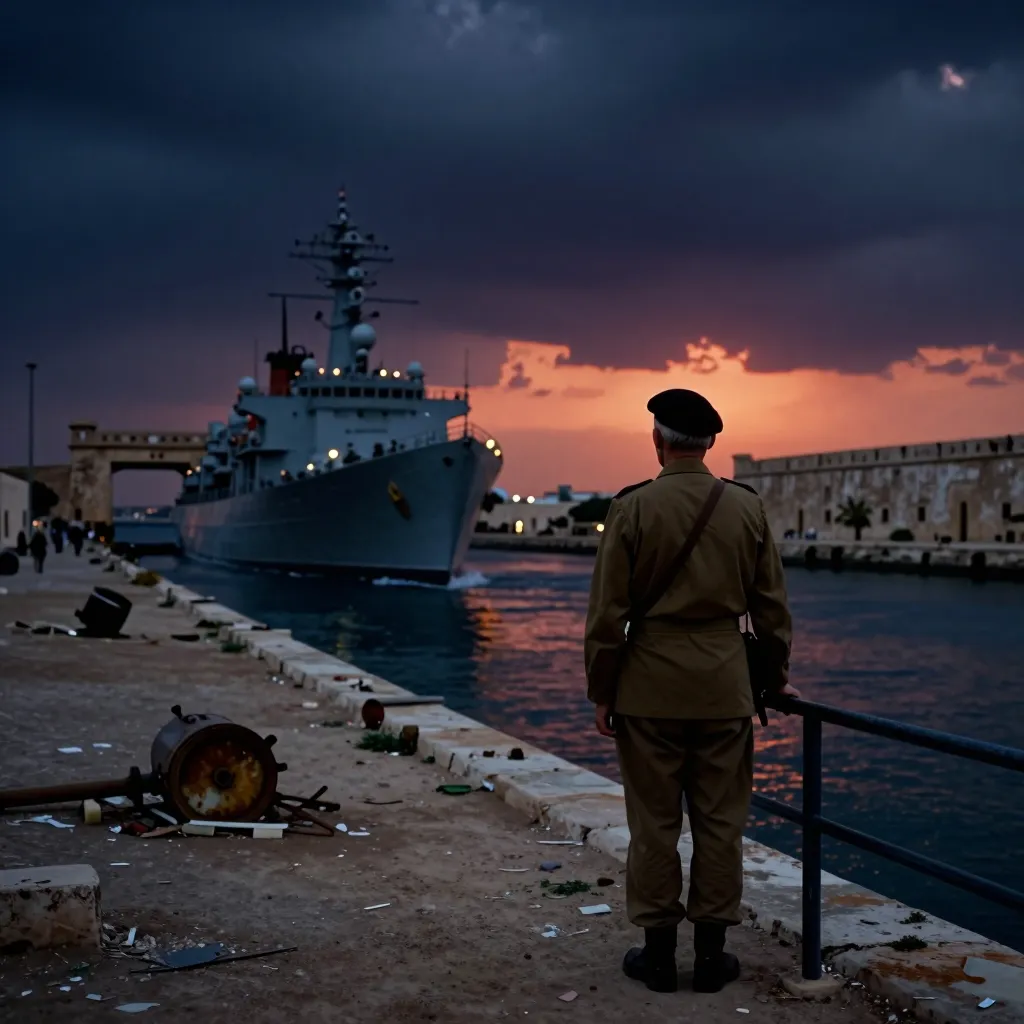
The Suez Myth: Britain’s 75-Year Struggle for the Empire’s Lifeline
From its birth as an industrial triumph to the 1956 crisis, uncover the history of the Suez Canal. This deep dive reveals how a 100-mile waterway fueled the myth of British global hegemony before ultimately shattering the colonial world order.
The Suez Artery: Strategic Greed and the Shadow of Empire
The Suez Canal is more than a feat of engineering; it is a scar across the Egyptian desert that, for nearly a century, dictated the rise and fall of global powers. Connecting the Mediterranean to the Red Sea, this 100-mile waterway became a "windpipe" for the British Empire, a source of immense wealth, and ultimately, the site of a diplomatic haunting that signaled the end of the colonial era.
The Birth of the Shortcut
For millennia, the dream of joining the two seas occupied the minds of ancient rulers, but it wasn’t until the 19th century that technology met ambition. Before a permanent canal existed, the British utilized a grueling overland route across the Isthmus of Suez, employing camels and riverboats to shave weeks off the journey to India.
In 1859, under the supervision of French engineer Ferdinand de Lesseps, the Compagnie Universelle du Canal Maritime de Suez began excavation. Despite British skepticism and fears that a rival power might control the route, the canal was completed in 1869. It was a triumph of the industrial age, perfectly timed for the rise of steamships which, unlike sailing vessels, could easily navigate the Red Sea's difficult conditions.
Imperial Seizure and the Protectorate
British interest shifted from suspicion to obsession as the canal’s strategic value became undeniable. By 1882, citing Egypt’s internal instability and mounting debts, Britain launched a naval bombardment of Alexandria and a land invasion to secure the waterway. While the British government initially claimed the occupation was temporary, they stayed for 75 years, ruling Egypt as a protectorate in all but name.
To the British, the canal was the "lifeline of the Empire". By 1910, over 16 million tons of shipping passed through it annually, and by the 1930s, two-thirds of all canal traffic was British. Even after Egypt was granted nominal independence in 1922, Britain clung to the Canal Zone, maintaining a massive military garrison of roughly 38,000 personnel to safeguard its trade and oil interests.
The 1956 Suez Crisis: A Dying Empire's Last Stand
The tension between British imperial interests and Egyptian nationalism reached a breaking point in the mid-20th century. In 1956, the nationalist leader Gamal Abdel Nasser nationalized the Suez Canal Company, ousting the Western powers that had controlled it for decades. Nasser’s move was a direct challenge to the old world order.
In a clandestine agreement known as Operation Musketeer, Britain, France, and Israel launched a coordinated military strike. While they successfully captured parts of the canal, the geopolitical landscape had shifted. The intervention was met with fierce condemnation from both the United Nations and the United States.
The Consequences of the Crisis
* Military Withdrawal: Under intense international pressure and a looming economic crisis, British and French forces were forced into a humiliating withdrawal in December 1956.
* Political Fallout: The crisis destroyed the reputation of British Prime Minister Anthony Eden, leading to his resignation in early 1957.
* The End of an Era: The event served as a stark realization that Britain could no longer act as a global hegemon without the support of the United States.
The Suez Canal remains a vital artery of global commerce, but its history is a dark chronicle of how a strip of water can become the center of a world-shattering conflict, marking the definitive transition from the age of empires to the modern era of sovereign states.