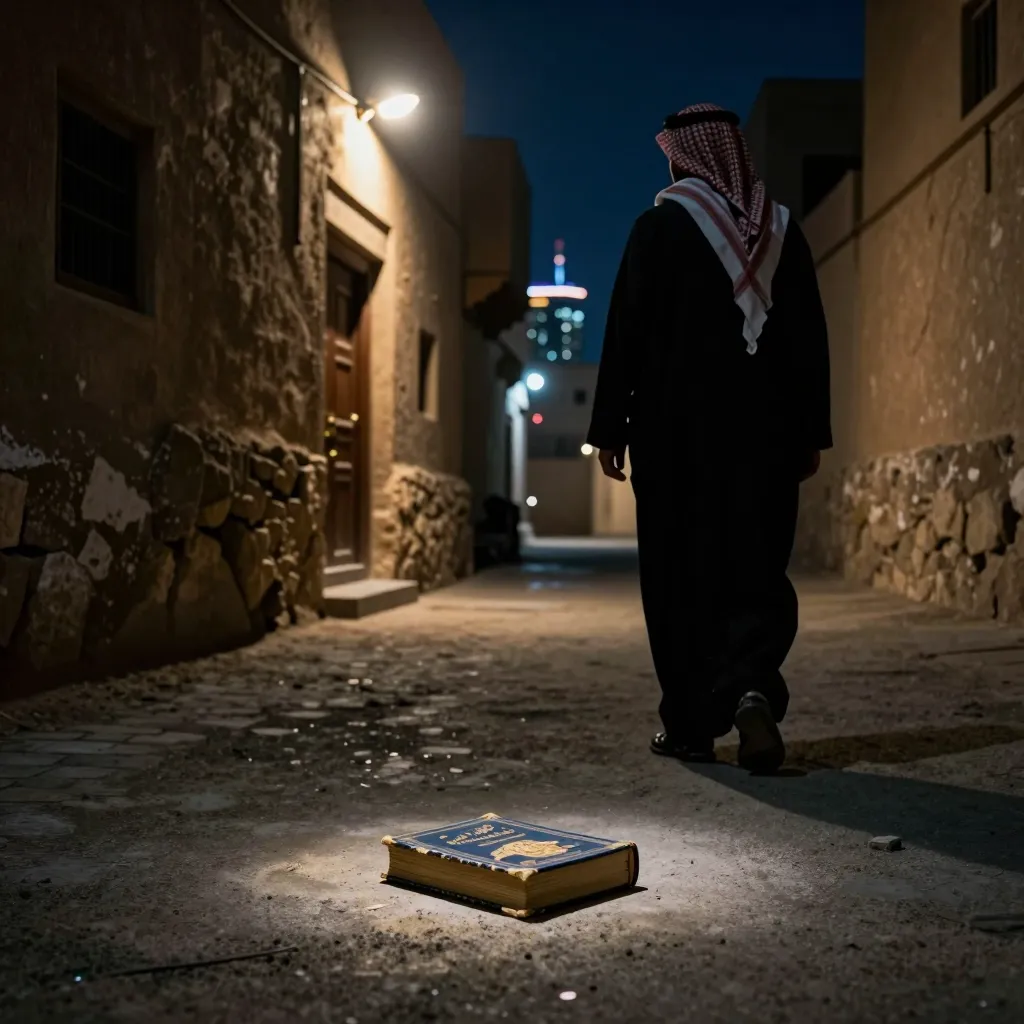
The Shadowed Streets of Riyadh: A Guide to Saudi Arabian Crime Fiction
Delve into the compelling world of Saudi-set noir, where investigators navigate religious law and social taboos to solve murders. From Mecca's sacred alleys to Riyadh's high-security compounds, discover how authors use mystery to explore justice, gender, and power in the Kingdom.
The Shadowed Streets of Riyadh: Crime Fiction in the Kingdom of Saudi Arabia
Saudi Arabia occupies a singular place in the global imagination—a land of vast desert expanses, immense oil wealth, ancient Islamic heritage, and a society governed by some of the world's most rigid social codes. For crime writers, this tension between modernity and tradition, openness and secrecy, creates a uniquely compelling backdrop. The kingdom's labyrinthine bureaucracy, strict gender segregation, and the ever-present weight of religious law provide fertile ground for narratives of murder, disappearance, and moral ambiguity.
The Veiled City: Zoë Ferraris's Riyadh Trilogy
American author Zoë Ferraris spent years living in Jeddah, and her intimate knowledge of Saudi society produced one of the most significant bodies of crime fiction set in the kingdom. Her trilogy introduces readers to an unlikely investigative partnership: Katya Hijazi, a forensic lab worker at the Riyadh coroner's office, and Nayir al-Sharqi, a Palestinian desert guide whose knowledge of the Empty Quarter proves unexpectedly useful in urban investigations.
The series opens with Find Nouf (2008), in which the disappearance of a young Saudi woman pulls Katya and Nayir into a case that exposes the hidden fractures beneath the kingdom's polished surface. City of Veils (2010) deepens the world, bringing in Detective Osama Ibrahim as the trio investigates the brutal murder of a controversial filmmaker discovered on a Jeddah beach—a death that threatens to expose the cultural fault lines running through Saudi society.
The trilogy concludes with Kingdom of Strangers (2012), perhaps the darkest entry. Detective Ibrahim's mistress vanishes, but he cannot report her disappearance without confessing to adultery, a crime punishable by death. His desperate appeal to Katya draws them into an underground network of human trafficking and the hunt for a possible serial killer operating in the shadows of the kingdom.
The Sacred and the Profane: Crime in Mecca
Mecca presents a particularly fascinating setting for crime fiction—a city of profound spiritual significance where millions gather annually for the Hajj, yet where darkness can flourish beneath the surface of devotion. Raja'a Alem's The Dove's Necklace (2016) exemplifies this duality. When a young woman's naked body is discovered in the Lane of Many Heads, an alley in contemporary Mecca, no one claims her—shame overriding grief. Detective Nasser's investigation becomes a mirror reflecting the city's contradictions: a place of pilgrimage and judgment, sanctity and secrecy.
The novel's setting in Islam's holiest city adds layers of complexity unavailable in conventional crime fiction. Every investigation must navigate not only legal procedures but religious sensitivities, not only social hierarchies but spiritual hierarchies. Alem, the first woman to win the International Prize for Arabic Fiction, brings an insider's understanding of Mecca's unique social ecosystem.
The Hajj itself becomes a setting for mystery in Bothayna Al-Essa's Lost in Mecca (2024). A seven-year-old Kuwaiti boy disappears during the pilgrimage, his disappearance swallowed by the vast crowds and the labyrinthine streets of a city transformed by millions of temporary residents. The novel captures the particular horror of a disappearance in a place where everyone is a stranger, where identity is temporarily suspended, and where the machinery of investigation must compete with the rhythms of ancient ritual.
The Expatriate Lens: Outsiders Looking In
For Western writers, Saudi Arabia's restrictions on foreign access and the profound cultural differences experienced by expatriates create a natural atmosphere of alienation and unease. Hilary Mantel's Eight Months on Ghazzah Street (1988) remains the most psychologically acute exploration of this experience. Drawing on her own years living in Jeddah, Mantel crafts a slow-burning thriller about Frances Shore, a cartographer who accompanies her engineer husband to Riyadh and finds herself trapped in a high-security residential compound.
The novel captures the particular claustrophobia of expatriate life in the kingdom: the compound's artificial community, the surveillance of Saudi authorities, the restrictions on women's movement, and the growing suspicion that violence lurks behind the compound's walls. Mantel understood that in a society where so much is hidden, the imagination fills the gaps with darker possibilities than reality might provide.
Danuta Reah's Strangers (2011) approaches the kingdom from a different angle. British expatriate Joe Massey witnesses the execution of his friend Haroun, an act that propels him back to London but cannot sever his connection to the kingdom. When he returns to Riyadh to fulfill a promise and investigate Haroun's death, he enters a world where the rules of Western investigation do not apply, where guilt and innocence are measured by different standards, and where the expatriate's privileged insulation can vanish without warning.
Historical Shadows: The Abbasid Period
Not all Saudi-set crime fiction confines itself to the contemporary kingdom. Djamila Morani's The Djinn's Apple (2024) reaches back to the Abbasid period (750–1258 CE), a golden age of Islamic civilization that encompassed much of modern Saudi territory. When Nardeen's family is murdered by men searching their home, she alone escapes, launching a quest for justice that carries her through the political and social complexities of the medieval Islamic world.
The historical setting allows Morani—an Algerian professor specializing in the Abbasid period—to explore themes of justice, gender, and power without the constraints of contemporary Saudi politics. Yet the novel resonates with modern concerns: the vulnerability of women in patriarchal societies, the corruption of power, and the cost of seeking truth in systems designed to suppress it.
Geopolitical Thrillers: The Kingdom on the World Stage
Saudi Arabia's position at the intersection of oil, Islam, and global politics has inspired a distinct subgenre of geopolitical thrillers that use the kingdom as a chess piece in larger games of international intrigue. These novels often sacrifice cultural nuance for narrative momentum, but they reflect genuine anxieties about the kingdom's role in world affairs.
Bob Graham's Keys to the Kingdom (2011) weaves Saudi connections into a post-9/11 conspiracy involving a murdered senator, hidden intelligence, and the shadowy links between the Saudi establishment and extremist networks. Robert Cullen's Heirs of the Fire (1997) explores the arms trade and political manipulation, as a journalist's expose of planned missile sales to Saudi Arabia ignites a chain of violence.
George Potter's The White Bedouin (2007) returns to more traditional thriller territory, sending a young American intern into the Empty Quarter in search of a legendary nomad, only to uncover corporate corruption and the ruthless pursuit of oil wealth. The novel captures the enduring Western fascination with the Bedouin as symbols of freedom and mystery, even as it reveals the modern forces eroding their traditional world.
The Enduring Appeal
What draws crime writers repeatedly to Saudi Arabia? The answer lies in the kingdom's unique combination of elements: a society in rapid transformation yet anchored to ancient traditions, a legal system that merges modern procedure with religious law, and a culture of privacy that makes the visible world merely a facade for hidden realities.
For the true crime and mystery enthusiast, Saudi-set fiction offers something beyond conventional whodunits. These novels explore how investigation itself becomes a transgressive act in societies where knowledge is power and secrets are currency. They examine how justice functions—or fails to function—when the state claims divine authority. And they reveal how individuals navigate systems where the personal and the political, the sacred and the profane, are inextricably intertwined.
The desert remains. The ancient cities of Mecca and Medina continue their millennia of pilgrimage. And the oil flows, wealth accumulating behind walls both literal and metaphorical. In this landscape of extremes, crime fiction finds its natural home—not merely as entertainment, but as a means of exploring the shadows that persist even in the brightest sunlight, the mysteries that resist solution, and the human capacity for darkness that no social system has yet succeeded in eliminating.