The Shadow of the Guillotine: How the Reign of Terror Devoured Revolutionary France
Explore the Reign of Terror, the brutal period when revolutionary ideals curdled into state-sponsored mass murder. From the mechanical horror of the guillotine to the Law of Suspects that erased justice, discover how the pursuit of a 'greater good' descended into paranoia, purges, and the execution of thousands—including the revolutionaries themselves.
The Shadow of the Guillotine: The Reign of Terror and the Mechanics of the French Revolution
The French Revolution is often remembered through the lens of Enlightenment ideals—liberty, equality, and fraternity. However, beneath the lofty rhetoric of democratic uprising lies one of the darkest chapters in political history: the Reign of Terror. This period transformed the streets of Paris from sites of protest into corridors of execution, driven by a radical fervor that sought to purge the nation of its perceived enemies through systematic violence.
The Descent into Radicalism
By 1793, the French Revolution had moved past its initial phase of constitutional reform. The monarchy had been abolished, King Louis XVI had been executed, and the young Republic faced existential threats from foreign monarchies and internal counter-revolutionary movements. In this atmosphere of paranoia and instability, the political landscape shifted toward the most radical factions.
The Committee of Public Safety emerged as the de facto executive government. Led by figures such as Maximilien Robespierre, this body was tasked with protecting the Republic from "internal and external enemies." However, the definition of an "enemy" became dangerously elastic. Political dissent, suspicion of moderation, or even a perceived lack of revolutionary zeal could be interpreted as treason.
The Instrument of Death: The Guillotine
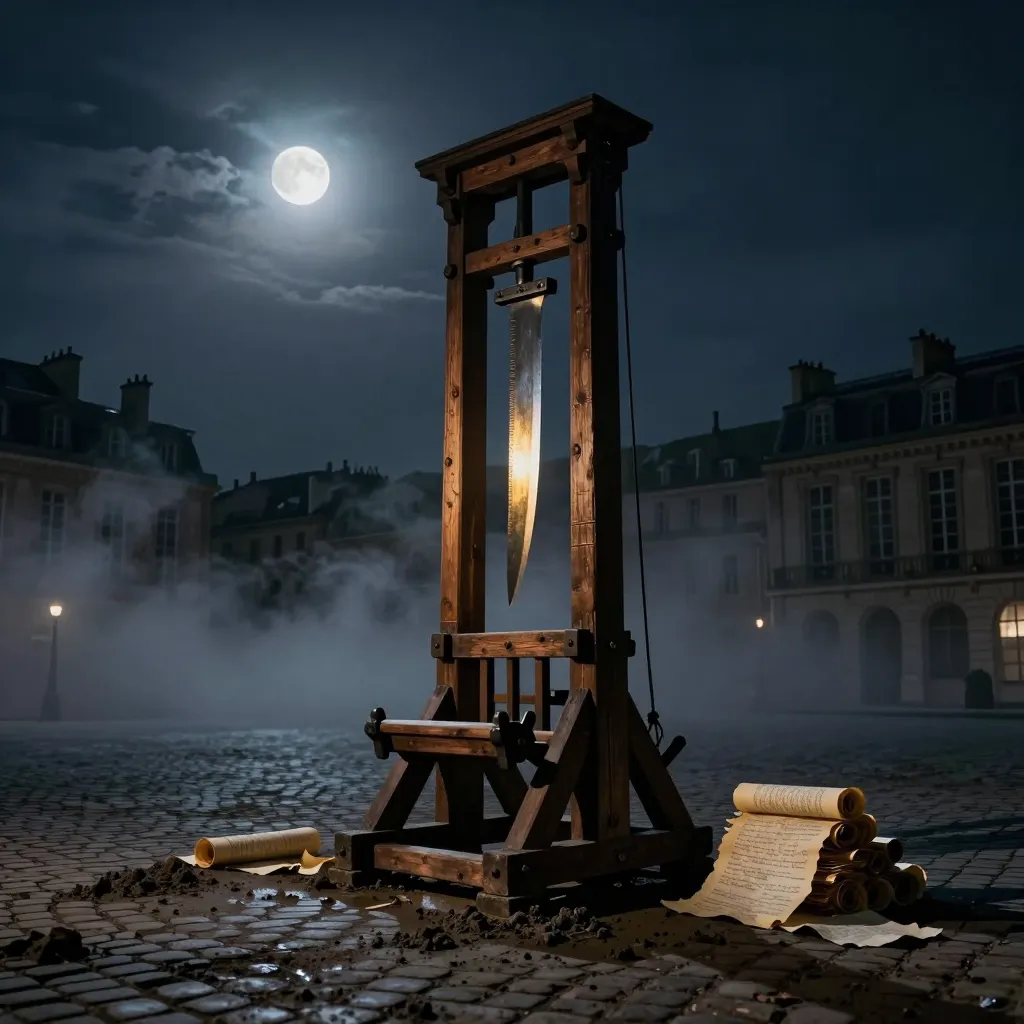
No symbol is more synonymous with this era than the guillotine. Before the Revolution, executions were often gruesome, inconsistent, and reserved for different social classes based on status. The guillotine was introduced as a "humane" and egalitarian method of execution—a mechanical device designed to ensure a swift, painless death for all citizens, regardless of their rank.
In practice, the machine became an engine of industrial-scale slaughter. The spectacle of the guillotine became a centerpiece of Parisian life, serving as both a terrifying warning to the populace and a grim ritual of the state. The efficiency of the device allowed the revolutionary government to process hundreds of victims in a single day, fueling a cycle of fear that permeated every level of society.
The Law of Suspects
The legal framework that facilitated the Terror was codified through the Law of Suspects, passed in September 1793. This decree stripped away many of the judicial protections that had previously governed the legal system. Under this law, individuals could be arrested based on their conduct, associations, or even their failure to demonstrate sufficient enthusiasm for the Revolution.
The burden of proof shifted significantly. Rather than proving a person had committed a specific crime, the state merely had to prove that the individual was "suspect." This ambiguity allowed for widespread purges. Professionals, aristocrats, clergy, and eventually even fellow revolutionaries were sent to the scaffold. The Terror eventually consumed its own architects, as the political factions within the Convention turned on one another in a desperate struggle for survival.
The Thermidorian Reaction and the Aftermath
The cycle of violence reached a breaking point in July 1794 (the month of Thermidor in the French Republican Calendar). As the executions became increasingly indiscriminate, even the most ardent supporters of the Committee began to fear for their own lives. The tension culminated in the arrest and execution of Robespierre and his closest allies.
This event, known as the Thermidorian Reaction, marked the end of the Reign of Terror. The radical fervor was replaced by a more conservative governing structure, eventually paving the way for the rise of Napoleon Bonaparte.
The legacy of the Terror remains a haunting study in the fragility of civil liberties. It serves as a historical warning of how the pursuit of a perceived "greater good" can descend into state-sponsored terror when justice is replaced by vengeance and law is superseded by ideology.