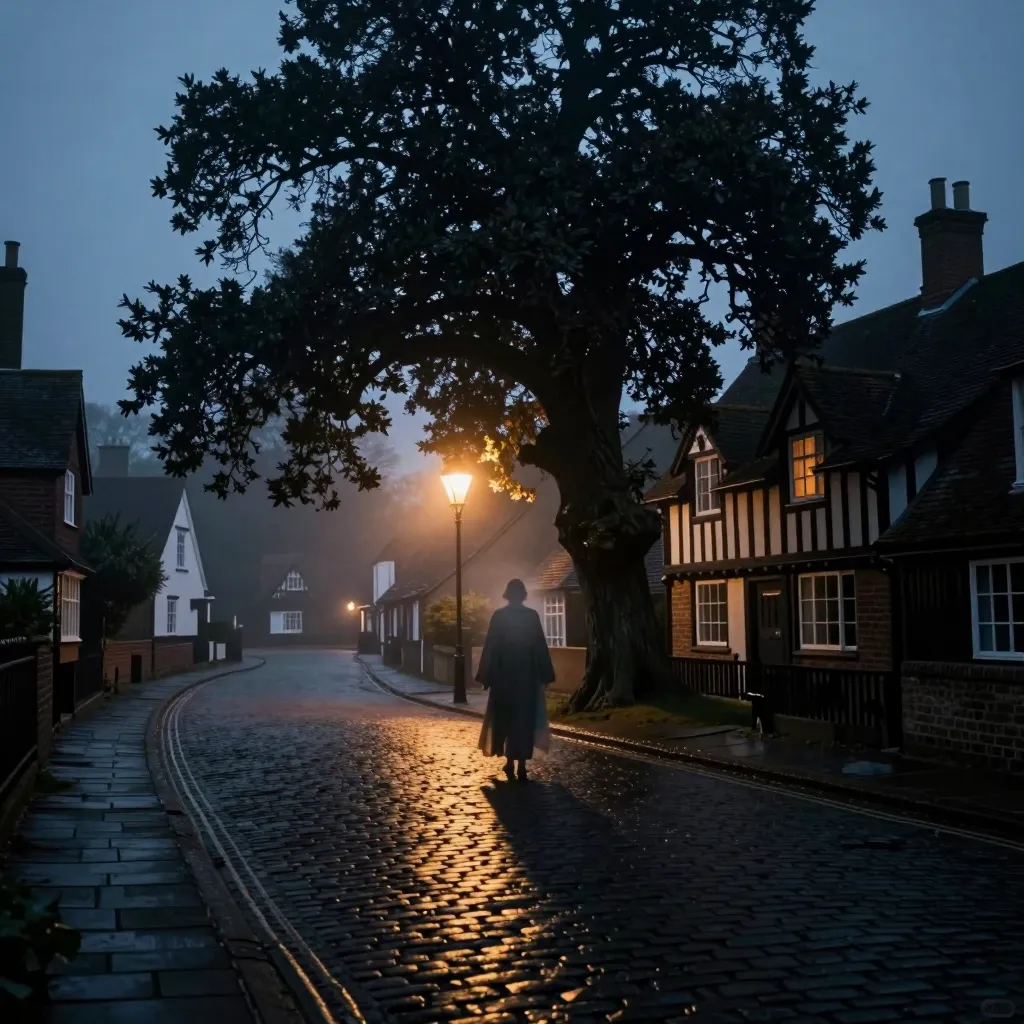
The Shadows of Pluckley: Inside Britain’s Most Haunted Village
Explore the macabre history of Pluckley, a Kentish parish officially recognized for its high density of ghosts. From the tragic Red Lady of St Nicholas Church to the terrifying Screaming Woods, learn why this village remains a focal point for paranormal research and strange phenomena.
The Shadows of Pluckley: Exploring Britain’s Most Haunted Village
Deep within the pastoral landscape of Kent, England, lies the parish of Pluckley. [cite_start]To the casual observer, it appears as a quintessential English idyll, defined by rolling green hills, traditional cottages, and an ancient stone church[cite: 2, 3]. Yet, this serene facade masks a reputation for the macabre. [cite_start]In 1989, the Guinness Book of Records officially recognized Pluckley as the most haunted village in Britain, noting a concentration of between twelve and sixteen documented apparitions[cite: 5, 41].
The Dering Lineage and the St Nicholas Specters
[cite_start]Much of Pluckley’s supernatural history is inextricably linked to the Dering family, an aristocratic bloodline that dominated the region from the 15th century[cite: 8]. [cite_start]Their ancestral seat, Surrenden Dering, was a center of political power and personal tragedy for centuries[cite: 9].
[cite_start]The most prominent spirit associated with the family is the Red Lady, believed to be a Lady Dering from the 1200s[cite: 11, 47]. [cite_start]Her apparition is frequently reported wandering the graveyard of St Nicholas Church[cite: 11]. [cite_start]According to local lore, she was buried in a lead coffin encased within seven oak caskets—a desperate attempt to keep her restless spirit from rising[cite: 12]. [cite_start]Despite these precautions, witnesses describe a sorrowful figure in crimson searching for the unmarked grave of her stillborn child[cite: 11, 13].
Within the same family legacy is the White Lady. [cite_start]This spirit is said to haunt the Dering family library, often seen gazing through arched windows into the night[cite: 13, 14]. [cite_start]Her presence is interpreted by many as a lingering echo of the high infant mortality and domestic grief that afflicted even the most privileged families of the era[cite: 15].
Violence at the Crossroads: Fright Corner
[cite_start]While the Dering ghosts represent tragic nobility, other spirits in Pluckley reflect the brutal lawlessness of 18th-century Kent[cite: 18]. [cite_start]During this period, the county was a hub for smuggling and highway robbery, where desperate men often met violent ends in clashes with authorities[cite: 18, 19].
The intersection known as Fright Corner is the site of one such historical echo. [cite_start]Legends tell of a nameless highwayman who was cornered by lawmen at this spot[cite: 20]. [cite_start]Following a desperate sword fight, he was reportedly pinned to an ancient oak tree and killed[cite: 21]. [cite_start]Modern accounts suggest the event has left a residual imprint on the landscape, with some claiming to hear the clashing of blades or seeing the shadowy reenactment of the outlaw’s final moments[cite: 22, 23].
Residual Echoes of the Working Class
[cite_start]The village's spectral inhabitants also include the "common folk" whose lives ended in sudden, often bizarre, tragedies[cite: 25].
- [cite_start]The Watercress Woman: At Pinnock Bridge, travelers have reported the ghost of an elderly Victorian woman who gathered watercress from the stream[cite: 26, 27]. [cite_start]She allegedly died when her clothing caught fire while she was smoking a pipe and drinking gin to stave off the cold[cite: 28, 29]. [cite_start]Witnesses often report a sudden drop in temperature accompanied by the smell of scorched fabric and tobacco[cite: 30].
- [cite_start]The Brickmaker: Near the local brickworks, the spirit of a laborer is said to linger[cite: 31]. [cite_start]He was reportedly crushed to death by a falling wall of clay, and his agonizing screams are occasionally heard echoing across the industrial site[cite: 31, 32].
The Screaming Woods
[cite_start]Bordering the village is Dering Woods, more commonly known as the Screaming Woods[cite: 33]. [cite_start]This ancient forest is widely cited as one of the most unsettling locations in the United Kingdom[cite: 34]. [cite_start]Visitors frequently report disembodied wails, screams, and the sound of footsteps following them through the undergrowth, often seemingly from only 15 meters away[cite: 35].
[cite_start]Some historians suggest these sounds may have originated as psychological warfare, used by 18th-century smugglers to keep locals away from their hiding spots[cite: 35, 36]. [cite_start]However, paranormal researchers often view the woods as a site of "residual energy," where the soil itself acts as a recording medium for centuries of trauma and hidden crimes[cite: 37, 38].
The Geography of the Supernatural
Why does Pluckley host such a high density of reported phenomena? Several factors may contribute to its reputation:
| Factor | Influence on Haunted Status |
|---|---|
| History | [cite_start]Kent's location made it a corridor for trade and conflict, leading to high levels of transient violence[cite: 39, 40]. |
| Architecture | [cite_start]The village’s Gothic Tudor windows and narrow lanes create a psychological "canvas" for the supernatural[cite: 42]. |
| Publicity | [cite_start]The 1989 Guinness recognition solidified the local lore in the public consciousness, increasing the power of suggestion for visitors[cite: 41, 43]. |
[cite_start]Whether these sightings are genuine tears in the veil of reality or the result of environmental factors and human imagination, Pluckley remains a focal point for those seeking to understand the intersection of history and the unexplained[cite: 44, 45].