The Persian Princess Mummy Hoax: Modern Murder in a Golden Mask
When police seized a $11 million ‘Persian Princess’ mummy, scans revealed a teenage girl murdered in 1996, her corpse forged into fake antiquity. This is the haunting cold case inside the golden mask.
The Persian Princess Mummy: A Modern Murder Wrapped in Ancient Lies
In the shadowy intersection of grave robbing, forgery, and cold-blooded murder, one of history's most chilling archaeological hoaxes unfolded—a case where a modern corpse was transformed into an ancient royal, complete with cuneiform inscriptions and a golden death mask.
The story begins in 2000, when Pakistani authorities intercepted a man in Karachi attempting to sell what he claimed was a 2,600-year-old mummy for $11 million. Under interrogation, the suspect revealed he had received the body from an Iranian accomplice who insisted it had been unearthed following an earthquake. The deal was straightforward: a fifty-fifty split of the fortune. Police recovered the mummy near the Iran-Afghanistan border and transported it to Karachi's National Museum for examination.
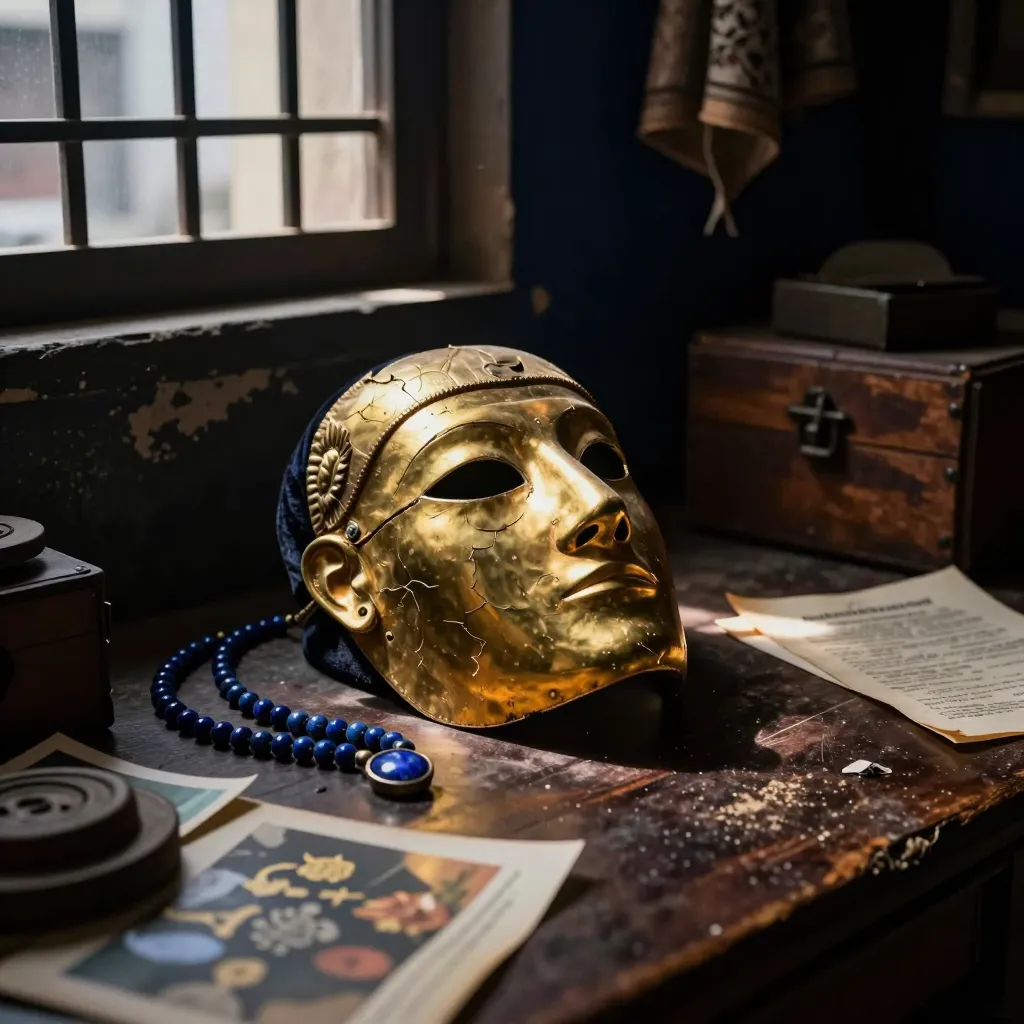
What curators discovered seemed, at first glance, extraordinary. The body lay in an ornate sarcophagus decorated with cuneiform inscriptions and carved images of Ahura Mazda, the supreme deity of Zoroastrianism. The mummy itself wore a golden crown, a face mask, and a breastplate bearing a declaration in Old Persian: "I am the daughter of the great King Xerxes. Mazereka protect me. I am Rhodugune, I am."
For a nation that had never before seen the remains of ancient Persian royalty, the implications were staggering. Iran and Pakistan immediately entered a diplomatic tug-of-war over ownership of the supposed princess. While politicians argued, scientists began their work—and the ancient miracle began to unravel.
Literary experts quickly identified problems with the breastplate inscription. The cuneiform, they determined, had been carved by someone with only superficial knowledge of Iranian script. Then came the forensic analysis: CT scans, chemical testing, and Carbon-14 dating revealed the devastating truth. This was no daughter of Xerxes. This was a modern fraud, and the woman inside had likely died only four years earlier.
The forensic profile that emerged was haunting. The victim stood four feet seven inches tall and was approximately sixteen years old at the time of death. Her internal organs had been meticulously removed, her abdominal cavity packed with powdery drying agents. Most disturbingly, blunt force trauma had shattered her cervical vertebrae—her neck had been broken, though investigators could not determine whether the injury was accidental or deliberate murder.
The methodical nature of the mummification process suggested something even darker than simple greed. Archaeologist Dr. Asma Ibrahim noted that the precision required to age a fresh corpse into a convincing ancient mummy indicated the involvement of scholars with specialized anatomical knowledge. The hoax was not merely criminal; it was academically informed.
Pakistani police launched a murder investigation, re-interrogating the network of men who had attempted to sell the body. Yet the case quickly went cold. The woman's identity remained unknown, her killer unpunished, her story swallowed by the shadows of the black market antiquities trade.
In 2008, the Edhi Foundation, a Pakistani charity providing emergency social services, gave the anonymous young woman what her desecrators had denied her: dignity in death. She was reinterred with proper burial rites, her true name still a mystery, her connection to the living world severed twice over—once by violence, once by the cruel fiction that had tried to make her ancient.
The Persian Princess hoax raises unsettling questions that linger in the musty corridors of private collections and illegal auction houses. How many other murder victims have been dressed in the trappings of antiquity, their violent ends obscured by the patina of age? How many modern disappearances are linked to the relentless hunger for rare artifacts? The black market in forged and looted heritage items does not merely rob history—it may conceal the bodies of the recently murdered, transformed into curiosities for the wealthy and obsessed.
In the end, Rhodugune, daughter of Xerxes, never existed. But the murdered girl inside the golden mask was devastatingly real—a ghost of the modern age, wrapped in the linen of an imagined past, waiting in the dark for a justice that never arrived.