Tinshemet Cave: New Evidence of Neanderthal and Human Cooperation Unearthed
New findings at Israel's Tinshemet Cave suggest Neanderthals and early humans shared rituals, knowledge, and possibly friendship 110,000 years ago. By analyzing shared burial practices and tools, researchers are dismantling the long-standing myth that these groups were purely enemies.
Ancient Cave Reveals Surprising Alliance Between Neanderthals and Early Humans
Deep within Israel's Tinshemet Cave, archaeologists have unearthed evidence that challenges everything we thought we knew about our ancient cousins. Far from the isolated, competing species depicted in textbooks, Neanderthals and early Homo sapiens appear to have formed genuine partnerships—sharing not just territory, but knowledge, rituals, and perhaps even friendship.
A Burial Ground That Rewrites History
The excavation team made a rare breakthrough when they discovered the first mid-Middle Palaeolithic burials found in fifty years. These weren't merely skeletal remains; they were time capsules preserving the intimate details of how two distinct human species coexisted approximately 110,000 years ago.
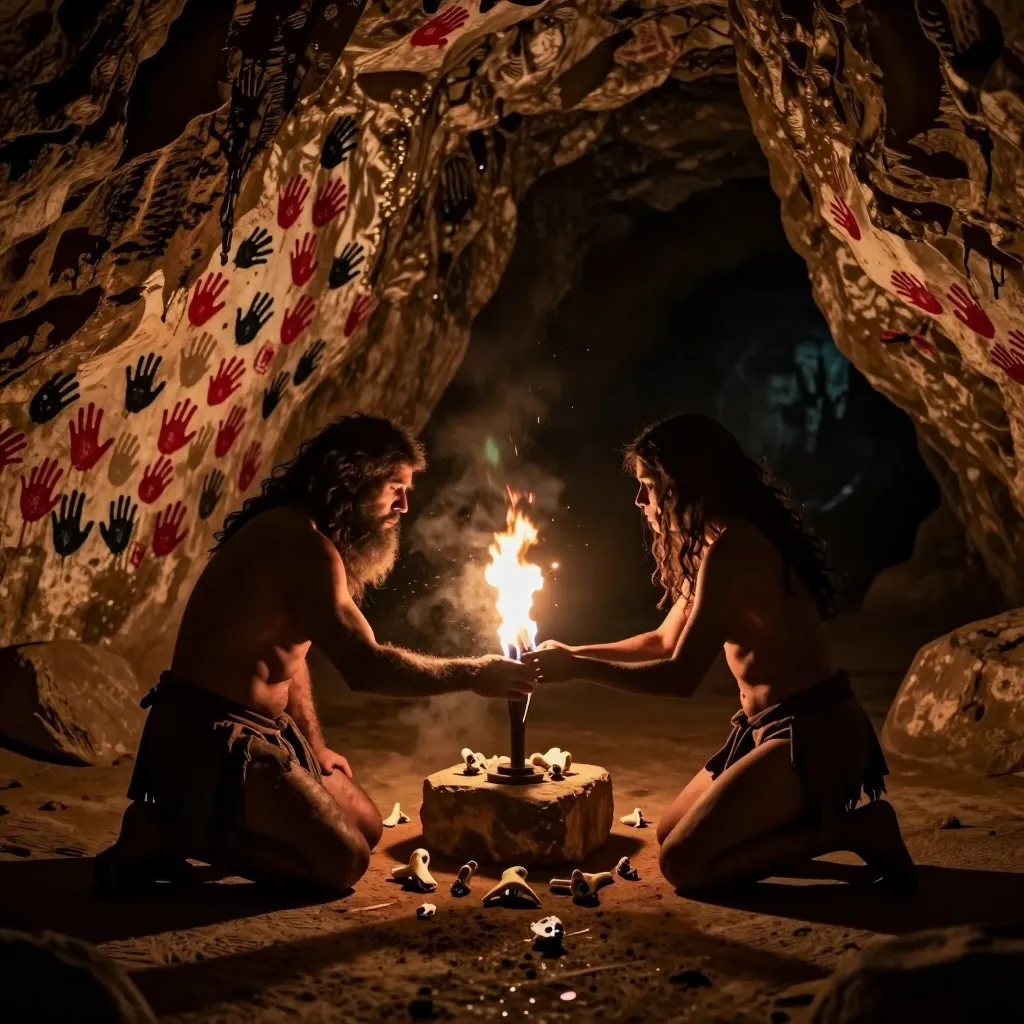
What stunned researchers wasn't just the presence of both Neanderthal and human remains in proximity, but the striking similarities in how they were laid to rest. Both groups practiced ritualistic burials, employed symbolic ochre in their ceremonies, and shared remarkably parallel social behaviors. The evidence points toward active cultural exchange rather than mere tolerance.
Beyond Competition: A Complex Social Network
For decades, the prevailing narrative painted Neanderthals and early humans as rivals—competing for resources, territory, and survival in a harsh prehistoric landscape. This discovery dismantles that view entirely.
The artifacts recovered from Tinshemet Cave tell a different story: one of collaboration and mutual learning. Stone tool technologies show clear cross-pollination between the groups. Burial customs demonstrate shared spiritual beliefs. The use of ochre—a mineral with deep symbolic significance—appears consistently across both species' practices.
This wasn't parallel evolution. This was conversation.
What This Means for Human History
The implications extend far beyond academic curiosity. If our ancestors regularly interacted with Neanderthals at this level of sophistication, it fundamentally reshapes our understanding of human cognitive and social development.
Cultural innovation rarely happens in isolation. The archaeological record at Tinshemet suggests that some of humanity's earliest technological and spiritual breakthroughs may have emerged from this interspecies collaboration. Knowledge transferred between Neanderthals and humans, refined through different perspectives, and shared across communities.
Researchers emphasize that population interactions have historically served as the engine driving human progress. This ancient partnership in the Levant may represent one of the earliest examples of that principle in action.
The Mystery Deepens
As excavations continue at Tinshemet Cave, each layer of sediment promises additional revelations. How extensive were these social networks? Did children from both groups grow up together? What languages—or forms of communication—bridged the biological divide between species?
The site preserves a moment frozen in time: two branches of the human family tree not merely overlapping, but intertwining. In an era often characterized by territorial violence in our evolutionary narrative, Tinshemet offers a haunting counterpoint—a reminder that cooperation, too, is deeply woven into our ancestral DNA.
For a species that would eventually dominate the planet, these early lessons in partnership may have been more valuable than any stone tool or hunting technique. The cave keeps its secrets close, but what has already emerged suggests that our ancient history contains chapters stranger and more wonderful than we ever imagined.