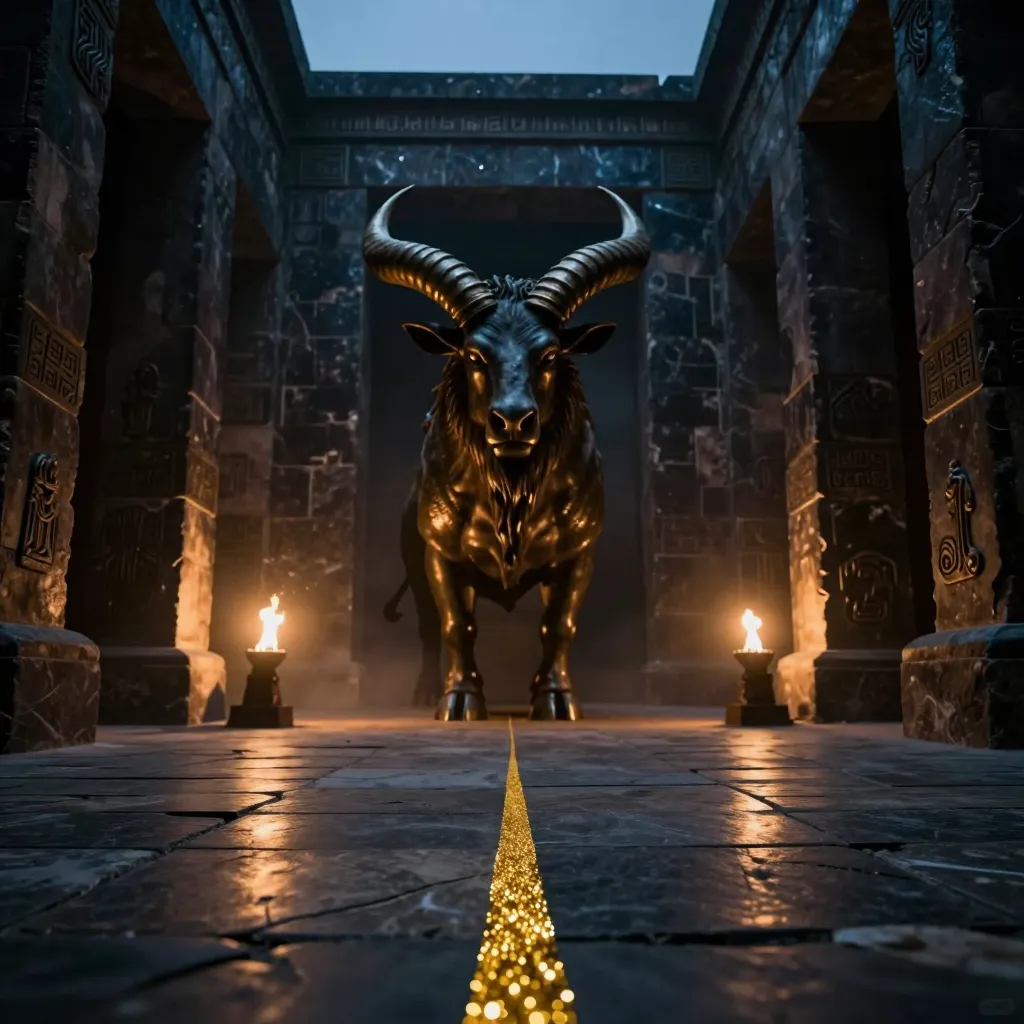
The Labyrinth of Minos: How Theseus Slayed the Cursed Minotaur
Explore the dark legend of King Minos's Labyrinth, the monstrous Minotaur born from divine punishment, and how the Athenian hero Theseus navigated the maze to slay the beast with nothing but a ball of golden thread.
The Labyrinth of Minos: Secrets of the Cretan Myth
Deep within the sun-drenched ruins of Knossos lies the shadow of one of antiquity's most enduring enigmas: the Labyrinth. In Greek mythology, this was no mere architectural feat, but a suffocating, winding prison designed to contain a nightmare. The legend of the Labyrinth, the Minotaur, and the hero Theseus weaves together themes of divine punishment, royal hubris, and the terrifying complexity of the unknown.
The Monstrous Origin
The tragedy of the Labyrinth begins not with a monster, but with a broken vow. According to myth, King Minos of Crete sought to prove his divine right to rule by requesting a sign from Poseidon, the god of the sea. He prayed for a bull of unparalleled beauty to appear as a mark of favor. Poseidon complied, sending a magnificent white bull from the waves.
However, captivated by the creature's splendor, Minos succumbed to greed and withheld the bull from sacrifice, keeping it for his own glory. This act of hubris enraged Poseidon. As retribution, the god cursed Minos’s wife, Queen Pasiphae, with an unnatural obsession for the beast. From this forbidden union, a monstrosity was born: the Minotaur—a creature possessing the powerful body of a man and the ferocious head of a bull.
Daedalus and the Impossible Maze
As the Minotaur grew, its hunger for human flesh became an uncontrollable terror. To hide the shame of the royal lineage and to contain the beast, Minos commissioned the master craftsman Daedalus to construct a structure of incomparable complexity.
The Labyrinth was designed to be inescapable. It was a geometric nightmare of endless corridors, dead ends, and shifting turns. Unlike a standard prison, the Labyrinth was intended to swallow anyone who entered, ensuring that even if the creature were seen, it could never be hunted, and its location could never be truly mapped. The architecture itself became a psychological weapon, designed to induce madness in those lost within its walls.
The Tribute and the Hero's Descent
The cruelty of Minos extended beyond the walls of the Labyrinth. To appease the monster and satisfy his own vengeance, the King demanded a blood tribute from Athens. Every nine years, seven young men and seven young women were sent into the maze to be devoured by the Minotaur.
The cycle of slaughter was broken only by the arrival of Theseus, the prince of Athens. Armed with resolve and aided by the cunning of Princess Ariadne—Minos’s own daughter—Theseus entered the darkness.
Ariadne provided the hero with a "clew," a ball of golden thread. By trailing the thread behind him as he ventured into the heart of the maze, Theseus was able to navigate the winding passages and, most importantly, find his way back through the darkness after slaying the beast. This mythic tool is the origin of the modern term "clue."
Historical Echoes and Archaeological Mystery
While the Labyrinth is a staple of myth, scholars often look to the historical reality of the Minoan civilization to find its roots. The Palace of Knossos on the island of Crete is a massive, sprawling complex of interconnected rooms, light wells, and winding staircases. To an outsider or a traveler from mainland Greece, the sheer scale and labyrinthine layout of the palace may have inspired the legends of a physical maze.
Furthermore, the prevalence of bull imagery in Minoan art—from massive frescoes to ritualistic bull-leaping ceremonies—suggests that the bull held a central, perhaps even sacred, place in their culture. Whether the Minotaur was a literal memory of a ritual gone wrong or a metaphorical representation of the "wild" being contained by "civilization," the myth continues to haunt our understanding of the ancient world.