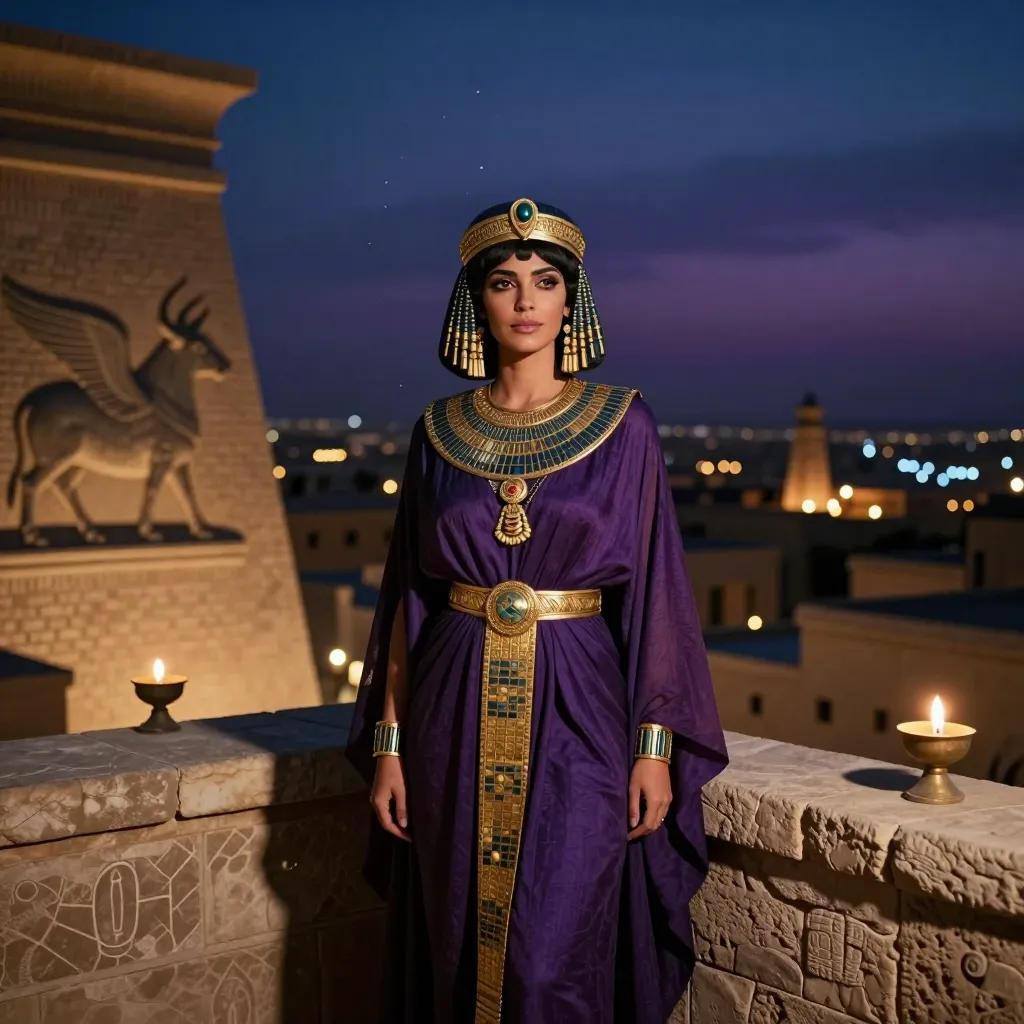
Shadow Sovereigns: The Powerful Women of Ancient Mesopotamia
Explore the extraordinary lives of ten Mesopotamian women, from the first named author Enheduanna to the warrior-queen Artemisia. This deep dive reveals how these figures wielded divine and political power, shaping history and inspiring myths from Cybele to Semiramis.
The Shadow Sovereigns: Power and Paradox of Mesopotamian Women
[cite_start]In the cradle of civilization, between the Tigris and Euphrates, a rigid patriarchal hierarchy defined the boundaries of existence[cite: 1]. [cite_start]While the primary expectation for women was to serve as wives and mothers within the domestic sphere [cite: 19][cite_start], the veil of history reveals a series of formidable figures who defied social constraints to wield influence as generals, scribes, and absolute monarchs[cite: 2]. [cite_start]From the Early Dynastic Period (circa 2900–2350 BCE) to the Sassanian Empire, these women utilized their "personality, spirit, and character" to navigate a world that often regarded them as being of less inherent worth than their male counterparts[cite: 4, 22, 114].
Divine Deviations: The Priestesses and Businesswomen
[cite_start]While most women were classified by their social standing—ranging from the nobility to the enslaved [cite: 20]—certain roles offered a unique escape from traditional domesticity.
- [cite_start]The Naditu of Sippar: Between 1880 and 1550 BCE, these priestesses dedicated themselves to the sun god Shamash[cite: 5]. [cite_start]Remarkably, they were exempt from the social mandate to bear children[cite: 7]. [cite_start]This freedom allowed them to engage in lucrative, though still somewhat mysterious, business activities, enabling them to live with a degree of autonomy rarely seen in the ancient world[cite: 6, 7].
- [cite_start]Ama-e (circa 2330 BCE): A Sumerian businesswoman from Umma, Ama-e managed a vast trade network involving grain, metals, and wool under her own name[cite: 38, 39]. [cite_start]She reinvested her profits into real estate and building projects, proving that female intellect could dominate the competitive arena of Sargonic trade[cite: 40].
Queens of the King List and the Royal Tombs
[cite_start]The Sumerian King List is a male-dominated record, yet it contains one striking anomaly: Queen Kubaba[cite: 32].
- [cite_start]The Tavern Keeper Who Ruled: Legend states Kubaba was an "alewife" or tavern keeper before ascending to the throne of Kish[cite: 31]. [cite_start]She founded the Third Dynasty of Kish and is the only woman recorded as a reigning monarch in the entire list[cite: 32, 33]. [cite_start]Her legacy was so potent that some scholars believe she served as a partial inspiration for the later Anatolian goddess, Cybele[cite: 36].
- [cite_start]Puabi, the Independent Sovereign: Discovered in the Royal Cemetery at Ur, the tomb of Queen Puabi (circa 2600 BCE) speaks of immense wealth and power[cite: 26, 27]. [cite_start]Her cylinder seal identifies her as "Queen" without any mention of a husband or king, leading historians to conclude she ruled Ur in her own right[cite: 28]. [cite_start]She was buried with a vast retinue of attendants, signifying her status as a powerful and affluent monarch[cite: 29].
The Literary and the Legendary
In the realm of culture and diplomacy, women left an indelible mark on the Mesopotamian soul.
- [cite_start]Enheduanna (circa 2300 BCE): The daughter of Sargon of Akkad, Enheduanna is the first author in human history known by name[cite: 82]. [cite_start]As the High Priestess of Ur, she wrote deeply personal and sophisticated hymns to the goddess Inanna, creating a template for liturgical poetry that would influence the writing of psalms for centuries[cite: 83, 84].
- [cite_start]Sammu-Ramat (reign 811–806 BCE): An Assyrian queen regent who governed for her young son, Sammu-Ramat defied the prohibition against women holding authority over men[cite: 85, 86]. [cite_start]Her reign was so impactful that it likely inspired the myth of Semiramis, the legendary queen said to be raised by doves[cite: 87].
- [cite_start]The Biblical Echo: The character of Queen Esther from the 4th-century BCE biblical narrative reflects the real-world influence of Mesopotamian queens[cite: 8, 11]. [cite_start]Though many scholars view her as fictional, her story—revealing a plot to exterminate her people and saving them through her influence over the Persian King Xerxes I—mirrors the diplomatic power real women could attain[cite: 9, 10].
Architects of Empire and Unlikely Oracles
Power in Mesopotamia was not always inherited; sometimes it was seized or channeled through the divine.
- [cite_start]Zakutu and the Treaty of Power: Rising from the status of a secondary wife, Zakutu (circa 728–668 BCE) became a formidable Queen Dowager[cite: 90, 91]. [cite_start]She ensured the succession of her son Esarhaddon and later issued the "Treaty of Zakutu," a political masterstroke that secured the throne for her grandson, Ashurbanipal[cite: 92].
- [cite_start]The Oracle of Nuska (circa 671 BCE): An unnamed slave girl who claimed to be possessed by divine spirits, she prophesied the fall of King Esarhaddon[cite: 96, 97]. [cite_start]Her charismatic personality was so persuasive that she became a central figure in a coup attempt, proving that even those at the bottom of the social hierarchy could threaten the crown[cite: 98, 100].
- [cite_start]Artemisia I of Caria (circa 480 BCE): A queen who ruled without male counsel, Artemisia commanded a naval squadron during Xerxes I’s invasion of Greece[cite: 101, 102]. [cite_start]Her tactical brilliance at the Battle of Salamis was praised by Herodotus, even though Xerxes failed to heed her strategic advice to avoid the engagement[cite: 103, 104].
The Final Sovereigns and the Decline of Status
[cite_start]As Mesopotamia moved toward the Sassanian era, figures like Azadokht Shahbanu (reign 240–270 CE) continued to shape history[cite: 107]. [cite_start]A diplomat and skilled swordswoman, she is credited with establishing the great intellectual and medical center of Gundeshapur by inviting Greek physicians to the court[cite: 108, 109].
[cite_start]However, historians note that female status at high levels diminished progressively after the Early Dynastic Period[cite: 14]. [cite_start]One theory suggests this decline correlated with the rise of male deities who replaced the earlier Sumerian goddesses[cite: 111]. [cite_start]The shift toward a more restrictive mindset became even more pronounced after the fall of the Sassanian Empire in 651 CE[cite: 112].
[cite_start]Despite these legal and customary constraints, the record of these ten women serves as a testament to those who "swam against the opposing current," leaving behind names that the patriarchy could not erase[cite: 115, 117].