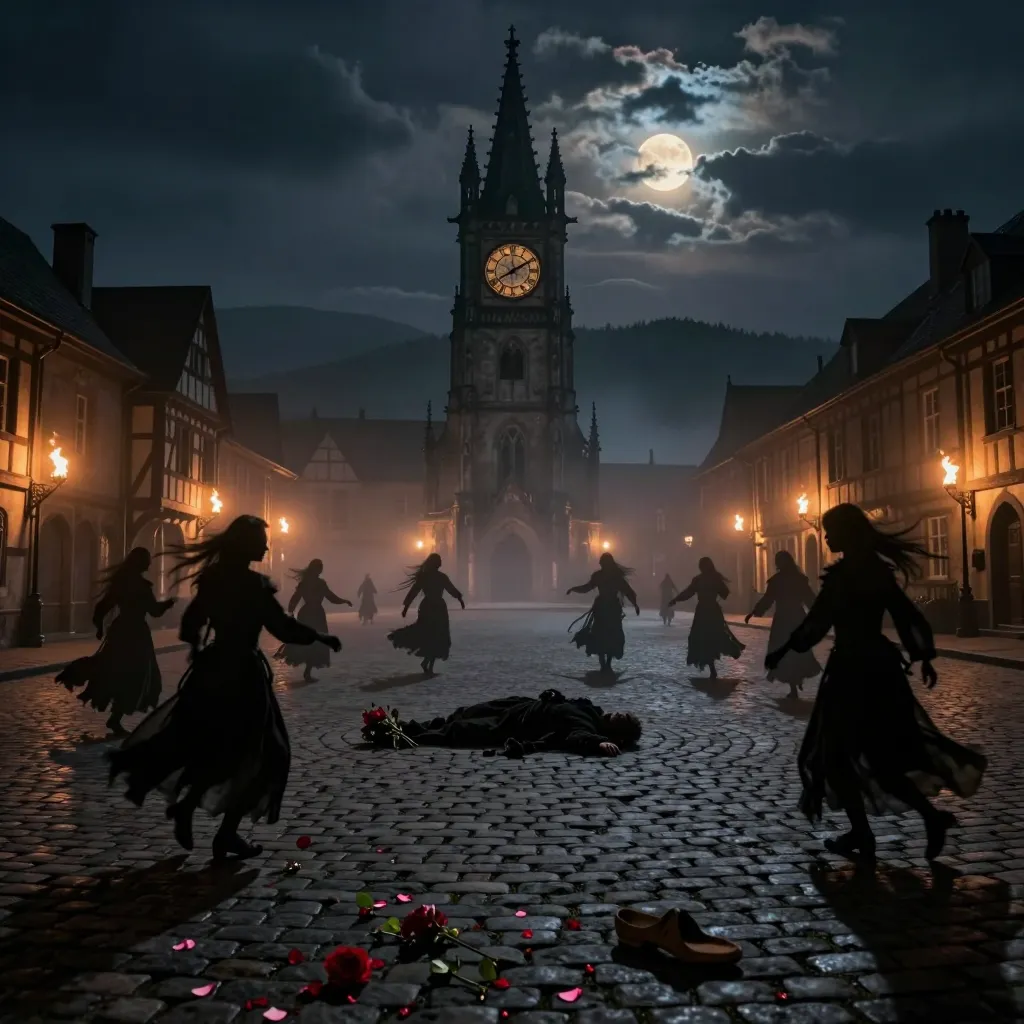
6 Bizarre Mass-Hysteria Outbreaks That Made History Dance
Step inside convents of biting nuns, streets of uncontrollable dancers, and schools hijacked by laughter. These six documented outbreaks reveal how fear and belief can spread faster than any virus—perfect for lovers of haunted lore and weird history.
When the World Loses Its Mind: Six Strange Storms of Mass Hysteria
From convents of meowing nuns to streets where thousands danced until they bled, history records moments when ordinary people were swept up by an invisible tide of shared delusion. No poison gas, no contagious microbe—just the raw power of belief, fear, and social pressure. Below are six of the eeriest episodes of mass hysteria ever documented, each one a window into how thin the veil of “normal” can be.
1. The Dancing Plague of 1374
Where: Rhine valley, modern-day Germany
What happened: On a hot summer day, townsfolk in Aachen began jerking, leaping, and twisting in the streets. Within hours, dozens had joined; within days, hundreds. Eye-witnesses wrote of people foaming at the mouth, collapsing from heart failure, yet springing back up to continue the frenzied jig. The episode rolled like a tide through Strasbourg, Cologne, and Utrecht. Some victims reportedly danced for weeks, their feet pulped and bones visible. Authorities blamed “hot blood,” arranged musicians hoping the spell would break, and finally herded the afflicted into mountain chapels dedicated to St. Vitus, patron saint of dancers. The fits vanished as suddenly as they began—leaving historians to argue over ergot poisoning, stress-induced psychosis, or a ritualized protest against feudal oppression.
2. The Biting Nuns of 15th-Century Europe
Where: German convents, later the Low Countries and Italy
What happened: One chronicler records that “a single sister, seized by a devilish humor, nipped her neighbor during vespers.” Within days the behavior ricocheted through the cloister. Nuns chomped companions on hands, faces, even through wool habits. The mania hopped convent walls, spreading city to city faster than any courier could ride. Ecclesiastical exorcists failed; threats of flogging succeeded. When the first “biter” was publicly beaten, the epidemic evaporated—proof that even holy walls can amplify human mirror-neurons.
3. Meowing Monasteries, 1844
Where: Southern France
What happened: A novice at an unnamed abbey began to purr and yowl during midnight prayers. Soon the entire choir mewed in eerie unison. Neighbors heard the nightly caterwauling and suspected witchcraft; local militia stormed the chapel, whipping the nuns until the meowing stopped. Contemporary folklore linked cats to Satan; once the behavior was framed as demonic, it became contagious, then punishable, then extinct.
4. Salem, 1692
Where: Essex County, Massachusetts Bay Colony
What happened: Nine-year-old Betty Parris and her cousin Abigail twisted into contortions, screaming that invisible tormentors stabbed them with pins. Physicians found no sickness; ministers found witchcraft. Within months, 200 colonists stood accused. Nineteen were hanged, one pressed to death, several died in jail. The crisis ended when Governor William Phips’ own wife was rumored to be next on the docket—proving that hysteria bows only to a higher fear.
5. The Tanganyika Laughter Epidemic, 1962
Where: Kashasha mission school, modern-day Tanzania
What happened: A joke, or maybe a spasm, set three schoolgirls giggling uncontrollably during class. The laughter spread like wildfire: 95 pupils within a week, then neighboring schools, eventually 14 institutions shuttered. Symptoms lasted from a few hours to sixteen days; victims cried between bouts, claiming headaches and sheer terror. Doctors ruled out pathogens; psychologists blamed exam stress and post-colonial tension. Eighteen months passed before the last chuckle faded.
6. The Sri Lanka Rash Panic, 2012
Where: 15 schools across Sri Lanka
What happened: Children erupted in itchy scarlet blotches, dizziness, and coughing fits. Parents demanded evacuations; hospitals overflowed. Tests for allergens, pesticides, and viruses returned negative. Once media reports suggested a “mystery illness,” new cases multiplied; when officials announced “mass psychogenic response,” numbers plummeted. The episode lasted ten days, illustrating how smartphones and television now accelerate the old dance of hysteria.
Why Do Minds Sync Like This?
- Setting matters: boarding schools, convents, prisons—places where emotions run high and escape is limited.
- Trigger event: a sudden death, a strange odor, a rumor of poison.
- Authority reinforcement: priests, teachers, or newscasters who legitimize the fear.
- Cultural script: pre-existing beliefs (witches, demons, chemical attacks) supply the shape the symptoms take.
- Resolution only arrives when a counter-narrative—punishment, ridicule, or scientific explanation—overpowers the first.
Today we like to think we’re immune. Yet every viral meme, every stock-pile of toilet paper during a storm forecast, whispers that the ancient circuitry is still live. The next epidemic may not make us dance or meow, but somewhere, in a crowded hallway or a scrolling feed, the signal is probably already hopping from one mind to the next—waiting for enough people to believe.