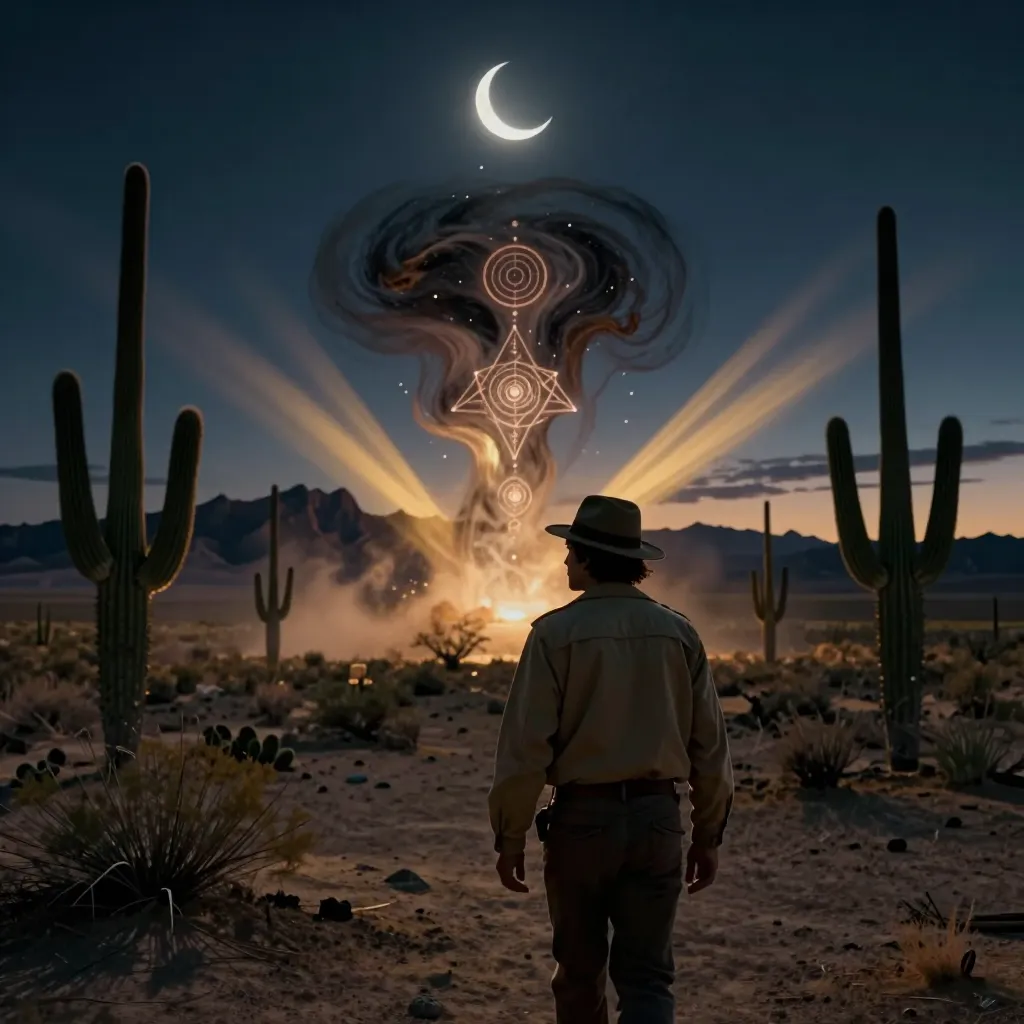
Ru Marshall Unveils the Enigmatic Legend of Carlos Castaneda
Dive into the controversial and thrilling history of Carlos Castaneda. Ru Marshall examines the boundary between reality and legend, investigating the man who captivated the world with tales of sorcery and ancient wisdom. A must-read for seekers of the unexplained.
The Architect of the Unknown: The Hidden Cult of Carlos Castaneda
In 1968, a graduate student at UCLA named Carlos Castaneda released a book that would fundamentally alter the landscape of Western counterculture. [cite_start]The Teachings of Don Juan purported to be a factual ethnographic account of Castaneda's apprenticeship under a Yaqui shaman named don Juan Matus[cite: 217, 218]. [cite_start]Through the ritualistic use of psychotropic plants like peyote and Datura, Castaneda claimed to have been initiated into a "mode of cognition" entirely alien to the Western world[cite: 218].
[cite_start]The book was a monumental success, transforming the fledgling anthropologist into a cultural icon[cite: 218, 219]. [cite_start]High-profile figures such as George Lucas—who cited Castaneda as the inspiration for "The Force"—and Bob Dylan became proponents of his work[cite: 219]. However, beneath the veneer of academic discovery and spiritual enlightenment lay a darker reality: a highly secretive cult and a narrative built on meticulously crafted deception.
The Fabric of a Myth
While the public viewed Castaneda as a pioneer of spiritual exploration, critics eventually began to peel back the layers of his story. [cite_start]It took five years for public figures, notably Joyce Carol Oates, to openly question if his "nonfiction" accounts were actually novels[cite: 220]. [cite_start]Investigative efforts later revealed that Castaneda had extensively plagiarized other anthropological works and accounts of drug experiences to lend his writing an "aura of authenticity"[cite: 336].
Castaneda’s personal history was equally fabricated. [cite_start]Born César Arana in Peru, he changed his name multiple times and systematically compartmentalized his social circles to prevent his various lies from intersecting[cite: 233, 234, 242]. [cite_start]He often remarked that he was a "bag of stories" and viewed lying not as a burden, but as an art form[cite: 305, 307].
The Inner Circle: The "Witches" and the Winds
[cite_start]The most chilling aspect of Castaneda’s legacy was the cult he assembled, beginning as early as 1960[cite: 220]. [cite_start]Long before he gained fame, he began recruiting followers whom he eventually dubbed his "witches"[cite: 222, 230]. [cite_start]His first recruits were two women, Joanie Barker and Judy Ames[cite: 229, 231].
To maintain control, Castaneda utilized several psychological tactics:
- [cite_start]Renaming: He stripped followers of their birth names, giving them aliases like "La Gorda" or "the winds" to unmoor them from their past identities[cite: 230, 250, 252, 253].
- [cite_start]Isolation: Followers were frequently encouraged or forced to cut ties with their families[cite: 284, 381].
- [cite_start]Total Devotion: Members were required to reinforce his "imaginary world," sometimes performing menial labor or financing his lifestyle[cite: 282, 296, 369].
One of the most tragic cases involved Judy Ames. [cite_start]Despite adoring her family and having two young sons, Judy eventually succumbed to Castaneda's influence[cite: 257, 316, 368]. [cite_start]In 1969, she sent her children away to relatives, telling her oldest son she might never see him again; they never saw her again[cite: 423].
Tensegrity and the Public Shift
[cite_start]In the 1990s, as his book sales dwindled, Castaneda’s group moved into the public eye by forming a corporation called Cleargreen[cite: 221, 377, 378]. [cite_start]They marketed "Tensegrity," a series of movement techniques Castaneda claimed were passed down through twenty-five generations of Toltec shamans[cite: 222]. [cite_start]He promised that these movements could grant followers physical agility and even "eternal life"[cite: 222].
[cite_start]Workshops were held globally, attracting thousands of followers[cite: 280]. However, the internal culture remained extreme. [cite_start]Behind the scenes, Castaneda was increasingly obsessed with "the leap"—a ritualistic exit from this world to "navigate infinity"[cite: 381, 382].
The Final Disappearance
The end of the Castaneda era was as mysterious as its beginning. [cite_start]In 1997, Castaneda was diagnosed with liver cancer, a fact kept strictly secret because he had long taught that illness was a "failure of the will"[cite: 384, 385]. [cite_start]He died on April 27, 1998[cite: 386].
[cite_start]Immediately following his death, five of his closest female followers vanished[cite: 386]. [cite_start]While Cleargreen maintained they had simply "left" to continue their work elsewhere, the reality was more grim[cite: 388, 389]. [cite_start]In 2006, the remains of one follower, Nury Alexander, were identified in Death Valley; the others remain missing to this day[cite: 386, 387].
| Key Figure | Role/Alias | Outcome |
|---|---|---|
| Carlos Castaneda | Leader / "Nagual" | [cite_start]Died of liver cancer in 1998[cite: 384, 386]. |
| Judy Ames | "La Gorda" / "Cecilia" | [cite_start]Suffered a breakdown in 1985; lived in isolation near the cult's HQ[cite: 395, 407, 409]. |
| Joanie Barker | "Stephanie" | [cite_start]Remained on the periphery until her death[cite: 279, 403, 404]. |
| Nury Alexander | Adopted daughter / Lover | [cite_start]Remains found in Death Valley in 2006[cite: 386, 387]. |
[cite_start]Castaneda’s story remains a profound example of how charismatic authority, when blended with a mastery of narrative and psychological manipulation, can create a "theater of the real" that obscures the truth for decades[cite: 329].