Jane Harper on Australian Crime Fiction and Crafting Slow-Burn Suspense
Explore the dark secrets of the Australian landscape with crime novelist Jane Harper. Learn how to build tension, utilize atmospheric settings, and master the craft of slow-burn suspense in this deep dive for mystery lovers and aspiring thriller writers.
The Haunting Art of Australian Crime Fiction: Inside Jane Harper's World of Slow-Burn Suspense
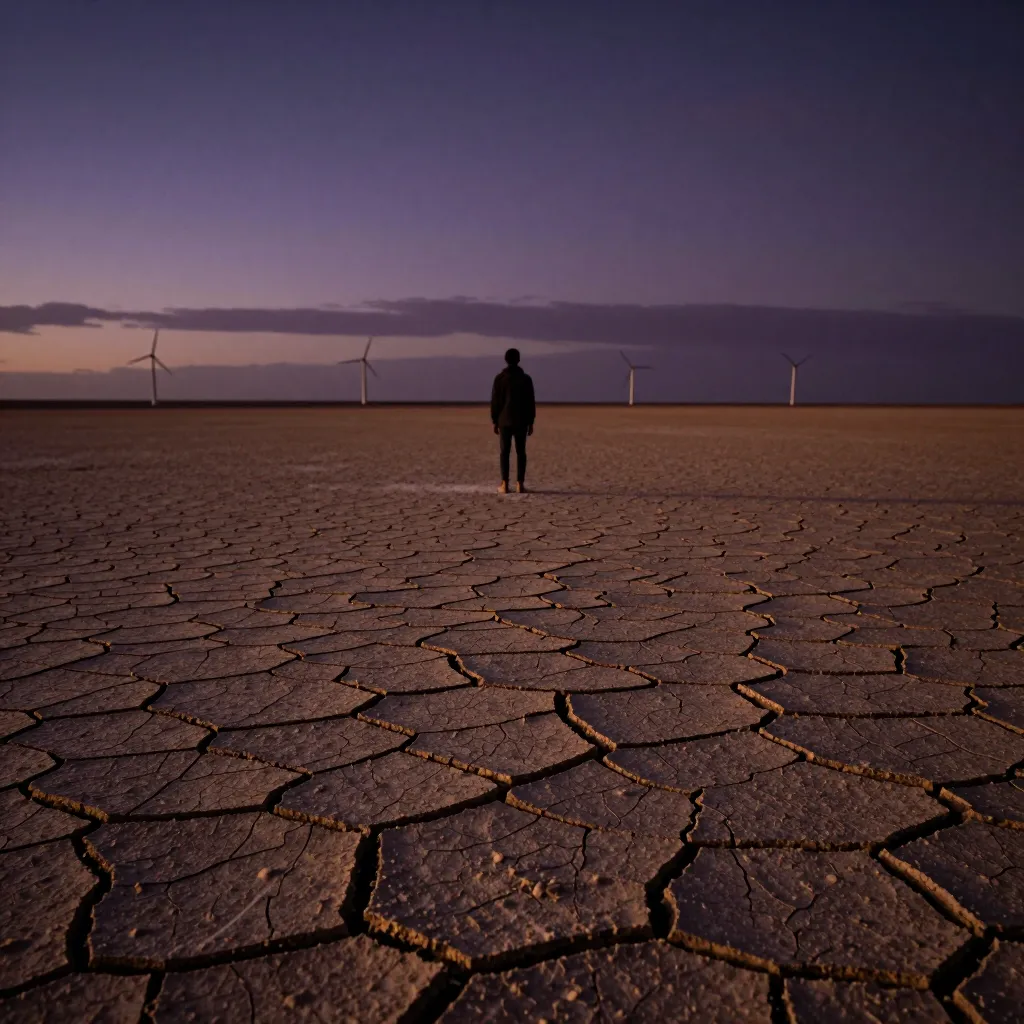
Some landscapes seem destined to harbor secrets. The Australian outback—with its crushing heat, endless horizons, and isolation that can swallow a person whole—has become the perfect canvas for a distinctive breed of crime fiction. At the forefront of this literary movement stands Jane Harper, an author who has transformed the vast, unforgiving terrain of rural Australia into a character as compelling as the mysteries themselves.
Born in Manchester but raised between two continents, Harper brings a unique dual perspective to her work. She spent her formative years in Australia before returning to England as a teenager, eventually building a career in journalism. In 2008, she made her way back to Melbourne, where the red dust and harsh beauty of the Australian interior would eventually inspire some of the most atmospheric crime novels of the past decade.
Her breakthrough came almost accidentally. In 2012, a short story submission to The Big Issue magazine—one of twelve selected for their annual Fiction Edition—ignited a passion for longform storytelling that would reshape her career. Four years later, her debut novel The Dry exploded onto the international scene, earning accolades across the globe and establishing Harper as the reigning voice of what critics would dub "outback noir."
Since then, her novels have sold more than 3.5 million copies worldwide, with three adaptations reaching screens both large and small. But it's her approach to storytelling—methodical, character-driven, and deeply rooted in place—that has earned her a devoted following among readers who prefer their mysteries to unfold like heat lightning on a summer horizon: slow to build, impossible to ignore, and leaving everything changed in its wake.
The Weight of Unanswered Questions
Harper's sixth novel, Last One Out (March 2026), demonstrates the full maturation of her signature style. The story opens five years after Sam Crowley vanished on his twenty-first birthday, leaving behind a family fractured by grief and a town slowly being reclaimed by the earth.
His mother, Ro, has spent those years in exile from both her marriage and her hometown of Carralon Ridge. The place she once knew has become a ghost town—literally. A coal mine on the outskirts has hollowed out the community from within, leaving behind a skeletal framework of buildings and the few stubborn souls who refuse to abandon what remains.
When Ro returns for the annual memorial held in Sam's honor, she must confront not only the mystery of her son's disappearance but the ruins of her marriage to Griff. He remains anchored to the town, unable to reconcile the paradise of his memories with the desolation before him. Their daughter Della exists somewhere between them, bearing her own wounds from the family's collapse.
The brilliance of Harper's construction lies in how she uses this fractured family to explore a universal truth: grief transforms everyone it touches, but never in the same way. Ro's desperate need for answers, Griff's retreat into nostalgia, Della's navigation between two broken parents—each response is valid, each creates new fissures in an already shattered foundation.
Where the Past Refuses to Stay Buried
Carralon Ridge itself emerges as perhaps the novel's most complex character. Harper has always excelled at isolated settings—the drought-stricken farming community of The Dry, the dense, claustrophobic forest of Force of Nature—but here she explores the tragedy of environmental and economic collapse with particular resonance.
The town represents a collision between memory and reality, between the Australia that existed and the one industrialization has created. Those who remain are divided between fighting for restoration and accepting the inevitable. These divisions run through families and friendships, creating intergenerational conflicts that mirror the larger mystery at the novel's heart.
This is where Harper's journalistic background serves her fiction most effectively. She understands that the best stories emerge from the friction between what people say and what they mean, between the official narrative and the whispered truths shared in confidence. Her settings feel authentic because she treats them as ecosystems—social, environmental, psychological—and traces how disruption in one sphere inevitably cascades into others.
The Art of Slow Revelation
What distinguishes Harper's work from more conventional thrillers is her deliberate pacing. She operates in the aftermath of violence rather than its immediate wake, when the emergency crews have departed and the survivors must learn to inhabit a changed world.
This approach allows her to prioritize character and atmosphere over plot mechanics. The mystery unfolds not through a series of escalating action sequences but through the gradual accumulation of detail, the slow erosion of secrets, the way memory distorts and clarifies with time.
Sam Crowley remains present throughout the narrative despite his physical absence—a feat Harper achieves primarily through Ro's perspective. We know him through her love, her guilt, her refusal to let his story end in uncertainty. This sustained characterization serves a dual purpose: it maintains emotional investment in the mystery while reminding readers that behind every missing person statistic lies a universe of grief.
From Page to Screen
Harper's atmospheric storytelling has proven naturally suited to visual adaptation. The Dry and Force of Nature became feature films starring Eric Bana, while The Survivors found new life as a Netflix series. For an author whose work depends so heavily on landscape and visual texture, these translations might seem risky—but Harper has embraced them with characteristic restraint.
She maintains a hands-off approach to adaptations, recognizing that film and television are distinct creative endeavors with their own requirements. Her primary concern remains simple: that readers who discover her stories through these adaptations find something worthy of their time. So far, that faith has been rewarded.
The Journalist's Eye, The Novelist's Heart
Harper's transition from journalism to fiction wasn't a rejection of her training but an evolution of it. The skills she developed—writing to deadline, expressing complex ideas clearly, listening to how people actually speak, constructing narratives that draw readers in—remain essential to her process.
Yet fiction offers something reportage cannot: the freedom to create worlds entirely of one's own devising, to explore the emotional truths that lie beneath factual surfaces, to imagine rather than merely record.
For aspiring writers, Harper's journey offers a particular lesson. The path from that first published short story to international bestseller wasn't forged through dramatic breakthroughs but through practical discipline—establishing routines, finding optimal working conditions, accepting that uncertainty and rejection are part of the process.
Every writer she admires, she notes, was once a beginner struggling to find their voice. The challenge is significant, but so is the reward: the world always has room for another good book, another voice that can make us see familiar landscapes with new eyes.
In Last One Out, Jane Harper continues to map the interior and exterior terrains of Australian crime fiction, finding in the country's vast emptiness a mirror for the mysteries that haunt us all.