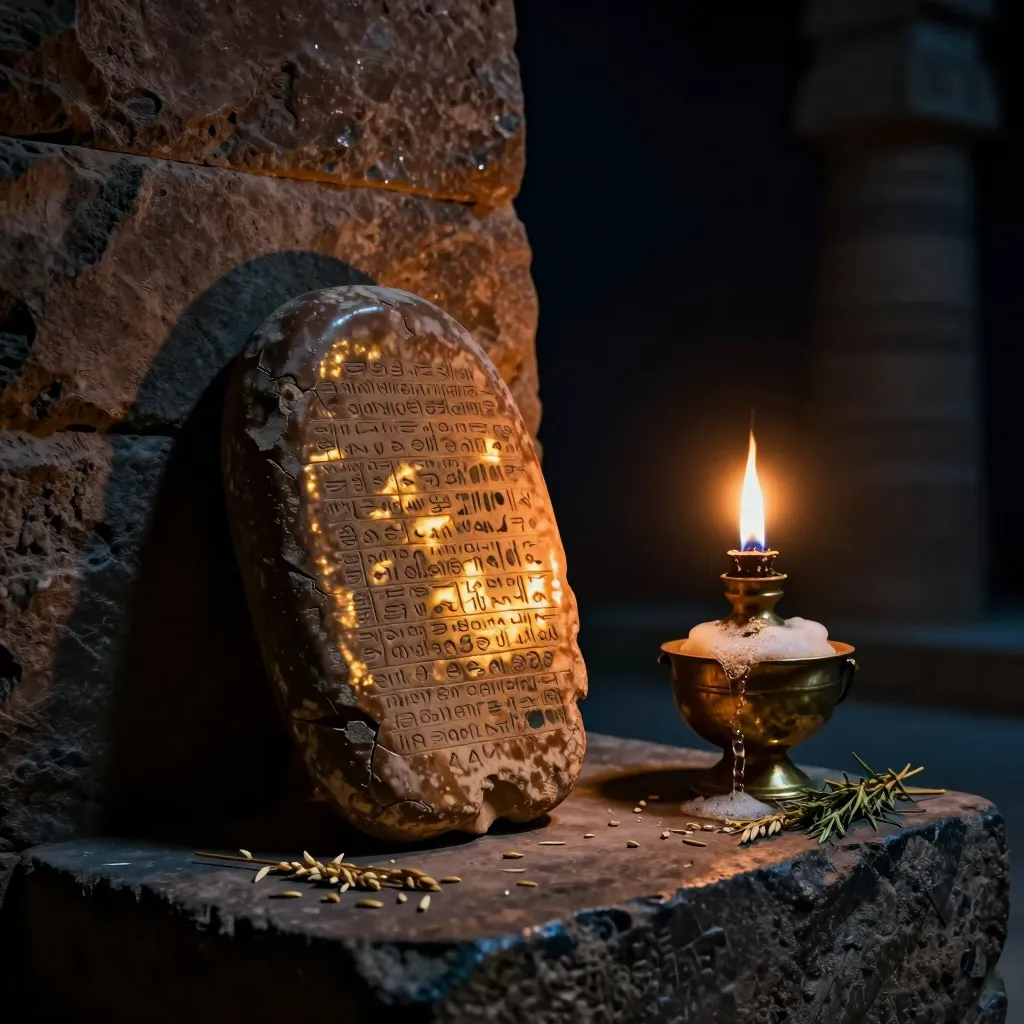
The Hymn to Ninkasi: A Sacred Recipe for the Goddess of Beer
Explore the divine origins of brewing in ancient Mesopotamia. This article reveals how the Goddess Ninkasi turned grain into 'liquid bread' through a sacred 1800 BCE hymn that served as both a song of high praise and a functional guide for the earliest brewers.
The Divine Brew: Ninkasi and the Sacred Alchemy of Mesopotamia
[cite_start]In the sun-drenched valleys of ancient Mesopotamia, beer was far more than a casual refreshment; it was a gift from the heavens, a source of life-sustaining nutrients, and a central pillar of civilization[cite: 18, 23]. [cite_start]At the heart of this brewing culture stood Ninkasi, the Sumerian goddess of beer, whose very essence was believed to inhabit the fermented grain[cite: 1, 35, 37].
[cite_start]The Hymn to Ninkasi, a lyrical work dating back to approximately 1800 BCE, serves a dual purpose as both a song of high praise and a functional blueprint for the ancient brewing process[cite: 1, 2, 85].
The Origins of the Golden Elixir
[cite_start]Archaeological evidence suggests that the Mesopotamian love affair with beer began long before the hymn was ever inscribed on clay tablets[cite: 2]. [cite_start]Chemical traces found at Godin Tepe date the practice back to at least 3500–3100 BCE, though some scholars believe Sumerian brewing may have roots reaching as far back as 4000 BCE[cite: 9].
[cite_start]The discovery of beer is often linked to the birth of agriculture itself[cite: 10]. [cite_start]While bread was the staple of the Mesopotamian diet, some botanists argue that the primary incentive for cultivating barley was actually the production of beer[cite: 12, 13]. [cite_start]This "liquid bread" was discovered when stored grain sprouted and fermented, revealing a transformative process that seemed nothing short of miraculous to the ancient mind[cite: 13].
Ninkasi: The Goddess in the Vat
In the pantheon of the Fertile Crescent, Ninkasi occupied a unique space. [cite_start]Unlike deities who merely oversaw a craft, Ninkasi was the craft itself[cite: 36, 37]. [cite_start]Her name, which translates to "the lady who fills the mouth," underscores her role as the provider of the beverage[cite: 104].
- [cite_start]Divine Birth: Ninkasi was born from the healing rituals of the mother goddess Ninhursag to aid the ailing god Enki[cite: 37, 38].
- [cite_start]Healing Qualities: Because of her origin, beer was closely associated with health and recovery[cite: 37].
- [cite_start]The Feminine Craft: Historically, brewing was a domestic art initiated and cultivated by women[cite: 14, 39]. [cite_start]Even as beer became a commercial enterprise, the priestesses of Ninkasi remained the primary practitioners of the sacred recipe[cite: 39].
A Recipe in Verse: The Ancient Process
[cite_start]The Hymn to Ninkasi acted as a mnemonic device, helping illiterate brewers memorize complex steps through a steady cadence[cite: 86]. According to the text, the traditional Sumerian method involved several distinct stages:
| Stage | Process Description |
|---|---|
| The Foundation | [cite_start]Mixing bappir (twice-baked barley bread) with sweet aromatics, honey, and dates[cite: 86]. |
| Fermentation | [cite_start]Soaking the malt in jars where "the waves rise and fall" as the grain reacts with water and wine[cite: 88, 94]. |
| Cooling | [cite_start]Spreading the cooked mash on large reed mats to lower the temperature[cite: 88, 95]. |
| Refinement | [cite_start]Using a filtering vat to pour the liquid into collector jars, a process described as having a "pleasant sound"[cite: 89, 96]. |
[cite_start]The resulting beverage was often consumed through straws[cite: 24]. [cite_start]While some modern observers suggest this was to avoid floating debris, Sumerian records indicate their beer was carefully filtered[cite: 27, 28].
Beer as a Social and Spiritual Staple
[cite_start]Beer permeated every level of Mesopotamian society, from the lowliest laborer to the highest noble[cite: 23, 24]. [cite_start]It was a vital part of the daily diet because the boiling and fermentation processes made it far safer to drink than the potentially contaminated canal water[cite: 20, 21].
[cite_start]In the realm of myth, beer was frequently used as a catalyst for major events[cite: 31]. [cite_start]In the poem Inanna and the God of Wisdom, the goddess Inanna uses beer to intoxicate Enki, allowing her to secure the "Mes"—the essential blueprints of civilization—for her city[cite: 31].
[cite_start]Despite the frequency of public drunkenness in myths, the beer itself was never viewed negatively[cite: 33]. [cite_start]It was a tool of elevation meant to make the "heart feel light" and the "liver happy"[cite: 35, 98]. [cite_start]As an ancient Sumerian proverb famously noted: "He who does not know beer, does not know what is good"[cite: 102].