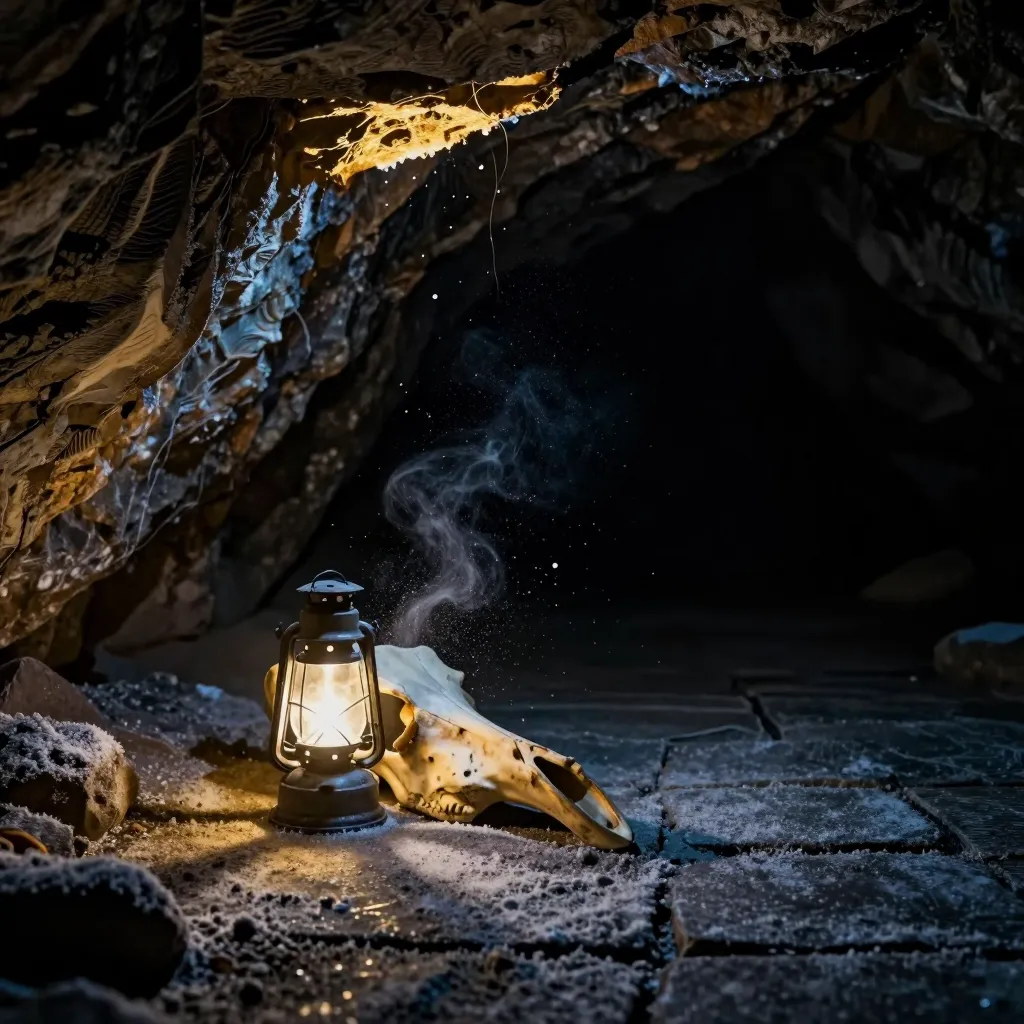
The Ghost in the Genome: Mystery Species Discovered in Siberian Cave
Deep in the Denisova Cave, scientists discovered genetic signatures of a mystery human relative that left no fossils behind. This unsettling discovery reveals a prehistoric world where our ancestors interbred with phantom lineages, leaving a haunted legacy in our own DNA.
The Ghost in the Genome: The Mystery Species of the Siberian Cave
Deep within the Altai Mountains of Siberia lies the Denisova Cave, a site that has long been a focal point for those seeking to uncover the dark history of our origins. While the world is familiar with the Neanderthals of Europe, this cavernous portal into the past revealed a second, more elusive group of ancient kin: the Denisovans. However, recent genetic analysis has unearthed a discovery far more unsettling than a new branch on the family tree. It appears that tens of thousands of years ago, the Denisovans shared their lives—and their beds—with a "ghost" species that is currently unknown to modern science.
A "Lord of the Rings" World
For decades, the narrative of human evolution was thought to be a relatively lonely one. Yet, as researchers peer deeper into the ancient DNA extracted from a single finger bone and a pair of teeth found in the Siberian soil, a more complex and crowded reality emerges. Evolutionary geneticists now describe the prehistoric landscape as a "Lord of the Rings"-style world, populated by a diverse array of hominid groups.
The most chilling revelation from the Denisovan genome is a segment of DNA that does not match humans, Neanderthals, or the Denisovans themselves. This genetic signature suggests that rampant interbreeding occurred across Europe and Asia more than 30,000 years ago, involving a mystery lineage that has left no fossils for us to find.
The Shadow Ancestor
Who was this unidentified entity? The lack of a fossil record makes it impossible to know what these beings looked like or how they lived. Some researchers speculate that they may have been a rogue branch of Homo heidelbergensis, an ancestral group that migrated from Africa to Asia roughly half a million years ago. While their cousins in Europe evolved into the Neanderthals, this Asian branch may have vanished into the shadows of history, leaving only a trace of their existence in the marrow of their Denisovan neighbors.
Others in the scientific community are more hesitant to put a name to the phantom. Paleoanthropologists have admitted that, despite our advanced ability to map entire genomes with precision, we currently lack the "faintest idea" of who this mystery species truly was.
Genetic Echoes in the Dark
The discovery of this "ghost DNA" challenges our understanding of what it means to be human. It suggests that our ancestors were not isolated travelers but were instead part of a much larger, stranger mosaic of life. In the silence of the Denisova Cave, the genetic echoes of an unknown race still linger—a reminder that the history of our world is far more haunted by vanished civilizations than we ever dared to imagine. As we continue to decode the secrets hidden in ancient bones, we may find that the most profound mysteries of the past are those that still walk with us in our own DNA.