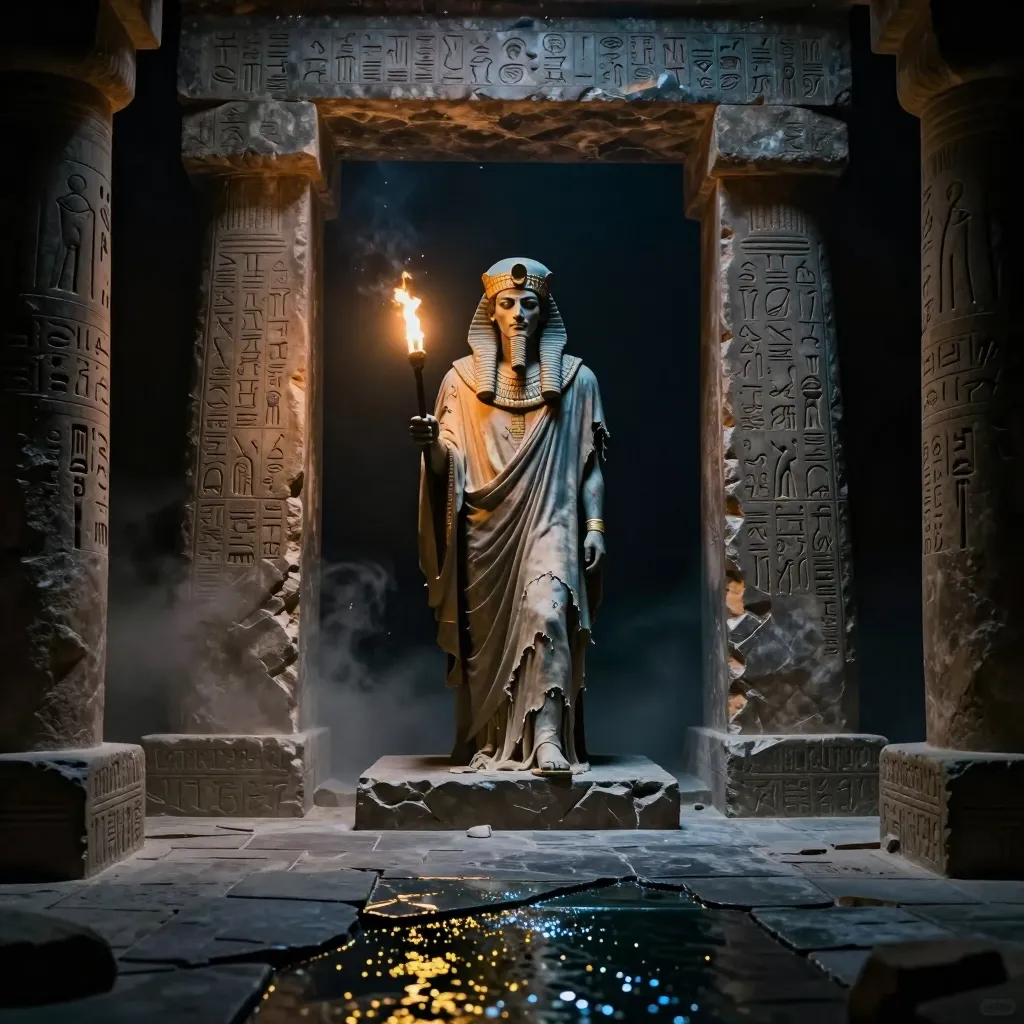
The Death of Ur-Nammu: Sumer’s Dark Descent into the Shadowy Afterlife
Explore the ancient Sumerian vision of death through the lament of King Ur-Nammu. Forsaken by the gods he served, the king descends into a joyless underworld of brackish waters and eternal isolation, revealing the dark roots of Mesopotamian ghost lore and the cruelty of inexorable divine fate.
The Shadowed Fall of Ur-Nammu: Sumer's Lament for a Betrayed King
In the cradle of ancient Mesopotamia, where the Tigris and Euphrates whispered secrets to the wind-swept plains, King Ur-Nammu met his untimely end. Ruler of the Third Dynasty of Ur around 2112–2094 BCE, this mighty sovereign forged an era of revival after centuries of chaos. Yet in 2094 BCE, on the blood-soaked battlefield against the barbaric Gutians, his life was severed. Composed during the reign of his son Shulgi, The Death of Ur-Nammu—also called Ur-Nammu's Descent to the Underworld—emerges as one of Sumer's most haunting laments. This poetic elegy paints a grim portrait of mortality, divine indifference, and the inescapable gloom of the afterlife, fueling the ancient dread of restless spirits.
A Kingdom Plunged into Mourning
The poem opens with cataclysmic despair engulfing Sumer. Cities crumble, panic grips the "black-headed people," and Ur itself—called Urim—lies devastated. The gods react with cosmic withdrawal: Enki seals Eridu's gates, Utu dims the sun, and Nanna frowns from his zenith. Holy Ninsun, the king's mother, wails in the once-joyful squares, her cries echoing the land's barren grief. Fields wither, canals silt up, and livestock bleat in sorrow as abundance yields to desolation.
Ur-Nammu's body, transported from the fray, lies inert in his palace. Once the vigorous shepherd who commanded Sumer's assembly, he now cannot lift his hands or feet. Axes fell him like a sacred cedar, storms shroud his resting place. Sacrifices spurned by the Anuna gods mark his abandonment; even An and Enlil, whom he served faithfully, decree no reprieve. His donkeys buried beside him, the roads to the netherworld grow treacherous, chariots shrouded in dust.
Descent into Arali: Gifts for the Eternal Lords
Ur-Nammu's soul traverses the barren path to Arali, the underworld domain of Ereshkigal, Queen of the Dead. He appeases the seven porters with offerings, stirring tumult among fallen kings, priests, and priestesses. Slaughtering bulls and sheep, he hosts a vast banquet, though its fare is bitter and its waters brackish—a stark reminder of paradise lost.
To each deity, precise tributes flow:
- Nergal, Enlil of the depths: a mace, bow, quiver, dagger, and leather pouch.
- Gilgamesh, underworld sovereign: spear, saddle-hook bag, lion-headed mace, shield, battle-axe.
- Ereshkigal: oil-filled vessel, flawless bowl, heavy robes infused with nether powers.
- Dumuzid, Inanna's consort: golden scepter, shining hand artifacts.
- Namtar, fate-decreer: jewelry, cornelian stones, golden ring.
- Hucbisag, his wife: lapis-adorned chest, silver clasp, woman's comb.
- Ningiszida, warrior of transitions: gold-wheeled chariot, dappled donkeys, seals, and pins.
- Ninazimua, scribe of Arali: alabaster headdress, stylus, measuring tools.
Ereshkigal grants him a dais and authority over slain warriors and the condemned, judging alongside Gilgamesh.
The Bitter Echoes of a Life Forsaken
Days pass in lamentation. Ur-Nammu mourns unfinished walls, his new palace, his household, his wife's embrace, his children's growth. "I served the gods sleeplessly," he cries, "yet no portent favored me." Rain cannot reverse its fall, nor can he return to brick-built Urim. His wife weeps as widow, forsaken by protective deities; Ninsun withdraws her arm, Enki silences her pleas. Music turns to dirges, throne to dust-heap, bed to steppe.
Inanna, absent during his doom—dispatched by Enlil—returns furious. She storms Enlil's temple, trembling heavens and earth, destroying pens and folds. "Who alters An's words?" she rages, barring her own E-ana shrine without her shepherd. Ningiszida comforts with prophecy: Ur-Nammu's name endures, his canals and fields revered, evil spirits banished.
Divine Treachery and the Ghostly Afterlife
Central to the lament's chill is betrayal. Ur-Nammu, faithful servant, falls despite trusts in An, Enlil, and Inanna—distracted by divine errand. No explanation pierces the void: why do the righteous perish? This powerlessness breeds Mesopotamian ghost lore—souls, self-aware yet impotent, sometimes flee Ereshkigal's grasp to haunt the living.
The underworld banquet, grand yet joyless, underscores eternal isolation. Funerary details mirror real rites, suggesting ritual performance. In Sumer's dark cosmology, death is no restful slumber but a shadowed exile, where echoes of earthly vigor fade into brackish silence.
This ancient dirge, etched in cuneiform, endures as a timeless whisper from the cradle of civilization: even kings bow to inexorable fate, their pleas lost in the underworld's unyielding hush.