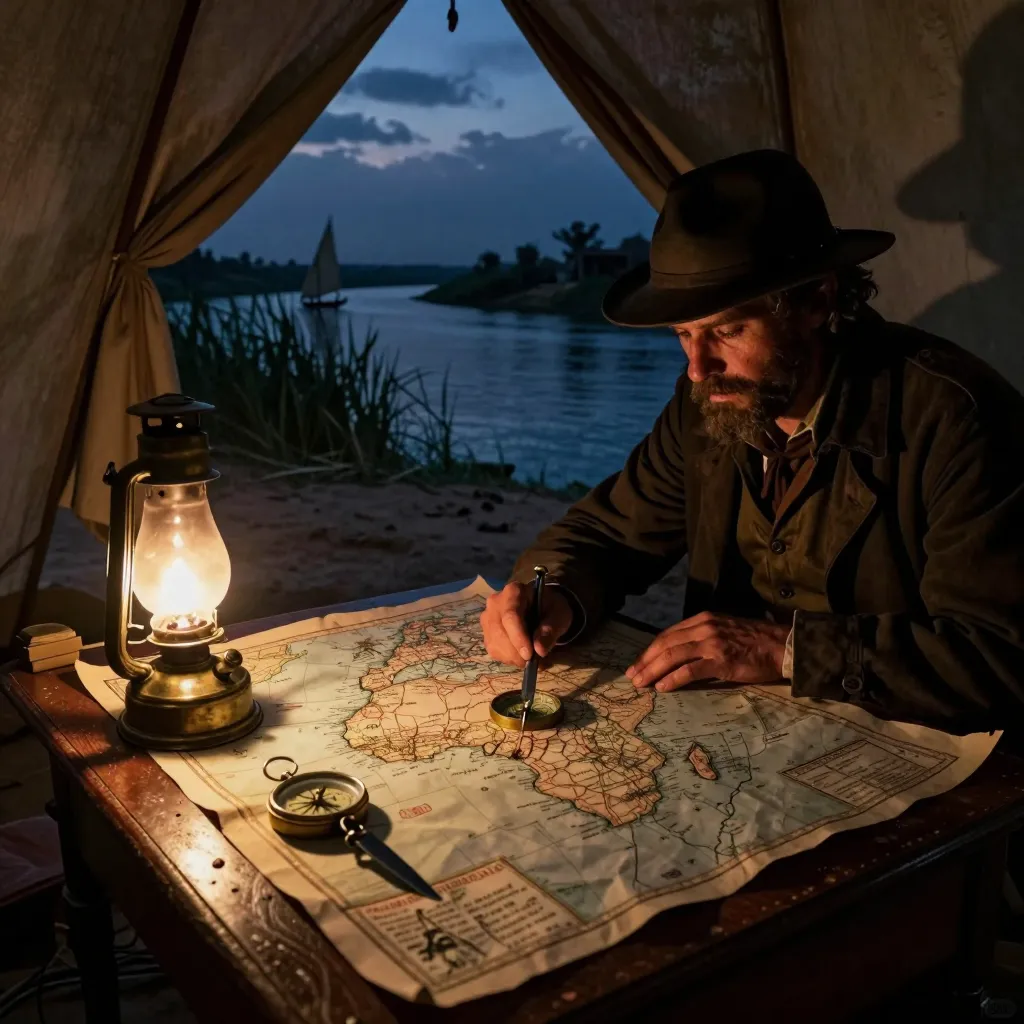
The Dark Saga of the Nile: Rivalry, Obsession, and the Scramble for Africa
Uncover the brutal history of the Victorian explorers who risked death and reputation to map the Nile. From the bitter Burton-Speke feud to the disappearance of David Livingstone, this saga reveals how a geographical quest paved the way for the total subjugation of a continent.
The Obsession with the Nile: A 19th-Century Descent into the Unknown
For centuries, the source of the Nile River remained one of the most enduring mysteries on the map. To 19th-century Europeans, the interior of East Africa was a "blank space," a region guarded by lethal diseases and rumors of vast, inland seas. What began as a quest for geographical glory soon morphed into a dark saga of obsession, rivalry, and the relentless machinery of colonial expansion.
The Deadly Allure of the White Nile
While the Blue Nile's origins in the Ethiopian highlands were known, the White Nile—stretching deep into the heart of the continent—remained a riddle. The journey south was a gauntlet of malaria and yellow fever that claimed countless lives before explorers even reached the interior.
The introduction of quinine in the 1820s finally allowed European "pioneers" to survive these environments, but their progress was often fueled by information from Arab slave traders. These traders had already carved paths into the interior in search of human cargo, providing the maps and routes that Western explorers would later use to claim "discovery".
A Clash of Titans: Burton vs. Speke
The search for the source reached a fever pitch with the partnership—and eventual bitter feud—of Richard Francis Burton and John Hanning Speke. Sponsored by the British government, the duo followed established slave routes toward Lake Tanganyika.
* Richard Burton: A polyglot who spoke 35 languages and famously infiltrated Mecca in disguise, Burton believed Lake Tanganyika was the Nile's true origin.
* John Hanning Speke: An army officer who grew convinced that the source lay further north.
In 1858, Speke struck out alone and reached a massive body of water he named Lake Victoria. Upon his return, the two men ceased speaking, sparking a public debate that only ended when Speke died in a suspicious hunting accident on the very morning he was set to face Burton in a final intellectual confrontation.
The Disappearance of Livingstone
As the world debated Speke’s claims, the legendary missionary David Livingstone ventured into the wilderness to find his own answers. Livingstone’s motivations were a complex mix of religious fervor and a desire to dismantle the slave trade through European commerce. However, his quest led to his total disappearance from the Western world for five years.
When journalist Henry Morton Stanley finally tracked him down in 1871, he found a man physically broken but still obsessed with the river. Livingstone believed the Lualaba River was the Nile's source; in reality, it was the Congo. He died in the African bush in 1873, his heart buried under a tree while his preserved remains were carried back to Britain for a state funeral.
Stanley and the Final Mapping
Henry Morton Stanley was a man of a different caliber—driven by a craving for fame and notorious for his brutal treatment of African porters. Through a series of grueling expeditions, Stanley circumnavigated Lake Victoria and confirmed Speke's original theory: Lake Victoria was indeed the Nile's primary source.
By the time the map was filled, the "Dark History" of the Nile quest was clear. The geographical victory provided the blueprints for the "Scramble for Africa". The waterways that explorers dreamed would carry Bibles and trade goods soon bore the weight of colonial armies, leading to the near-total subjugation of the continent by the dawn of the 20th century.