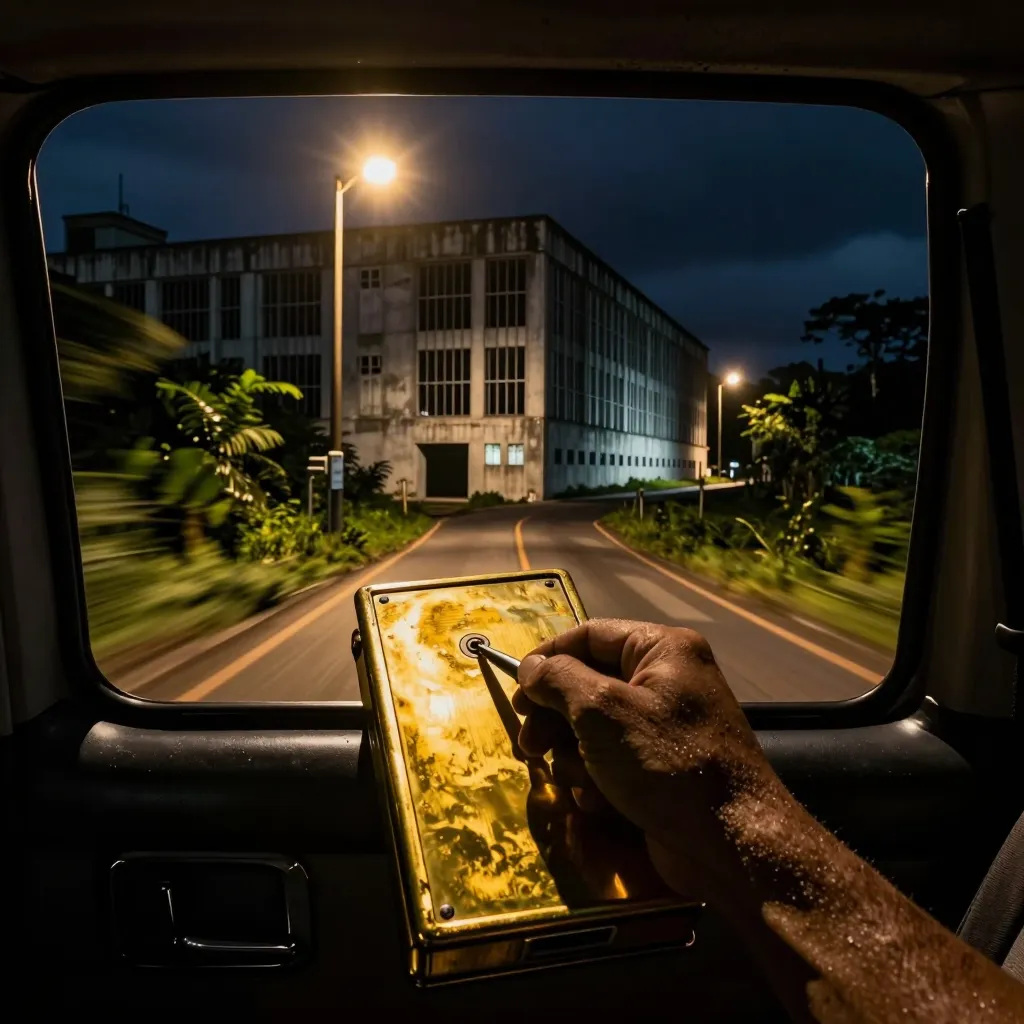
Interviewing a Fugitive Pop Star: The Race to a Brazilian Prison Cell
Follow the high-stakes hunt for a fallen pop icon and her producer. From international manhunts to a mysterious pregnancy inside a high-security Brazilian ward, this true story explores the thin line between celebrity worship and predatory cult manipulation.
The Chase for a Missing Idol: Inside the High-Stakes Hunt for a Fugitive Pop Star
In the early 2000s, one of Latin America’s most famous performers wasn’t touring stadiums or walking red carpets. She was on the run.
Interpol had issued a global alert. Border agents were circulating her photo. Reporters scoured continents looking for even the faintest trace. The target wasn’t a cartel boss or a war criminal. It was a pop icon accused of being at the center of a cult-like ring that preyed on teenage girls.
And somewhere behind the swirl of rumor and outrage, a single question kept resurfacing: were the missing girls still alive?
This is the story of that pursuit—the frantic race to locate a vanished pop star in Brazil, to penetrate the walls of a maximum-security system, and to confront the unsettling mix of celebrity, obsession, and alleged abuse that left a trail of frightened families and unanswered questions.
A Star Turns into a Shadow
Before her name became synonymous with scandal, the singer was a phenomenon.
Often dubbed the “Mexican Madonna,” she built a career on rebellion and raw charisma. Her concerts were explosive. Her fans copied her ripped fishnets, wild hair, and defiant attitude. At the height of her fame in the 1990s, she was more than a performer—she was a symbol of liberation for countless young women across Latin America.
Behind the scenes, investigators would later allege, something far darker was unfolding.
At the center of it all was not just the singer, but the man who shaped her career: her producer and mentor. To the outside world, he was a brilliant manager with a near-mystical hold on the star’s image. To families and prosecutors, he would eventually be portrayed as the architect of a predatory system that lured teenage girls with promises of stardom—and then trapped them.
When the accusations finally boiled over, the effect was immediate and explosive. Parents filed complaints. Former followers described psychological manipulation and sexual exploitation. Authorities in Mexico began building a case involving alleged corruption of minors, abuse, and what many called a “teenage sex cult” orbiting the pop star and her maestro.
And then, just as the scandal reached critical mass, they both vanished.
Vanished: A Global Alert and a Deadly Fear
The escape transformed an already shocking case into a full-blown thriller.
They slipped away from Mexico, along with several young women who had long been part of their inner circle. For months, the group seemed to dissolve into the currents of migration and the anonymity of border towns.
Interpol issued a red notice: detain on sight. Their images circulated on police advisories worldwide. The idea that one of Latin America’s most recognizable faces could simply vanish took on a surreal quality. Detectives along the U.S.–Mexico border quietly traded darker theories.
One investigator, haunted by how such “movements” sometimes ended, voiced a fear that went far beyond criminal charges: that the group would someday be found the way too many cult stories conclude—in a closed compound, surrounded by a field of bodies.
The missing girls’ families waited without answers. Authorities focused heavily on building charges and negotiating extraditions, but the question of immediate safety—were they alive, were they being held against their will—often lagged behind jurisdictional arguments and bureaucratic delays.
The manhunt wasn’t just about arresting fugitives. It was about reaching those girls before something irreversible happened.
From War Zones to Pop Culture’s Dark Side
The search for the fugitive star eventually pulled in a journalist who had just returned from a very different kind of hunt: tracking down a missing file clerk from Philadelphia who had re-emerged in the Congolese jungle as a rebel leader in a brutal civil conflict.
If an anonymous office worker could vanish into one of the most remote war zones on earth, what did that say about a celebrity with money, contacts, and a fiercely devoted following?
The logic was simple: if traditional law enforcement was mired in procedures, a reporter—unbound by jurisdiction—could go wherever the leads pointed. No warrants. No inter-agency turf wars. Just time, nerve, and a willingness to chase whispers across borders.
When news broke that the star and her mentor had been spotted in South America, the chase shifted: it was no longer about where they had gone, but how to get close enough to see the truth with one’s own eyes.
Capture in Brazil: From Global Stages to a Locked Ward
Eventually, the running stopped.
Brazilian authorities arrested the singer and her mentor in early 2000 after months on the move. The fugitive idol who once performed to tens of thousands was now confined behind the walls of a high-security women’s prison.
The scandal followed her in. The prison was supposed to be a place of control—gates, guards, and steel doors—but soon, something impossible began to circulate through its corridors.
The singer was pregnant.
She had been in an all-female facility for months. No conjugal visits. No reported abuse that accounted for the timing of conception. Yet somehow, she was expecting a child.
It sounded like urban legend. Authorities scrambled for explanations. Guards were interrogated and subjected to polygraphs. Her legal team hinted at assault. Brazilians debated the story in newspapers and on television, with reactions ranging from disgust to disbelief.
And then came the most outlandish theory of all—one that would electrify tabloids and occupy investigators: that she had smuggled semen into the prison and artificially inseminated herself.
The “Gangster Sperm” Theory
Behind closed doors, Brazilian investigators began to consider a scenario as bizarre as it was technically possible.
According to leaked files later reported in the international press, authorities suspected that semen had been brought into the prison from a male inmate in another facility. The alleged method: a crude, improvised syringe fashioned from everyday objects—reportedly something as simple and accessible as a ballpoint pen.
In this theory, conception wasn’t an accident or an assault, but a deliberate act—a way to maintain a connection with a lover or ally outside her immediate confinement, and perhaps to complicate legal proceedings by adding the welfare of an unborn child to the equation.
The story of “gangster sperm” raced around the world. Late-night shows mocked it, tabloids embellished it, and officials in Brazil were forced into the uncomfortable position of insisting they could “neither confirm nor deny” what sounded like the plot of a prison melodrama.
Lost in the noise, again, was the central unease: if the system couldn’t even explain how an inmate in a sealed women’s wing had become pregnant, what else was happening behind those walls that no one could see?
Lawyers, Leaks, and a Dangerous Spotlight
For the singer’s defense team, the pregnancy was both a nightmare and an opportunity.
On one hand, it deepened the scandal. Every new rumor added fuel to the public’s outrage and threatened to poison any potential jury pool—both in Brazil, where she was detained, and in Mexico, where charges loomed.
On the other, the intensity of the scrutiny gave her lawyers leverage. If anything happened to their client, they could point to the public spotlight as proof that authorities had ample warning and motive to protect her.
Her lead attorney in Brazil cultivated a reputation as a kind of legal magician, the sort of advocate who specialized in maneuvering around impossible situations. When confidential police documents began leaking, showing investigators’ wildest theories about the pregnancy, he understood something crucial: as long as the story lived in rumor and unofficial leaks, his client had little control over how she was seen.
He decided on a risky move—invite one more explosion of attention in hopes of exhausting the scandal.
His idea was audacious and counterintuitive: allow a major international outlet to conduct a single, in-depth interview with the imprisoned star, inside the medical facility where she’d been transferred as her due date approached.
One huge story, he argued. Dump every log on the fire at once. Then, when there was nothing left to hide, maybe the flames of speculation would finally die down.
But that plan came with brutal logistical obstacles—and a ticking clock.
Racing the Clock: Visas, Carnivals, and Narrow Escapes
Brazil’s prison hospital was located inland, far from the tourist-thronged beaches. Reaching it in time meant moving faster than an entire country winding down for Carnaval, the massive national festival that effectively shuts government offices for days.
The window was painfully narrow: a matter of days before the festivities began, during which visas had to be obtained, flights booked, and bureaucratic gates passed.
The journey that followed was a minor thriller in its own right. Every step presented a new barrier:
- A passport crammed with stamps but no blank pages left for a visa.
- Airline agents insisting that entry to Brazil required a visa in advance.
- A consulate demanding a work visa for a journalist—a process normally involving official letters and ministry approvals the reporter didn’t have time for.
- Endless lines at the U.S. passport office, with little chance of reaching the front before closing.
- A final dash back to the Brazilian consulate minutes before it shut down at noon, hoping someone would bend rules for a stranded traveler with only a standby ticket and a desperate story.
In the end, it was not careful planning but improvisation and nerve that carried the day. New passport pages were mysteriously added. A tourist visa materialized at the last minute. A standby seat opened on a packed flight full of revelers headed to Rio.
The reporter arrived in Brasília, exhausted but on time, with less than a day to spare before Carnaval locked the country down.
He had crossed oceans to reach a single locked door. Now he had to get it open.
Negotiating with the System
Gaining access to a prisoner in a high-profile case is rarely straightforward—especially when that prisoner is at the center of an international storm.
At the hospital complex, the warden in charge of the prison wing had no interest in more trouble. To him, every story published about the pop star’s conditions was a potential disaster: more scrutiny, more blame, more chances for his institution to be dragged before cameras and angry officials.
He had one simple wish—to keep the situation quiet until it passed. Allowing a reporter from a world-renowned newspaper to walk into his facility seemed like the exact opposite of that.
The singer’s attorney argued otherwise. To him, silence was the real danger. Each day that the star remained a mystery, new rumors grew: cult rituals, hidden lovers, clandestine insemination, assassination plots. Whether those theories were true or not almost didn’t matter anymore—public opinion was building its own reality.
His pitch was blunt: let one large, well-documented story appear, featuring the singer’s own words, and then stop feeding the gossip. One blaze, then ashes.
The warden was unconvinced. The back-and-forth circled endlessly, with legal documents pushed aside and practical fears taking over the conversation.
Then the mood in the office changed, fast.
Men in Black and a Fight Over DNA
Three men in black uniforms stepped into the doorway. They carried no visible insignia, just an air of federal authority. One flipped open a government ID. Another shifted his jacket enough to reveal a handgun holstered at his waist.
They weren’t there to discuss interviews.
They were there for the child.
The lead officer delivered his instructions: the woman known across Latin America was to undergo an amniotic fluid extraction. The procedure would take genetic material from her unborn baby. The officers wanted it, quietly and without explanation to the mother, so they could secure “verifiable DNA” before the child entered the world.
To her lawyer, it was a red line.
For him, the demand wasn’t about medicine. It was about power and control—a step toward wielding the baby as a piece of evidence rather than a human being. He exploded in protest, shouting that the order was unconstitutional and a gross invasion of privacy.
The officer’s response was ice-cold. If the hospital didn’t cooperate, he warned, he had a van full of men ready to take the facility by force.
What followed was a flurry of phone calls that revealed just how high the stakes had risen. The defense attorney dialed judges he knew personally. The warden contacted health officials in charge of the prison medical service. The federal officer spoke in low tones to someone the others couldn’t hear.
Somewhere in Brasília, a court weighed the situation and decided to intervene.
A stay was granted. The extraction would not proceed.
The men in black left, their demand temporarily defeated. The lawyer, shaking off adrenaline, turned back to the warden.
One crisis had just been averted. Another decision still hung in the air.
Would the prison allow the outside world—through a single journalist—to step into that guarded room and hear from the singer at the center of it all?
A Door Opens
The warden, visibly drained, ended his last call and leaned back in his chair. Around him, the paperwork of a thousand normal duties sat untouched. For days, perhaps weeks, his daily responsibilities had been overshadowed by this one combustible prisoner and the swirling conflict around her body, her reputation, and her unborn child.
In Portuguese, he signaled his surrender: no more scenes, no more confrontations, not with an outsider present. Let the interview happen. Let it be done.
Then he turned back to the reporter in English and offered a tired, almost wry parting line: enjoy your visit. The woman waiting inside, he hinted, was not easily summed up by headlines or rumors.
“You’ll see.”
Behind his cryptic remark lay a convergence of forces that made this case so unnerving: celebrity worship turned to blind allegiance, young lives caught in the gravitational pull of a charismatic idol and her maestro, families abandoned or shattered, and institutions struggling to control a narrative spinning far beyond their grasp.
Somewhere beyond the gates, a pop star sat under guard, pregnant under mysterious circumstances, accused of being part of something far more sinister than a PR scandal—yet still idolized by fans who refused to believe she could do any wrong.
Cults, Idols, and the Cost of Devotion
This story isn’t just about one singer, one producer, or one prison in Brazil. It echoes a pattern that appears again and again in dark corners of modern culture:
- A powerful, charismatic figure promises transformation—fame, spiritual enlightenment, belonging.
- Young followers, often vulnerable or disillusioned, surrender boundaries in exchange for that promise.
- Outsiders struggle to understand where free will ends and coercion begins.
- Legal systems scramble to distinguish devotion from manipulation, consent from control.
The accusations surrounding the fugitive star and her mentor fit many of the hallmarks associated with cult-like dynamics: isolation from families, absolute loyalty demanded from followers, a closed inner circle where the leader’s desires become unquestioned law.
Whether or not every allegation was ever fully proven, the trail of missing girls, frantic parents, and shattered careers left behind points to a brutal reality: under the glamour of pop culture, exploitation can thrive as long as it hides behind bright lights and screaming crowds.
When the lights go out, what remains are the questions that haunt every such case:
How far will people go for someone they worship? How long will institutions look away when the abuser is profitable, adored, or politically untouchable? And when the truth finally breaks through the stage lights and prison walls, how much of the damage can ever really be undone?
In the race to get inside that Brazilian prison, the goal wasn’t just to secure a rare interview. It was to pierce the fog of myth and scandal surrounding a woman who embodied both idol and alleged predator—and to confront, up close, the unsettling truth about how far devotion can be stretched before it snaps into something monstrous.