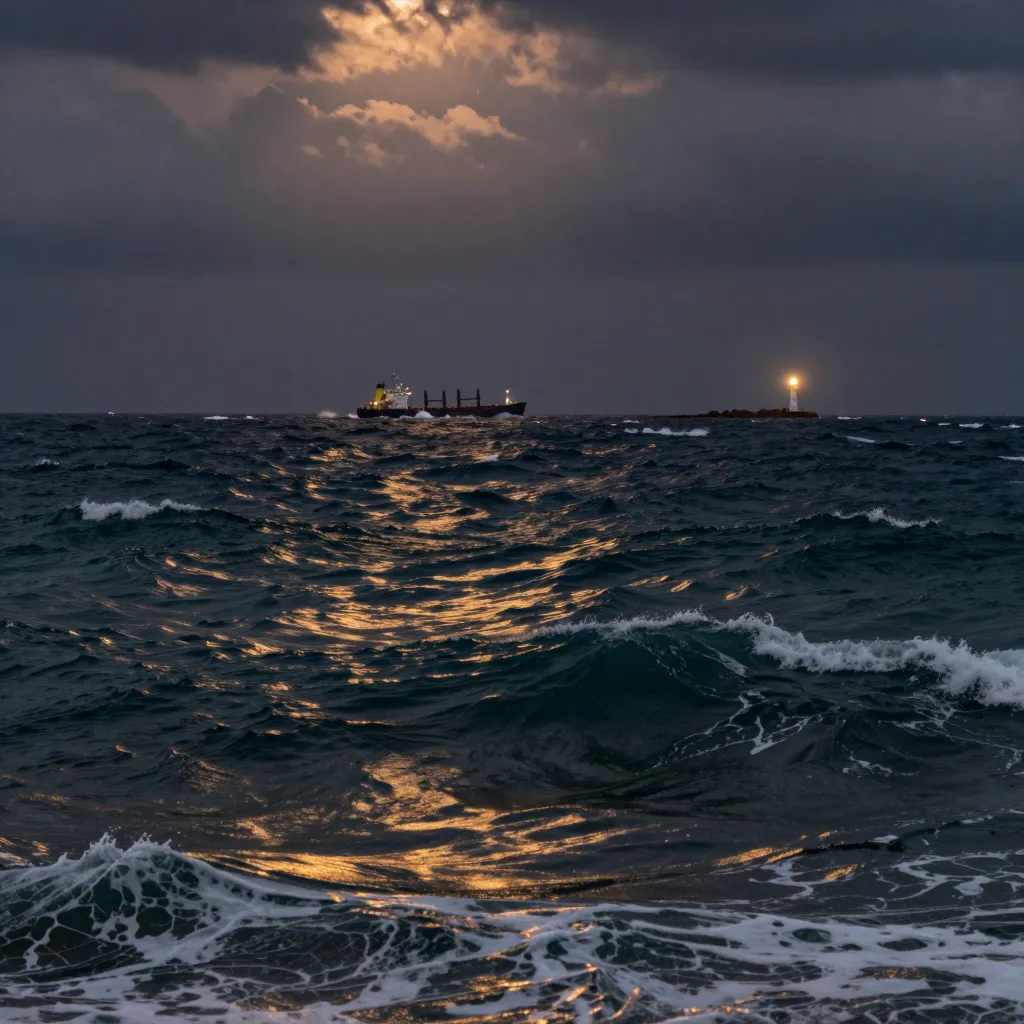
The Bermuda Triangle: Solving the Mystery Through Science and Statistics
While legends claim the Bermuda Triangle swallows ships whole, modern data suggests a different story. Scientists and organizations like NOAA explain how high traffic and natural forces create a psychological trap, proving the mystery is more grounded in probability than the supernatural.
The Bermuda Triangle: Statistical Reality or Nautical Enigma?
For decades, the stretch of the North Atlantic known as the Bermuda Triangle has stood as one of the most persistent legends in the annals of unsolved mysteries. [cite_start]Defined by the points of Florida, Bermuda, and Puerto Rico, this vast maritime region has earned a reputation for swallowing ships and aircraft without a trace[cite: 3, 4]. [cite_start]While pop culture often attributes these disappearances to the supernatural or the extraterrestrial, a growing body of scientific evidence suggests the "mystery" may be more grounded in mathematics than myth[cite: 7, 8].
The Anatomy of a Legend
[cite_start]The region's notoriety is built upon high-profile incidents where crews and vessels vanished under seemingly inexplicable circumstances[cite: 4]. These stories often highlight:
- [cite_start]Vanishing Acts: Ships and planes disappearing without distress signals[cite: 4].
- [cite_start]Missing Remains: The lack of physical wreckage or debris found after a disappearance[cite: 4].
- Atmospheric Oddities: Reports of compass malfunctions and sudden, violent shifts in weather.
However, many experts argue that these events are less about the location and more about the sheer volume of activity within its borders.
The Probability Argument
[cite_start]Australian scientist Karl Kruszelnicki posits that the Bermuda Triangle is not an anomaly, but a victim of statistical probability[cite: 5]. [cite_start]His research suggests that when one accounts for the high density of maritime and air traffic in this specific area, the number of accidents and disappearances is not disproportionately high[cite: 5].
[cite_start]In essence, the frequency of disasters in the Triangle is statistically comparable to any other heavily traveled section of the ocean[cite: 5, 7].
Institutional Perspectives
The skepticism regarding the Triangle's "deadly" nature is shared by major maritime and scientific organizations:
- [cite_start]The National Oceanic and Atmospheric Association (NOAA): According to a 2010 report, there is no evidence that mysterious disappearances occur more frequently in the Bermuda Triangle than in other well-traveled maritime regions[cite: 7].
- [cite_start]The US Navy and Coast Guard: These agencies maintain that natural forces—such as unpredictable weather—and human error are the primary drivers of disasters at sea[cite: 7]. [cite_start]They contend that the "supernatural" elements associated with the region are largely the product of science fiction and folklore[cite: 7].
Science vs. Superstition
The enduring allure of the Bermuda Triangle highlights the tension between the human desire for the unexplained and the cold reality of data. [cite_start]While the region remains a focal point for those interested in strange phenomena, the prevailing scientific consensus is that the mystery is fueled by hype rather than measurable abnormality[cite: 8].
[cite_start]Ultimately, the Bermuda Triangle may be less of a physical trap and more of a psychological one—a place where the combined forces of nature and human fallibility are reinterpreted through the lens of mystery[cite: 7].