Baldur: Norse Light God, Oath-Bound Fate, and His Return After Ragnarök
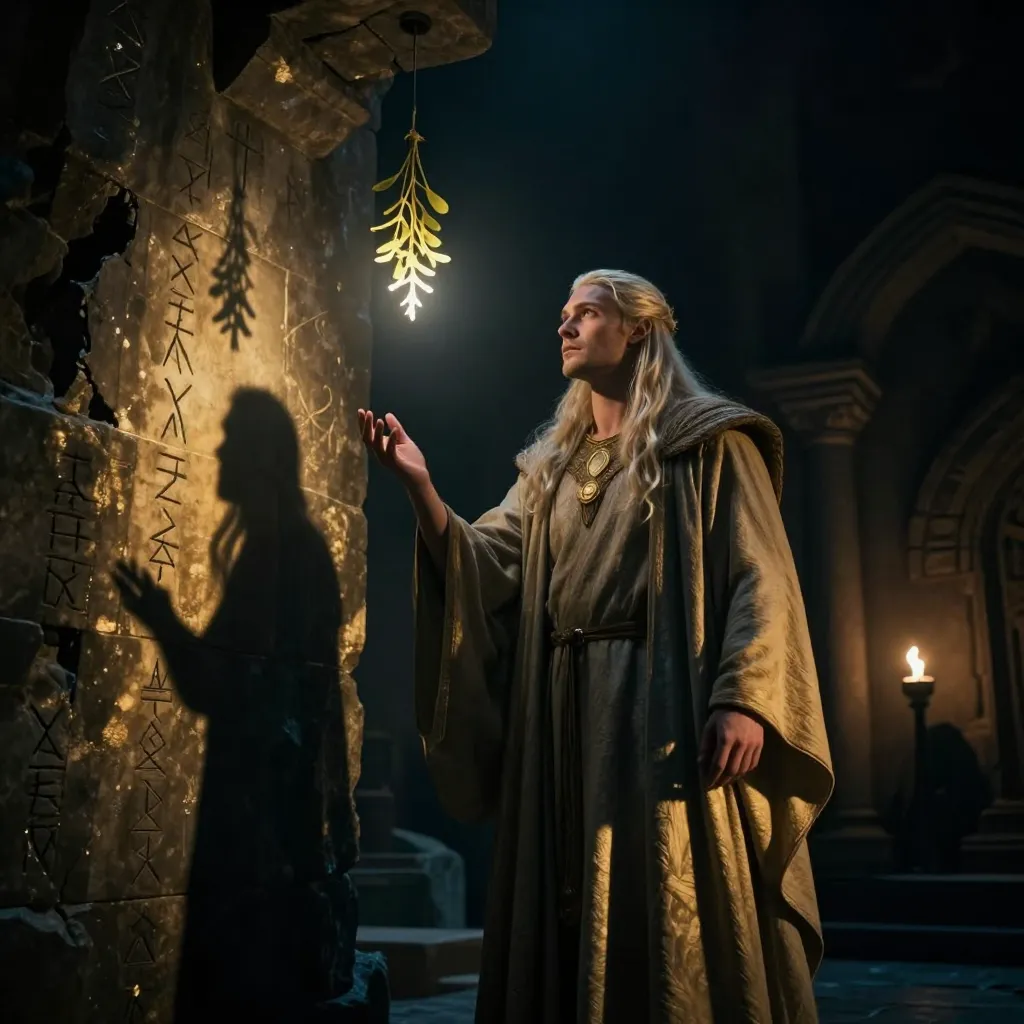
Baldur, son of Odin and Frigg, shone brighter than any god in Asgard, protected by Frigg's oaths against all harm. When Loki’s trick with mistletoe pierced his invulnerability, Baldur fell, and only if every creation wept could he be released, sealing his fate until Ragnarök.
Baldur: The Shining God of Norse Legend

In the shadowed halls of Asgard, where gods walked among starlight and storm, none shone brighter than Baldur. Beloved by all who dwelt in the nine realms, he radiated a light that seemed to pierce the very darkness of the Norse cosmos—a brilliance that made his inevitable fate all the more tragic.
The Radiant Aesir
Baldur stood among the principal gods of the Norse pantheon, the Aesir, as the son of Odin, the All-Father, and Frigg, the queen of the gods. His lineage connected him to the highest authority in the divine hierarchy, yet it was his nature rather than his birthright that earned him universal adoration. Married to the goddess Nanna, he fathered Forseti, a deity associated with justice and reconciliation.
The sources describe him as possessing supernatural beauty—not merely handsome, but luminous. His presence brought light into any space he occupied, a physical manifestation of the joy and purity attributed to his character. This radiance would prove both his defining characteristic and the ironic backdrop against which his darkness fell.
The Name and Its Shadows
The etymology of Baldur's name remains contested among scholars, wrapped in the same mystery that shrouds much of pre-Christian Germanic religion. Proposed derivations include connections to the Proto-Indo-European root bhel- ("white"), Old Norse bál ("fire"), and various Germanic words for "lord." The most direct interpretation links his name to the Old Norse baldr, meaning "bold" or "brave."
This etymological possibility carries significant implications. While later medieval sources portray Baldur as passive and innocent, an alternative tradition suggests a more martial character—a warrior god whose boldness matched his brightness. This duality hints at complex layers beneath the surface of surviving myths, pointing to a figure who may have combined martial prowess with his celebrated benevolence.
The Dream of Death
The primary narrative concerning Baldur centers on his death and the failed attempt to reclaim him from the underworld—a story preserved most completely in Snorri Sturluson's Prose Edda, though elements appear in earlier poetry and archaeological evidence.
The tale begins with omens. Baldur began experiencing dreams foretelling his own demise—visions that struck terror into the hearts of the gods, for prophecy in Norse mythology carried the weight of inevitability. In response, his mother Frigg undertook an extraordinary protective measure: she traveled throughout the entire cosmos, extracting sacred oaths from every substance, every element, every living and unliving thing, promising that none would harm her son.
With these oaths secured, the gods indulged in a macabre sport. They hurled weapons and objects at Baldur, watching with delight as everything—stones, swords, arrows—turned aside harmlessly, unable to breach the cosmic protection his mother had woven. The god of light stood invulnerable, surrounded by the laughter of immortal companions.
The Trickster's Discovery
Loki, the eternal disruptor of divine order, observed these proceedings with calculating eyes. Disguising his intentions, he approached Frigg with innocent inquiries. Had she truly covered every possibility? Was nothing overlooked in her comprehensive collection of promises?
Frigg, unsuspecting, admitted one exception: the mistletoe. She had considered it too small, too harmless, too insignificant to pose any threat to her radiant son. This admission became the thread from which tragedy would be woven.
Loki acted with characteristic speed and malice. He fashioned a spear—or in some accounts, an arrow—from the mistletoe, creating the only weapon in all creation capable of piercing Baldur's protection. But the trickster required another hand to wield it, for direct action would expose his guilt too plainly.
He found his instrument in Höðr, Baldur's own brother, a god blind to the visible world. Loki guided the blind deity's hand, directing the mistletoe weapon toward the shining target. The projectile flew true, striking Baldur with devastating effect. The god of light fell, his radiance extinguished, and silence descended upon Asgard.
The Descent into Darkness
The grief that followed transcended divine composure. The gods found themselves paralyzed by loss, confronted with the impossible reality of Baldur's death. Yet within their despair flickered hope—if death could claim him, perhaps death could also be persuaded to release him.
Hermód, another of Odin's many sons, volunteered for the perilous journey to Hel's realm. Mounting Sleipnir, Odin's eight-legged steed, he rode down the world-tree Yggdrasil, past its gnarled roots, into the subterranean darkness where the goddess of death held dominion.
There he found Baldur transformed. The radiant god sat pale and grim in the seat of honor beside Hel herself, his brightness dimmed to ghostly pallor. Hermód pleaded for his brother's release, and after persistent negotiation, Hel offered a conditional bargain: Baldur would return to the living world if and only if everything in creation would weep for him. This universal mourning would demonstrate that he was truly as universally beloved as claimed.
The Refusal That Sealed Fate
Messengers traveled throughout the nine realms, collecting tears for the fallen god. And the world did weep—gods and giants, men and monsters, stones and trees, all shed tears for Baldur's loss. The condition seemed destined for fulfillment.
Yet one refused. The giantess Þökk ("Thanks"), widely understood to be Loki in another disguise, declared that she would weep dry tears for Baldur. She would not mourn the death of Baldr, she stated coldly, and with this refusal, the possibility of resurrection collapsed.
Baldur remained in Hel's joyless kingdom, destined to stay there until Ragnarök, the twilight of the gods, when he would emerge to participate in the final cosmic conflict and the renewal that would follow.
The Hidden Warrior
Modern readers encountering Baldur through Snorri Sturluson's thirteenth-century compilation receive a particular portrait: the innocent, passive victim, martyr-like in his suffering. Yet this image may reflect Christian-influenced reinterpretation rather than authentic pre-Christian conception.
An alternative account preserved by the Danish historian Saxo Grammaticus presents a dramatically different Baldur—eager for battle, ambitious, almost warlord-like in his temperament. This version, though confused and overlaid with euhemeristic interpretation (treating gods as historical figures), preserves elements potentially closer to original Germanic conception.
Supporting this martial interpretation are numerous kennings—poetic circumlocutions used in skaldic verse—that associate Baldur's name with weapons and warfare. These linguistic fossils suggest that before medieval Christian influence reshaped the narrative, Baldur may have combined his luminous nature with the boldness implied by his name—a warrior of light rather than merely a passive symbol of it.
Echoes Across Germanic Lands
Baldur's significance extended beyond Scandinavian borders. An Anglo-Saxon chronicle records him as Bældæg, "The Shining Day," son of Woden (the English Odin), preserving his connection to light and his paternal lineage across cultural translation. The Second Merseburg Charm, a continental Germanic magical text from the ninth or tenth century, contains another brief reference, demonstrating his presence in the broader Germanic religious landscape.
These scattered attestations, fragmentary as they are, confirm that Baldur occupied a significant position in the religious imagination of multiple Germanic peoples. The archaeological record reinforces this impression—details of his myth appear on jewelry predating the Viking Age, suggesting narratives very old indeed.
The Eternal Return
Baldur's story resonates with mythic patterns found across world traditions: the beautiful dying god, the failed resurrection, the single refusal that prevents redemption. Yet it carries distinctly Norse characteristics—the binding power of oaths, the inevitability of fate even for gods, the complex moral ambiguity of Loki's role as necessary agent of destruction.
His promised return after Ragnarök connects him to themes of cyclical renewal and cosmic rebirth. In the aftermath of the final battle, when the world emerges from fire and flood, Baldur will walk again upon the renewed earth, his brightness perhaps finally reconciled with the boldness his name suggests.
In the end, Baldur remains luminous in memory—a god who gave light even as darkness claimed him, whose death foreshadowed the greater deaths to come, and whose story preserves the Norse understanding that even among immortals, some fates cannot be escaped, only endured.