10 Everyday English Phrases With Brutal Military Origins
From trenches to office emails, many common phrases originated in the chaos of combat. Explore the fascinating, sometimes dark, true military history behind ten popular sayings that have quietly survived long after the original battles faded into the past.
10 Everyday Sayings Born on the Battlefield
The language of war has a way of creeping into ordinary life. Phrases forged in trenches, shouted across radio static, or muttered in the chaos of combat now live comfortably in office emails, coffee shop chatter, and text messages. Most people who drop these expressions into conversation have no idea they’re carrying fragments of military history with them. These aren’t just figures of speech—they’re echoes of real moments when precision, danger, and dark humor were matters of survival.
10. Roger That
It sounds like casual affirmation, something you’d say to confirm plans for dinner. But “Roger that” traces back to the early days of wireless telegraphy, when operators needed an unambiguous way to signal that a message had been received. “Roger” stood for the letter “R” in the phonetic alphabet, and in military communications, ambiguity wasn’t an option. Lives depended on crystal-clear confirmation. The phrase eventually migrated from cockpit radios and command centers into everyday use, stripped of its urgency but still carrying that same weight of acknowledgment.
9. Got Your Six
Clock-face orientation was everything in combat. Twelve o’clock meant straight ahead; six o’clock meant directly behind—the blind spot, the place you couldn’t see and couldn’t defend. When a soldier told another, “I’ve got your six,” they were offering something profound: protection in the one direction the other person was helpless to guard. That promise of loyalty and vigilance translated naturally into civilian life, where it now serves as shorthand for having someone’s back in any high-stakes situation.
8. On the Double
The phrase carries an unmistakable snap of authority, and for good reason. It comes from marching commands, where “double time” meant moving at twice the normal pace—180 steps per minute instead of 120. Drill sergeants used it to inject immediate urgency into a unit’s movement. When someone uses it today, whether in a workplace or at home, that same military impatience lingers in the syllables: move faster, don’t think, just act.
7. No Man’s Land
Before it became synonymous with the churned, corpse-strewn wasteland between World War I trenches, the expression had older, quieter origins in 14th-century England, where it described burial grounds set aside for outsiders and strangers. But war amplified and twisted the phrase into something more visceral—a strip of earth where no living person could survive for long, claimed by neither side, haunted by artillery and gas. Modern usage has softened again, applying the term to political deadlocks, awkward social voids, or any space where no one feels safe or in control. The core idea remains: a place you don’t want to be.
6. Bite the Bullet
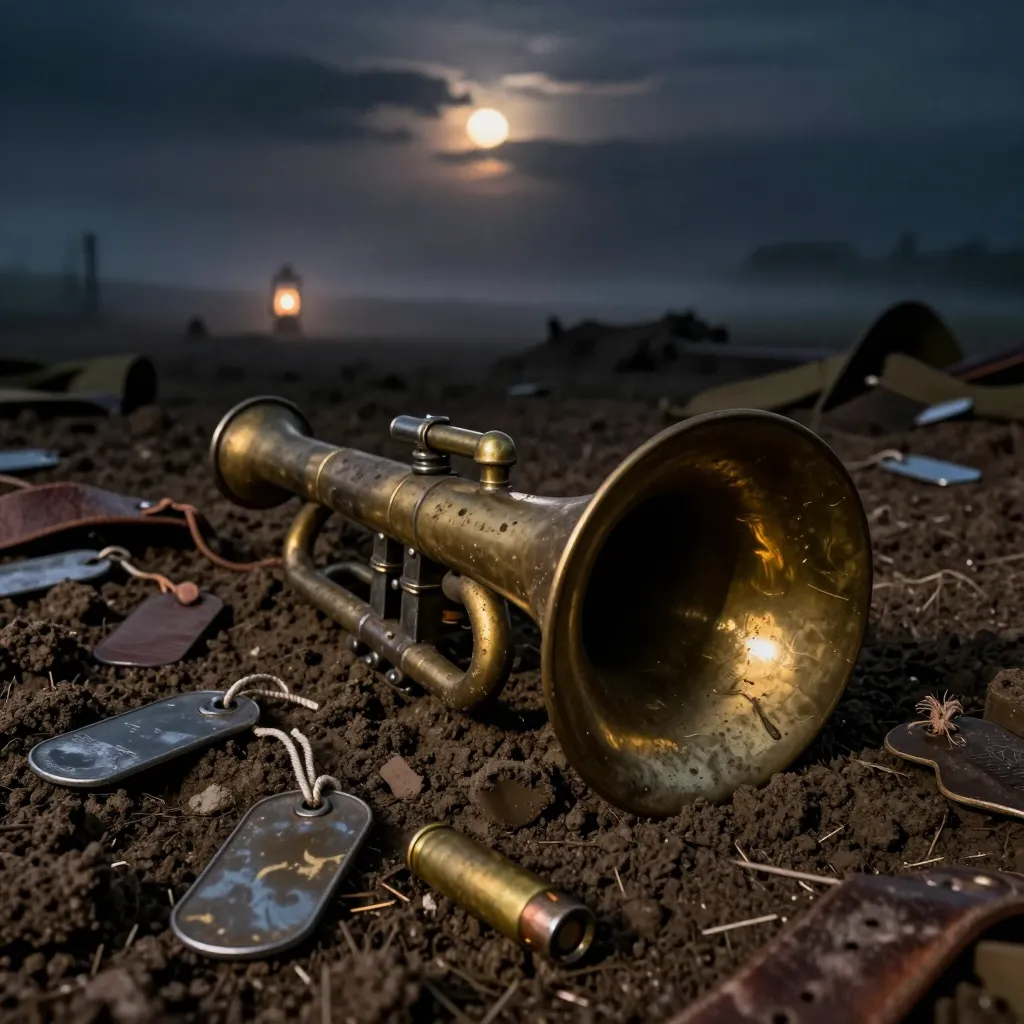
The image is almost too brutal to imagine. Before ether and chloroform made surgery bearable, battlefield medics had limited options for managing pain during amputations and bullet removals. A wounded soldier might be handed a lead bullet to clamp between his teeth, giving him something to focus on besides the agony—a primitive, desperate form of pain management. The phrase survived because the image is so stark: facing something unbearable with grim determination, refusing to cry out. It’s one of the darkest origins in everyday language, and most people who use it have no idea how literal it once was.
5. FUBAR
Military culture has always had a dark, sardonic sense of humor, and acronyms were its perfect vehicle. FUBAR—officially sanitized as “Fouled Up Beyond All Recognition”—emerged during World War II as soldiers’ deadpan assessment of situations where everything had gone catastrophically wrong. Its cousin, SNAFU (“Situation Normal, All Fouled Up”), carried the same weary resignation. These weren’t complaints so much as psychological survival tools, a way to laugh at chaos that could otherwise break a person. They’ve since leaked into civilian vocabulary, where they still describe total disasters, though the original context of men under fire has faded.
4. On the Front Lines
There is no more exposed position in warfare than the front line—the place where two opposing forces meet in direct, lethal contact. The phrase originally described soldiers who stood at the very edge of battle, where the risk of death was highest. Its modern usage exploded during the COVID-19 pandemic, when healthcare workers were described as being “on the front lines” of a different kind of war. The metaphor works because it captures that same sense of immediate, unrelenting pressure, of standing between danger and everyone else.
3. Balls to the Wall
Despite what it sounds like, this phrase has nothing to do with recklessness or anatomy. It comes from aviation, specifically the design of early aircraft throttles. The levers ended in round knobs—balls—that pilots would push all the way forward until they hit the firewall, the solid barrier at the front of the cockpit. That position meant maximum engine power, maximum speed, maximum risk. Pilots who went “balls to the wall” were committing fully, leaving nothing in reserve. The expression now applies to anyone pushing themselves to their absolute limit, though most who use it have never felt the G-forces of a dive or the roar of a propeller at full throttle.
2. Heard Through the Grapevine
During the American Civil War, telegraph lines strung between poles crisscrossed the landscape in patterns that reminded soldiers of grapevines twisting through a vineyard. These lines carried news from the front—sometimes official reports, more often rumors, whispers, and half-truths that spread faster than verified information. To hear something “through the grapevine” meant receiving intelligence through informal, unreliable channels. The phrase outlived the telegraph entirely, becoming our standard way of acknowledging that we learned something through gossip rather than direct confirmation.
1. Hurry Up and Wait
If there’s one experience that unites everyone who has ever served, it’s this: the frantic rush to prepare, to pack, to move, to arrive at a designated point at an exact moment—followed by hours of absolute nothing. The military runs on precision timing, but moving thousands of people and tons of equipment inevitably creates bottlenecks. The result is a special kind of psychological torture: adrenaline without release, urgency without purpose. Veterans recognize the phrase instantly, often with an exhausted laugh. And civilians know it too, from airports, emergency rooms, and any bureaucratic process that demands punctuality only to punish it with interminable delay.